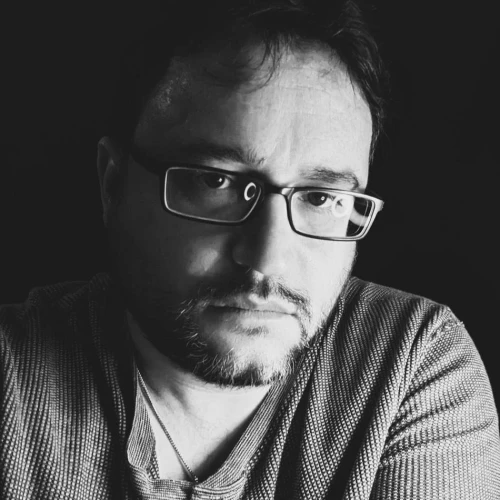

In the face of rising anti-Zionism and a troubling wave of antisemitism, two Catholic theologians have issued a public appeal that should matter deeply to Jews. Father Antoine Lévy, a Dominican theologian, and Dr. André Villeneuve, a biblical scholar and founder of Catholics for Israel, recently launched “For Zion’s Sake: A Catholic Appeal in Support of Israel.”
Their initiative seeks to push back against the growing tendency among some Catholic voices to delegitimize the Jewish state and treat opposition to Israel as a moral or even theological duty.
It comes at a moment when Israel continues to face threats from Iran and its proxies, while antisemitic incidents surge globally. For many Jews, the silence or bias coming from certain Christian institutions feels painfully familiar. A disturbing pattern has taken hold: Political accusations of apartheid, colonialism and genocide are often paired with a revived form of supersessionism—the idea that the Church has replaced the Jewish people in God’s plan. This combination is both theologically flawed and dangerous.
At the heart of the two clerics’ appeal is an affirmation of the Jewish people’s ongoing covenant with God. Drawing on Scripture from Genesis through the prophets and the New Testament, the authors insist that God’s promises to the Jewish people remain irrevocable. They cite Romans 11, in which Paul describes the Jewish people as the “natural branches” who are still beloved and whose calling has not been withdrawn. For Jewish readers, this language is significant. It rejects the notion that Jewish exile or suffering somehow proves divine rejection, and it affirms that the Jewish return to the Land of Israel carries theological weight.
Lévy and Villeneuve define Zionism simply: the Jewish people’s right to self-determination in their ancestral homeland.
Catholic Zionism, as they present it, recognizes God’s faithfulness in the modern restoration of the Jewish people while treating the State of Israel as a human and fallible political entity subject to the same moral scrutiny as any other nation. They reject caricatures that portray support for Israel as blind endorsement of every Israeli policy or as an end-times obsession. Instead, they call for a balanced stance that upholds Israel’s right to exist and defend itself against existential threats while remaining concerned for the suffering of all civilians.
The authors are candid about historical baggage. They discuss the 1904 meeting between journalist Theodor Herzl, the father of modern-day Zionisn, and Pope Pius X, in which the pope reportedly refused to support a Jewish homeland because the Jews had not accepted Jesus. They note that this account comes from Herzl’s diary and carries no formal authority as Catholic doctrine.
Yet anti-Israel activists frequently portray it as timeless Church teaching. The silence of the Church in never formally affirming those comments has allowed the story to live on as a symbol of rejection. For Jews, this remains a reminder of how theological attitudes once translated into political indifference.
The authors insist that God’s promises to the Jewish people remain irrevocable.
Since then, the Church has moved in a different direction. The 1965 declaration Nostra Aetate rejected collective Jewish guilt for the death of Jesus, affirmed that God does not revoke His gifts or calling and condemned antisemitism in all its forms. In 1994, the Vatican established full diplomatic relations with Israel. These steps represented real progress. Lévy and Villeneuve argue that the current moment risks swinging the pendulum backward.
Some Catholic influencers and media figures now speak as if opposition to Zionism is a required Catholic position. Catholic figures such as political commentator and podcaster Candace Owens and others have used their platforms to criticize Israel, Zionism and “Jewish influence” in ways that recycle classic antisemitic tropes. The authors contend that the Vatican’s relative silence on the threats facing Israel and the explosion of antisemitism allows these louder voices to fill the void.
This silence carries particular weight for Jews. Memories of papal inaction during the Holocaust still shape Jewish perceptions of the Church. When prominent Catholic platforms remain muted about atrocities committed against Israelis or about the surge in antisemitic attacks worldwide, many Jews hear an echo of earlier failures.
Lévy and Villeneuve do not claim to speak for the Church. They do claim the right, as faithful Catholics, to challenge narratives that treat the State of Israel’s existence itself as a problem.
The document is carefully structured. It begins by noting the disturbing trend of Catholics turning against Israel; moves through biblical and theological reflection on the Jewish people and the land; addresses the question of whether a Catholic can be a Zionist; and ends with a call for solidarity.
Another section invites non-Catholics to add their support as “Friends of” the appeal. The appeal has garnered numerous Catholic signatories, including priests, theologians and public figures. They’ve received encouragement from Catholics who felt isolated in their support for Israel and welcomed a theologically grounded alternative to the prevailing criticism.
For Jewish audiences, several points stand out. First, the appeal treats the Jewish connection to the Land as rooted in Scripture rather than as a colonial project. Second, it refuses to equate criticism of specific Israeli policies with denial of Israel’s right to exist. Third, it recognizes that anti-Zionism frequently functions today as an “acceptable” form of antisemitism. Fourth, it insists that genuine concern for Palestinian Arab suffering does not require the erasure of Jewish history or peoplehood.
Lévy and Villeneuve have written to the pope, urging the Vatican to engage with the theological questions their document raises. They hope for open discussion rather than polarized condemnation. In their view, the existence of the State of Israel forces the Church to confront its own identity in light of Jewish continuity. If the Jewish people remain the people of the covenant, then their return to the land cannot be dismissed as theologically irrelevant.
“For Zion’s Sake” does not resolve every tension in Catholic-Jewish relations. It does, however, offer a clear alternative to the voices that treat Jewish self-determination as inherently suspect. At a time when Jews face both physical attacks and ideological campaigns aimed at stripping legitimacy from Israel, expressions of solidarity grounded in shared Scripture and moral clarity matter.
Lévy and Villeneuve invite Catholics and people of goodwill to read and sign the document.
For Jews watching the debate inside the Church, the emergence of this appeal is a notable development: a reminder that not every Christian voice has turned away, and that some are working to recover a more faithful reading of the biblical story that binds both communities.