Newsletter
Newsletter Support JNS

Palestinian leaders and inconvenient truths

This is the old Palestinian blame game: Always make Israel or America appear responsible for the suffering you inflict on your own people.

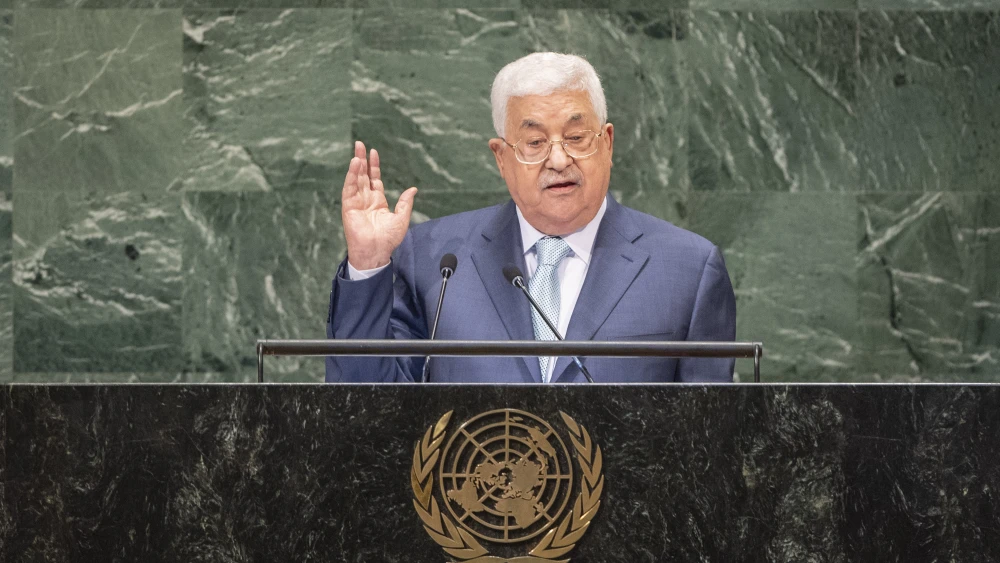
Palestinian Authority leader Mahmoud Abbas addresses the U.N. General Assembly, Sept. 27, 2018. Photo by Cia Pak/U.N. Photo.
Khaled Abu Toameh is an award-winning Arab and Palestinian Affairs journalist formerly with The Jerusalem Post. He is a senior distinguished fellow at the Gatestone Institute and a Fellow of the Jerusalem Center for Public Affairs.
  • Palestinian Authority leader Mahmoud Abbas understood that he had made a grave error in calling out his Arab brothers for their tightfistedness. This was a massive mistake because his Arab brothers do not tolerate any form of criticism. For them, Abbas should only be criticizing Israel and the United States.
  • This is the old Palestinian blame game: Always make Israel or America appear responsible for the suffering you inflict on your own people.
  • Like most Palestinians, Abbas is well-aware that the Arab states are no longer willing to serve as a cash machine for ingrates. Under the current circumstances, the Palestinians are more likely to succeed in cajoling money from duped Western donors than from their loving brothers. From the Palestinian leaders’ point of view, however, this is an inconvenient truth best hidden from their people.
  • Read full article at Gatestone.

“Our goal is clear: to establish Israel as a global leader in the field of artificial intelligence,” Netanyahu said.
“Monitoring this agreement cannot be passive,” Daniel S. Mariaschin, CEO of B’nai B’rith International, told JNS.
The U.S. vice president said that the memorandum of understanding mandates uranium stockpile destruction and verification, with no benefits if Tehran fails to comply.
The Iranian-backed terror army launched an anti-tank missile and mortar shells at IDF troops in Lebanon.
Military source tells JNS that Tehran sought to unite Hamas and other factions into a single Iran-backed force in northern Samaria before the IDF intervention.
“Multiple individuals are now in custody and allegedly planned attacks were stopped cold,” FBI director Kash Patel wrote.