


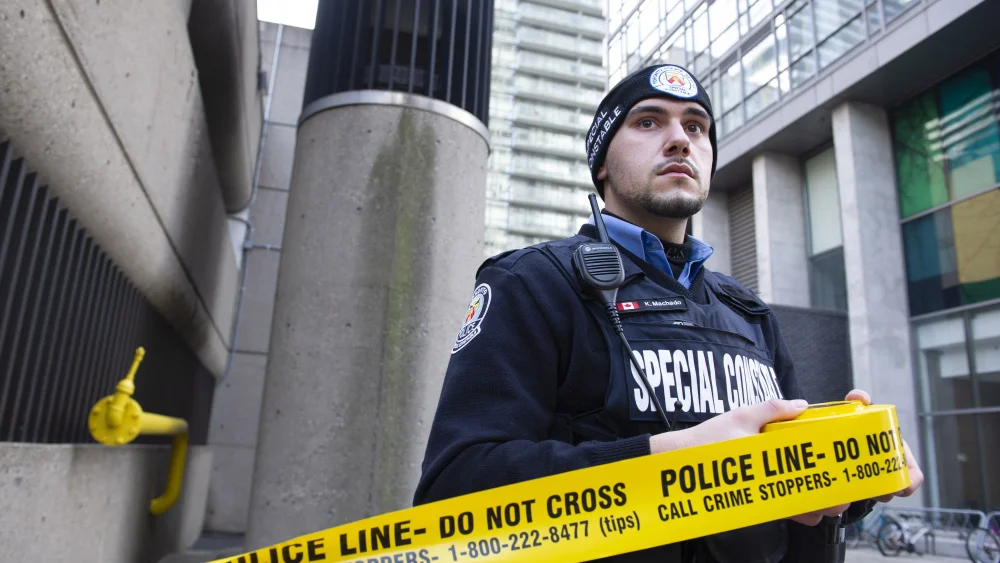

A shooting incident at a boxing gym in Richmond Hill, Ontario, owned by Salar Gholami, an Iranian-Canadian dissident who had spent years organizing pro-freedom rallies against the mullahs in Tehran, rocked the Greater Toronto area. Seventeen bullets shattered his windows and walls just hours after reports emerged of the Feb. 28 death of Iran’s supreme leader, Ayatollah Ali Khamenei.
Another shooting took place on March 2, when gunmen opened fire on Temple Emanu-El in North York. Members of the congregation had finished celebrating one of the most joyful holidays in the Jewish calendar, the holiday of Purim. Most were barely out the door when the shots rang out, while some were still inside.
Sadly, these are the predictable consequences of a political culture in Canada that has spent years signaling to extremists that the lives of those who oppose radical Islamist regimes are acceptable targets, especially Jewish lives.
Canadian Jews and others who oppose radical Islam have watched the leadership of their cities and the national leadership of the country fail to prevent the spread of radicalization for years. The mayor of Toronto positioned herself as a champion of progressive causes, going as far as to support Palestinian causes and calling the war in Gaza a genocide. Yet in her own city, she looked the other way as antisemitic hate crimes soared.
The country’s prime minister, Mark Carney, has gone even further, adopting language that demonizes Israel and echoes the talking points of those who would celebrate its destruction. He declared his support for a Palestinian state before the last Israeli hostage even left the Hamas-run Gaza Strip. When leaders at the highest levels of government treat the Jewish community as a political inconvenience rather than a community worthy of protection, they send a signal. That signal travels fast. Now it has arrived, in the form of bullets.
Toronto police confirmed that 22 antisemitic incidents have been reported so far this year alone, accounting for 63% of all hate-crime reports in the city. Let that number sink in. Yet for far too long, the response from elected officials has been tepid, reactive and hollow. Toronto Mayor Olivia Chow posted a tweet condemning the synagogue shooting. Stopping hate requires more than a tweet. It requires action, and it requires a genuine change of heart among Canadian leadership.
The attack on the gym carries a broader warning that should alarm every freedom-loving Canadian. Iranian-Canadian dissidents have been living under threat for years, yet they are still organizing, speaking out and demanding liberty for their people who continue to suffer under the Islamic Republic. Canada designated the Islamic Revolutionary Guard Corps as a terrorist entity in June 2024. However, deportations have moved at a glacial pace, bogged down in bureaucratic delays and endless appeals.
Meanwhile, men like Gholami host rallies and get rewarded with 17 bullets through their windows. The IRGC does not respect borders; it follows its enemies across continents and into their neighborhoods. Canada has allowed its open-door immigration policies to become a vehicle for those who wish to export Tehran’s terror onto Canadian soil.
What connects these two attacks is a climate of permissiveness. The Canadian government refuses to enforce consequences for hate and prioritizes political positioning over public safety, while treating the concerns of the Jewish community or Iranian dissidents as inconvenient noise rather than urgent alarm bells. Carney, Chow and others like them create the conditions in which extremists feel emboldened.
The Jewish community warned that this would happen. It was said in op-eds, meetings and public statements. The Jewish community begged Canadian leadership to take the threat seriously. The response has been indifference, and sometimes worse, open political hostility toward Israel and the communities that stand with her.
The Jewish people have survived far worse and will survive this, too. Still, a community’s resilience should never be used by governments as an excuse to under-protect it.
Canada’s leaders must move beyond performative condemnation. They need to deport IRGC-linked operatives. They need to secure the borders against those who come not to build new lives but to silence dissidents and terrorize communities. They need to empower and resource the Hate Crime Unit and the Integrated Gun and Gang Task Force.
Most importantly, the government needs to reflect honestly on the political rhetoric that has normalized hostility toward Israel, the Jewish community and those who protest terrorists over the past several years.
If the leadership of Canada continues to turn a blind eye toward blatant acts of criminal activity and hate crimes, then Canadians will see just how radical Islam can become within their own borders. That would be a terrible shame and a blatant disregard for the peace, harmony and respect for life that the liberal government claims to champion.


