
A month after the Hamas-led massacre on Oct. 7, 2023, HonestReporting, a pro-Israel media watchdog based in Canada, alerted the public to some uncomfortable findings: They had discovered that several Gaza-based freelance photojournalists appeared to be operating in proximity to prominent Hamas leaders and terrorists during the attack or possessed material that raised serious questions about how it had been obtained.
The report, titled “Photographers Without Borders,” was published on Nov. 8, 2023. The photographers in question were working with or associated with media outlets such as the Associated Press, Reuters, The New York Times and CNN.
The media outlets in question, as expected, denied responsibility and characterized the photographers as independent contributors. At this stage, only Israelis and those closely following the aftermath of the largest massacre of Jews since the Holocaust seemed troubled by the report’s findings. The story did not end with the allegations against the media.
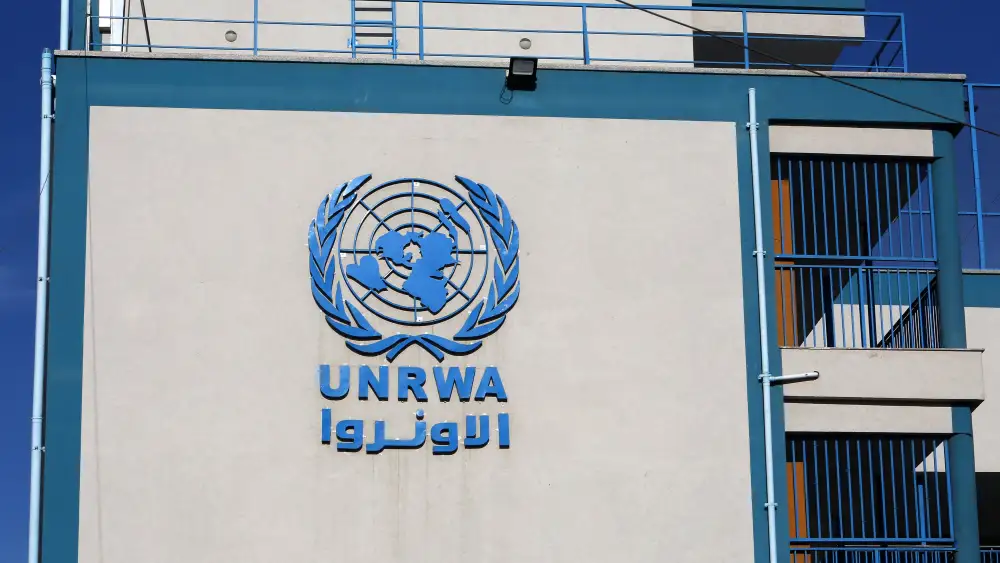
In January 2024, more uncomfortable allegations began to surface. Based on hostage testimonies and Israeli intelligence work, it was reported that at least 12 U.N. Relief and Works Agency (UNRWA) employees actively participated in the Hamas-led terrorist attacks in southern Israel on Oct. 7, 2023. That means participation in logistics, rape, kidnapping or even murder.
No other group of refugees in the world has a single agency dedicated to them. Critics have long argued that this unique arrangement contributes to the perpetuation of the Middle East conflict rather than its resolution. The first report on UNRWA’s involvement in the events of Oct. 7 was written by Israeli journalist Almog Boker. It stated that a recently released hostage said he had been held for nearly 50 days in the attic of a teacher employed by UNRWA.
Later, former Israeli hostage Emily Damar reportedly told British Prime Minister Keir Starmer that she had been held at UNRWA facilities. While this was not a claim against a UNRWA employee, it was serious enough for the United Nations itself to begin an internal investigation. That investigation led to the dismissal of nine UNRWA employees for possible involvement in the Oct. 7 massacre of 1,200 people and the kidnapping of 251 others.
Given this evidence, one might assume that UNRWA would have been shuttered. Certainly, under normal circumstances, the United Nations would shut down the agency, undertake a deeper investigation and use the organization’s general-purpose refugee agency, the U.N. High Commissioner for Refugees (UNHCR) to handle Palestinian refugee matters.
There are several reasons why this will never happen, the most important being that, out of all the world’s refugees, only Palestinian refugee status is inheritable. Children and grandchildren of refugees become refugees as well, which is not the case with any other refugee group.
In response to the revelations about the UNRWA employees, 17 countries, including major donors like the United States, Germany and France, suspended funding to the agency in 2023. Eventually, all of them except the United States resumed their funding, and UNRWA returned to business as usual.
Somehow, trust in an organization whose paid employees killed people was not shattered. Donor funds continue to pour in. One of UNRWA’s largest contributors is the European Union; more specifically, the European Commission. On average, the European Union funnels more than $100 million to UNRWA, according to reports. It is likely that few European taxpayers know that their governments contribute to the agency’s funding.
The Trump administration has refused to resume annual financing that typically amounted to $344 million. In fact, the administration is contemplating the imposition of terrorism-related sanctions on UNRWA and revoking its diplomatic immunity. Is this too harsh or simply necessary? Let’s try to answer that question.
For years, questioning UNRWA was treated like a moral crime. Criticizing governments, armies or corporations is allowed, but raising concerns or asking questions about the organization handing out aid to Gaza was immediately labeled as propaganda. While, as humans, we can empathize with how a humanitarian organization works and with the fact that aid is indispensable, the brutal truth remains: The more important an organization claims to be, the more it deserves ruthless scrutiny. UNRWA has failed to withstand such scrutiny.
According to recent reports from Washington, federal investigators are now probing at least 1,500 UNRWA-linked individuals for suspected terrorist ties. This is around 12% of the agency’s personnel in Gaza. The number is so large that the presence of such personnel can only be the result of systematic infiltration.
UNRWA continues to stonewall investigations into its conduct. It maintains that no systematic infiltration exists and that only a small number of employees were implicated in the events of Oct. 7.
That raises a simple question: How many terrorists are too many for a humanitarian organization funded by taxpayers from around the world?
For these taxpayers, the answer should be simple: Even one is too many.