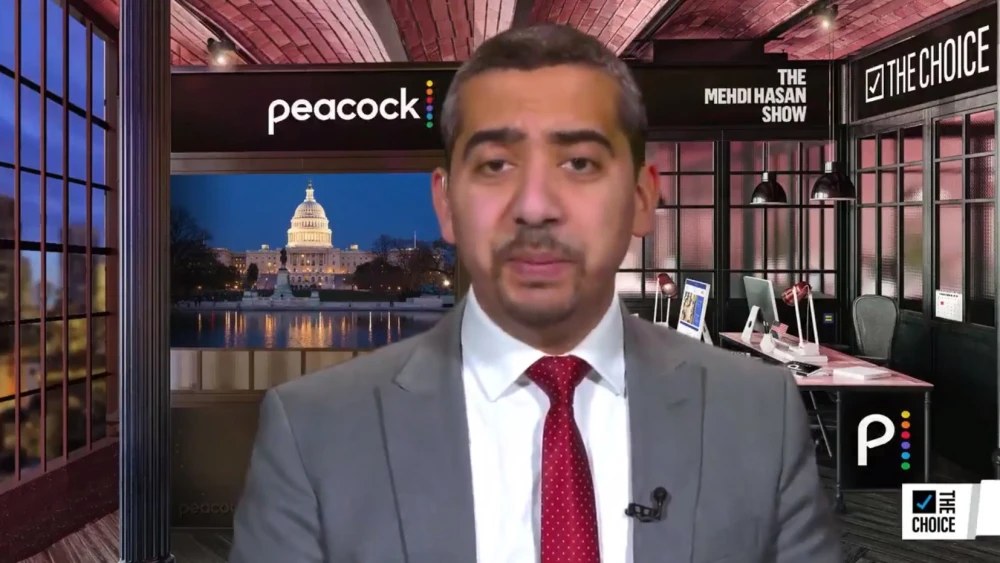
The cable-TV news network MSNBC canceled “The Medi Hasan Show” in November in the early months of Israel’s war with Hamas in the Gaza Strip. As of Sunday, the popular program host has decided to step away from the station.
He announced his plans in a video, saying: “Tonight is not just my final episode of the ‘Mehdi Hasan Show,’ it’s my last day with MSNBC. Yes, I’ve decided to leave.”
Some personal news: I've decided to leave MSBNC.
— Mehdi Hasan (@mehdirhasan) January 8, 2024
New year, new plans, new challenges:pic.twitter.com/A4ArRYk9d2
The now-former MSNBC contributor has long been a harsh critic of Israel. He has called non-Muslims “animals.”
“You cannot kill your way to victory over a foreign, occupied people,” Hasan wrote on Nov. 9. “My ‘Mehdi Hasan Show’ commentary on how Israel’s killing of innocents in Gaza only strengthens Hamas and its recruiting efforts—as America discovered the hard way in Iraq and Afghanistan.”
“Ever since 9/11, we have just taken it for granted that certain countries can send drones or bombs into foreign sovereign countries, across national borders, to kill people they’ve decided, without an arrest or trial, are guilty of crimes,” Hasan wrote on Jan. 2. “But most other countries can’t do this.”
StopAntisemitism wrote that “Qatari mouthpiece and anti-Israel propaganda machine Mehdi Hasan leaves MSNBC after the network dumps his show.”
Hasan previously worked as an anchor for Al Jazeera and as a podcaster at the left-wing website The Intercept.