Newsletter
Newsletter Support JNS

Report: Iran restricts inspector access to nuclear plant after attack

Diplomats say the dispute is in the process of being resolved but has caused tension in the indirect talks between Iran and the United States to revive the nuclear deal.

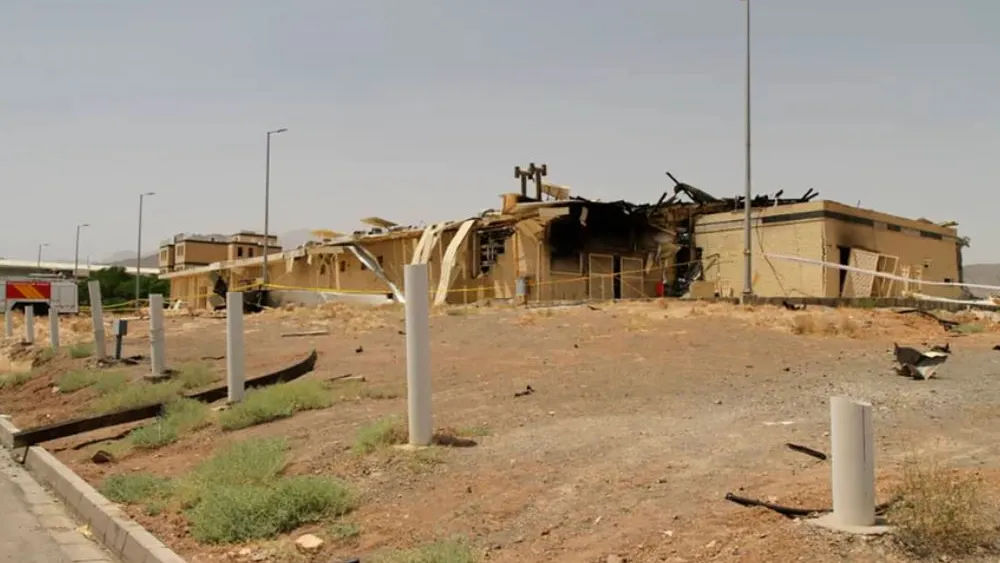
A building at the Natanz nuclear facility in Iran after being damaged in a fire on July 2, 2020. Credit: Atomic Energy Organization of Iran.

Iran is limiting access to inspectors from the International Atomic Energy Agency to its main uranium enrichment plant at Natanz because of what it claims was an attack on the site by Israel, diplomats told Reuters.

According to the exclusive report published on Thursday, one official said the standoff has gone on for weeks. Diplomats say that the dispute is in the process of being resolved, though it has caused tension in the indirect talks between Iran and the United States to revive the 2015 nuclear deal.

“They are provoking us,” said one Western diplomat, predicting access to inspectors would be renewed next week.

The April 11 explosion that tore through the Iranian nuclear site of Natanz, and which the Islamic Republic has blamed on Israeli sabotage, appeared to have taken around 5,000 centrifuges of the IR-1 type offline, a report released by the Jewish Institute for the National Security of America (JINSA) has said.

The report assessed that the blast took Iran’s nuclear clock back by almost two months, “effectively counteracting Iran’s major expansions of its enrichment capacity since November 2020.”

“Any award to Francesca Albanese only shames those who bestow it,” tweeted Amb. Mike Waltz.
A senior United Torah Judaism Party official told Channel 12 News, “The show is over.”
“Our connection with the city of Jerusalem is deep and meaningful,” said the chief of staff.
Olga Popyrina, who worked designing lighting fixtures and glassware for Ikea, collaborated on the project with Rabbi Alexander and Leah Namdar of Chabad-Lubavitch Sweden.
According to the indictment, Nazmi Abu Bakr murdered the Israeli soldier with a brick thrown from a rooftop in the northern Samaria village of Ya’bad.
The soldier posing with the statue was sentenced to 21 days in military prison, and the soldier who photographed it was sentenced to 14 days, according to the Israel Defense Forces.