Newsletter
Newsletter Support JNS

Richard Fishman, co-CEO of AIPAC, dies at age 62

The Israeli advocacy group said the leader’s “clear-eyed vision and way with words motivated a generation of committed pro-Israel activists.”

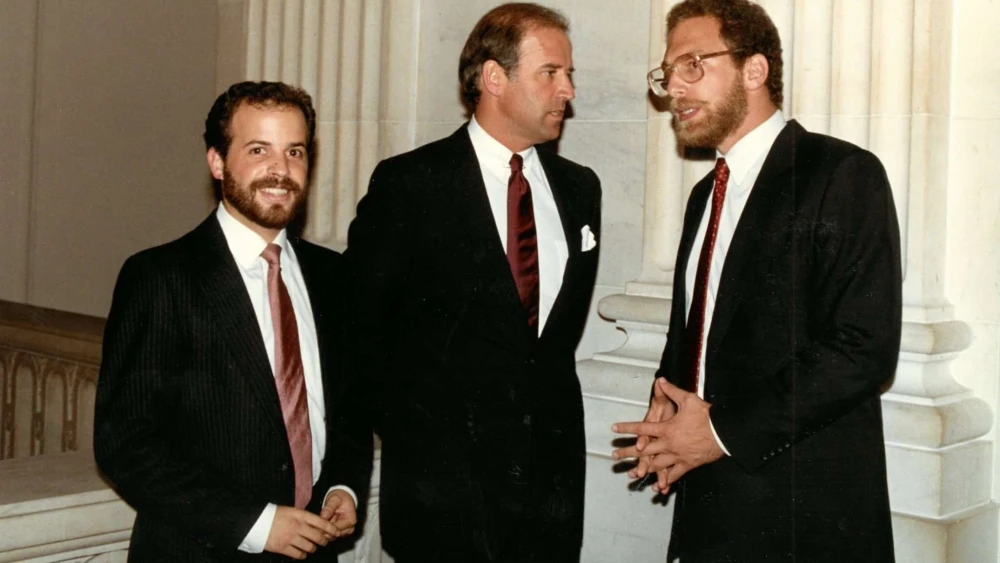
From left: Co-CEO of AIPAC Richard Fishman, Sen. Joe Biden (D-Del.) and AIPAC director of strategic initiatives Jonathan S. Kessler in Washington, D.C. Source: AIPAC on Campus/Facebook.

The American Israel Public Affairs Committee (AIPAC) has announced the death of its co-CEO, Richard Fishman, on Oct. 24. He was 62 years old.

AIPAC praised the longtime leader, who has been associated with the organization since 1985, for his role in helping shape “the organization and nationwide movement that it is today.”

The group described Fishman’s belief in the ability of “each person to make a difference” and recalled how his “intellect, warmth and quick wit aided him in broadening and deepening support for AIPAC.”

Achievements overseen by Fishman include the construction of a new headquarters in Washington D.C.; and expansions in education, development and political incentives. He accomplished this, according to AIPAC, “all while staying true to the organization’s commitment to bipartisanship.”

Fishman is survived by his wife, Dana, and their two children, Shelbie and Ethan.

A federal jury convicted Mahdi Mohammad Sadeghi for illegally exporting sensitive U.S. information to the Islamic Republic.
Steven Thrasher alleges that he was denied tenure as a result of his participation in anti-Israel activities on campus post-Oct. 7.
“This is not a case of a few bad apples,” Yoni Tobin, senior policy analyst at JINSA, told JNS. “It’s a case of a rotten tree.”
The tankers created a bottleneck at the airport due to a shortage of room to park planes.
“The extension of daylight saving time will create an extreme hardship on observant Jews,” Rabbi A.D. Motzen, of Agudah, told JNS. “It would be extraordinarily difficult, if not impossible, to arrive on time for a job and will affect the start time of our schools.”
The justices intervened a day after the Knesset passed the legislation by a vote of 58-54.