Newsletter
Newsletter Support JNS

US policy of labeling West Bank products as ‘Made in Israel’ takes effect

A three-month transition period is in place for manufacturers to comply with the new guidelines.

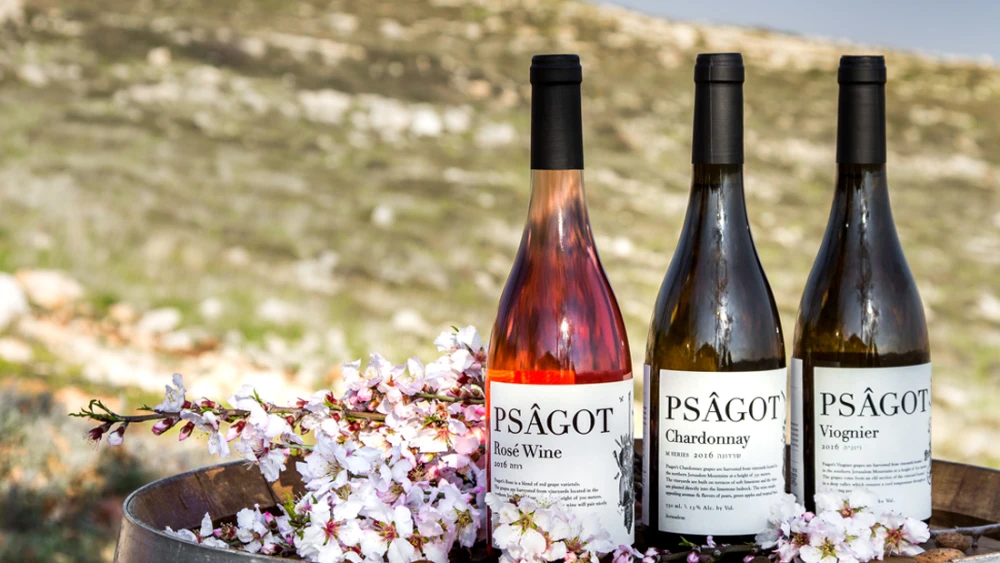
A display from Israel's Psagot Winery, which was at the center of a European court ruling on labeling of Israeli products from beyond the pre-1967 Green Line. Credit: Psagot Winery.
A display from Israel’s Psagot Winery, which was at the center of a European court ruling on labeling of Israeli products from beyond the pre-1967 Green Line. Credit: Psagot Winery.

The U.S. policy of requiring products made in Israeli settlements in the West Bank as “Made in Israel” took effect last week, according to U.S. Customs and Border Protection.

CBP published a notice in The Federal Register, the daily journal of the U.S. government, on Dec. 23.

The notice allows for a three-month transition period (until March 23) for manufacturers to comply with the new guidelines, which were issued by the U.S. State Department last month, requiring products manufactured in Israeli-controlled settlements in the West Bank to be labeled as “Israel,” “Product of Israel” or “Made in Israel” when exported to the United States.

Products made in Palestinian Authority-controlled areas of the West Bank will be marked as products of “West Bank,” and goods produced in Gaza will be marked as products of “Gaza.” This rejects the “West Bank/Gaza” label that had been allowed since 1997.

A federal jury convicted Mohammad Sharifullah for his role in over a dozen terrorist attacks, including the 2021 bombing that killed 13 U.S. service members and about 160 Afghan civilians.
CENTCOM Commander Adm. Brad Cooper stated that the blockade has redirected “69 million barrels of oil that the Iranian regime can’t sell,” denying Tehran more than $6 billion in revenue.
The FBI found that Claudio Valente, who killed two in a Brown classroom and an MIT professor two days later, “was driven by an accumulation of grievances that he collected throughout his life.”
The center, which was created with reparations money over Norway’s complicity, plans to host a scholar who decried Western concern for Israel’s security.
“There isn’t a moment that I don’t think of what could have been,” her mother told JNS.
“I can’t even say it with a straight face,” Rep. Brian Mast said of the global body choosing Iran for non-proliferation, women’s rights and terrorism prevention roles.