The Tissue Engineering Laboratory (3D Point of Care) at the Galilee Medical Center Research Institute, affiliated with the Azrieli Faculty of Medicine Bar Ilan University, recently acquired one of Israel’s most advanced three-dimensional (3D) bioprinters, the BioX 2.0 by CellInk. 3D bioprinting utilizes additive manufacturing techniques with biological substances and live cells, to accurately replicate human-scaled tissues. Obtaining this technologically advanced printer is yet another leap forward for the Oral and Maxillofacial Surgery and Oral Medicine Institute, and the Galilee College of Dental Sciences, headed by Professor Samer Srouji.
The bioprinter is the newest addition to an array of technologically advanced additive manufacturing equipment at the Oral and Maxillofacial Institute 3D Point of Care facility, which is one of the most advanced of its kind in the country and deals with patient-specific cases on a continual basis.
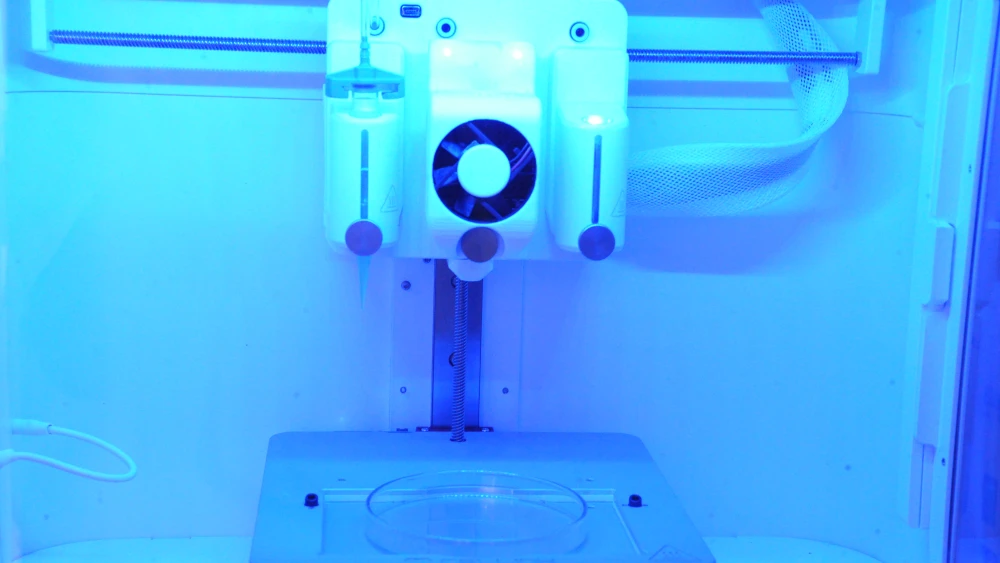
Dr. Idan Redenski, the newly appointed project director at the Tissue Engineering Laboratory, said that the unique BioX 2.0 bioprinter is capable of printing biological substances that are present in the human body. He added that in the future, 3D bioprinters could produce and replace entire human organs.
According to Prof. Srouji, the new bioprinter will initially be used for research purposes, and in the near future will be utilized for clinical cases. He also wished to thank Raya Strauss-Ben Dror, the president of the medical center’s Friends Association, and its chair, Michael Illouz, for their assistance in purchasing the 3D bioprinter.
Professor Chaim Putterman, associate dean at the Azrieli Faculty of Medicine and the director of the Research Institute, said that the bioprinter would contribute greatly to the Research Institute and to everything related to excellence in research at the national and global level. The director-general of Galilee Medical Center, Professor Masad Barhoum, welcomed the 3D bioprinter’s acquisition, emphasizing that the medical center is committed to be a center of innovation and technological progress to advance healthcare.