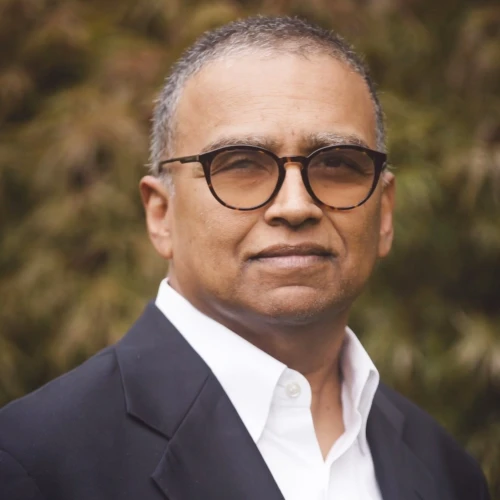
Lior Rokach, an Israeli computer scientist who is part of an elite United Nations panel on artificial intelligence, plans to focus on keeping that technology from going off the rails.
“I will stress the field of AI safety and how to ensure that AI operates according to its design, and how to develop a control system that will prevent unintended harm that AI can do to humans,” the Ben-Gurion University of the Negev professor told JNS.
Rokach is one of 40 experts whom António Guterres, the U.N. secretary-general, recommended and the U.N. General Assembly approved to serve on the Independent International Scientific Panel on Artificial Intelligence, which the United Nations says is the “first global scientific body” on the topic.
The panel is established through a U.N. General Assembly resolution.
Ensuring that artificial intelligence remains safe involves both apparently simple things, like making sure that a user, who uploads an electronic health record, receives the right medication recommendation, and harder tasks, like countering hacking, according to Rokach.
Artificial intelligence models, such as ChatGPT, Claude and Gemini, have “guardrails” to prevent them from answering problematic queries, but it’s very easy to work around them, Rokach told JNS.
“This tool in the hands of the wrong people will be a very big issue,” he said. Artificial intelligence can be used for terror activity and cyber crimes, he added.
The Holon native, who previously chaired Ben-Gurion’s software and information systems department, is co-founder of four artificial intelligence companies and holds more than 20 patents, including those related to artificial intelligence. He was selected from some 2,600 applicants representing 140 countries.
He told JNS that the Israeli Foreign Affairs Ministry brought the call for experts to his attention and “stressed why it is important to apply, even if the U.N. and Israel have had some friction lately.”
Technically, he and his co-panelists don’t represent their countries, he said. Guterres has said that panelists “will serve in their personal capacity, independent of any government, company or institution.”
“I’m an Israeli, but I’m not a candidate that came from the Israeli government,” Rokach told JNS. “Actually, the U.N. even emphasized this fact that I’m not representative of the Israeli state.”
But it’s critical that the Jewish state has a place in the forum, according to Rokach.
“Israel is blessed by exceptional human capital in the field, but we’re still a small country in the sense of competing for massive computer resources, which only large countries like the U.S. and China actually incorporate,” he said.
Two panelists are listed as being from the United States and a third, who teaches at Carnegie Mellon University in Pittsburgh, is listed as “Iranian.”
Guterres said that the panel is expected to publish its first report by July, an apparently ambitious timeline. Rokach told JNS that the panel will meet for the first time this week via Zoom, and its first in-person gathering is set for June.
The panel is intended to both provide a scholarly assessment of artificial intelligence and to monitor the field in real time and “raise red flags in a timely manner,” Rokach told JNS.
While the professor focuses on safety and security, other panelists will deal with topics like artificial intelligence’s impact on the labor market and education, ensuring that any AI development is sustainable and an array of other sectors.
“The nice thing is that the group of experts are coming from different fields. There are several from the computer sciences like myself, but also other experts from philosophy, law and physics,” Rokach told JNS. “We will get a very nice perspective on this field.”