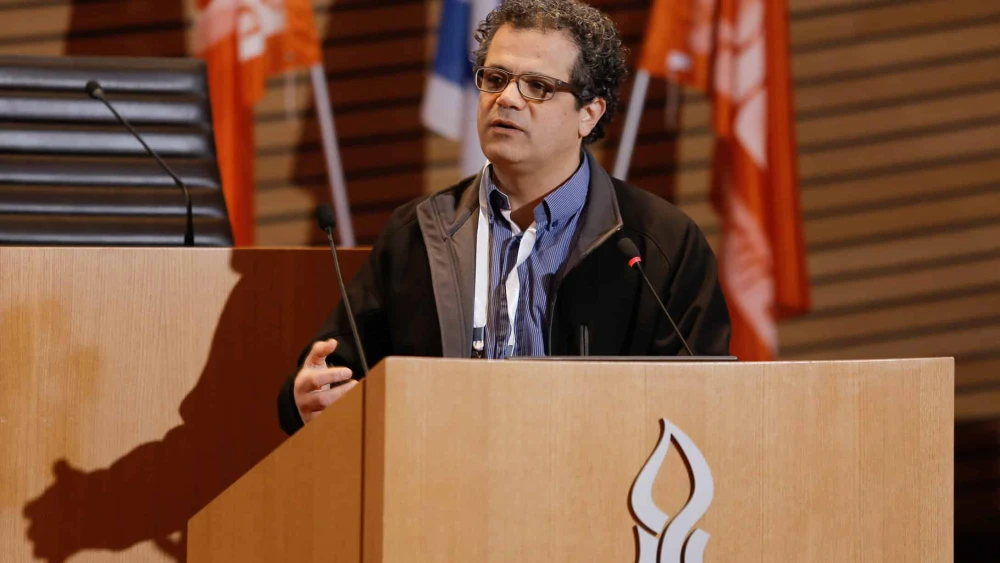
United Nations Secretary-General António Guterres recommended Israeli computer scientist Lior Rokach for a global panel on artificial intelligence.
The Independent International Scientific Panel, established through a U.N. General Assembly resolution, will be “the first global scientific body” on AI, “bringing together leading experts to assess how AI is transforming our lives,” according to a U.N. statement.
Rokach is among 40 experts recommended by Guterres for the panel, with final appointments to be made by the General Assembly. He was selected from a pool of 2,600 applicants representing 140 countries.
Geographic balance was a key selection criterion, with representatives from Egypt, the United Arab Emirates, Turkey and Iran also recommended for the panel.
Other recommended members include Maria Ressa, a Nobel Peace Prize laureate from the Philippines who studies AI-driven disinformation and online manipulation, and Yoshua Bengio of Canada, a Turing Award winner and pioneer of deep learning.
Rokach is a member of the new Stein Faculty of Computer and Information Science at Ben-Gurion University of the Negev and previously chaired the university’s Department of Software and Information Systems. A native of Holon, he is a co-founder of four AI companies.
He is known for his research on designing and analyzing machine learning and data mining algorithms and holds more than 20 patents related to AI and information technology.
“The panel will help the world separate fact from fakes and science from slop,” Guterres told reporters earlier this week. “It will provide an authoritative reference point at a moment when reliable, unbiased understanding of AI has never been more critical.”
Guterres said the panel is expected to publish its first report by July, and that members “will serve in their personal capacity, independent of any government, company or institution.”
Rokach’s recommendation to the U.N. panel “reflects his scientific leadership as one of the most cited researchers in his field,” stated Daniel Chamovitz, president of Ben-Gurion University.