Newsletter
Newsletter Support JNS

Report: Iran began establishing underground nuclear test site in early 2000s

The initiative, which had a start date of Dec. 12, 2000, had spotted five possible testing sites and was developing processes, including seismic ones, to measure an underground nuclear test’s explosive yield.

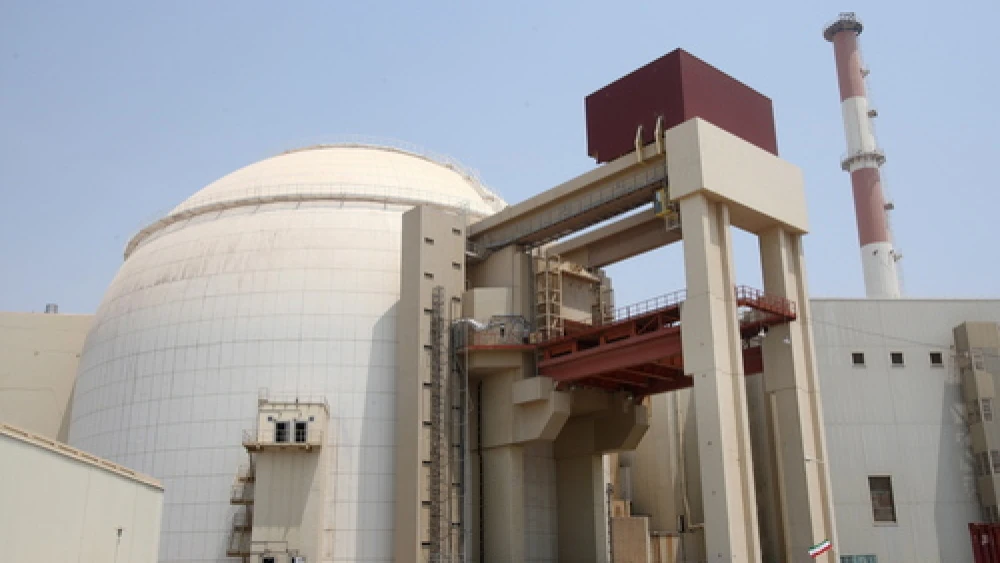
The nuclear power plant in Bushehr in southern Iran. Credit: EPA/Abedin Taherkenareh.

Iran began establishing an underground nuclear test site in the early 2000s and developed the necessary steps towards making an explosive device as part of a program called “Project Midan,” according to a new report.

The initiative, which had a start date of Dec. 12, 2000, had spotted five possible testing sites and was developing processes, including seismic ones, to measure an underground nuclear test’s explosive yield, according to the report from the Institute for Science and International Security.

Citing “geospatial information,” the institute detected a site “where underground non-nuclear explosives tests were conducted in 2003 as part of developing seismic methods of measuring the yield of an underground nuclear explosive.”

The report called on the International Atomic Energy Agency to respond to the archives as they apparently contradict Iran’s statements about its nuclear program, which violates the Nonproliferation Treaty (NPT), which Iran has been party to since 1970.

Last year, Israeli Prime Minister Benjamin Netanyahu presented evidence collected by Israeli intelligence that, based on some 55,000 pages of documents and 55,000 files on CDs, showed that “Iran is brazenly lying when it says it never had a nuclear-weapons program. The files prove that.”

It was proof of the existence of “Project Amad,” an initiative the regime had built to design, construct and test nuclear weapons that ended in 2003, although Netanyahu warned that Iran has continued this program covertly.

It’s “absurd and tragic that there are U.N. experts who are supposed to care about the rights of women, especially to combat sexual violence, and she’s one of the world’s major deniers of sexual violence against Israeli women,” Hillel Neuer told JNS.
“We’re going to keep pushing, and we’ll get there,” Rabbi Josh Joseph told JNS. “We’ll get to the $1 billion that we need.”
“We don’t need it. We need to teach real, honest history,” Sonja Shaw, school board president of Chino Valley Unified School District, told JNS.
The Israeli ambassador accused Vanessa Frazier, the U.N. special representative for children and armed conflict, of amplifying antisemitic content and unverified claims about Israel, and called for a review of her continued suitability for office.
A federal judge found that efforts to remove Hassan Suleiman Khalaf to Gaza or an Arab village in Judea and Samaria via Israel remain viable.
Speaking to local authority leaders, the Israeli premier said bold military decisions changed the regional balance of power and averted existential threats.
Benny Gantz, JNS editor-in-chief Jonathan S. Tobin, Gilad Erdan, Mosab Hassan Yousef, Nissim Black and leading voices in security, diplomacy, media, law and Jewish communal affairs headline the summit’s third day in Jerusalem.
