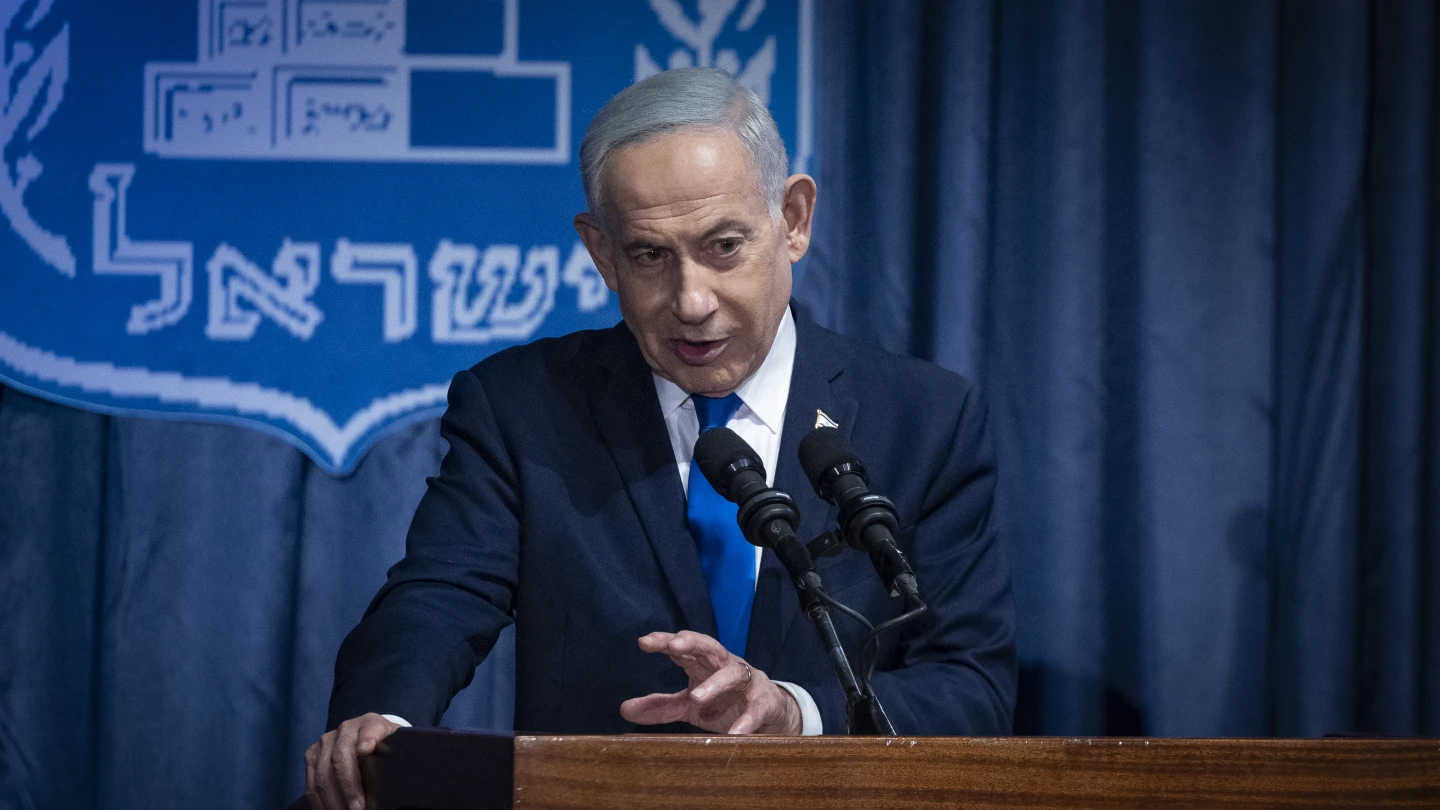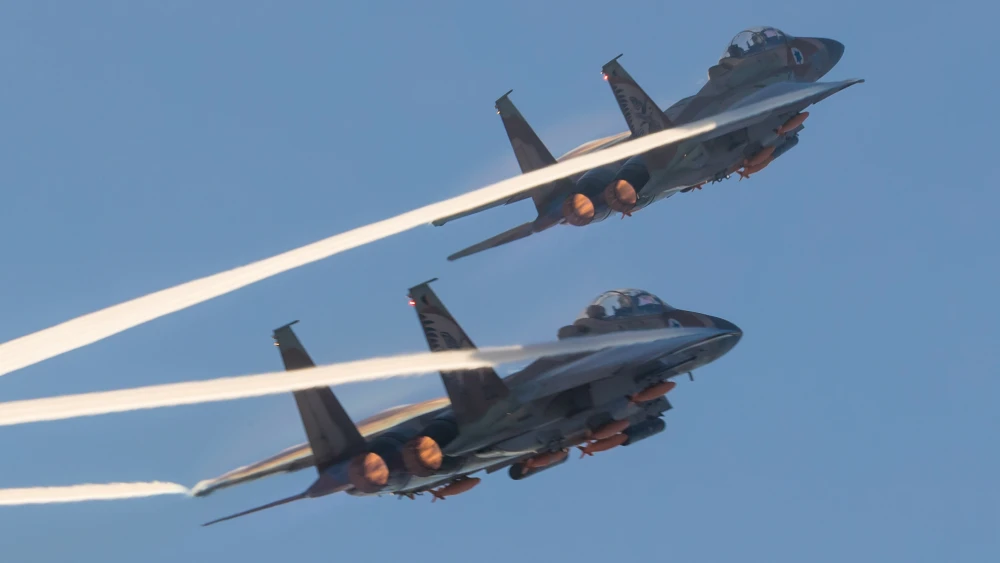

On Aug. 18, Israel bombed Syria’s Abu al-Duhur Airbase, claiming Turkey planned to station troops, radar and an air defense system there. Ankara denied it. The bombing marked a significant expansion of Israel’s military activities in Syria to an area near the Turkish border. Will it lead to a strategic collision between the United States and Israel?
U.S. President Donald Trump has embraced Syria’s new president, Ahmed al-Shaara, and repeatedly praised Turkey’s President Recep Tayyip Erdoğan, with whom he boasts he has a “special relationship.” Following the strike, during an Aug. 21 interview, United States Ambassador to Turkey and Special Envoy for Syria Tom Barrack criticized Israel’s actions as an “unnecessary escalation.”
Israel vigorously defended its decision to hit the airbase. Defense Minister Israel Katz said Barrack’s remarks were “full of inaccuracies” and contradicted Trump’s own position. Israel had shared intelligence with the U.S. prior to the attack, he said, refuting Barrack’s claim that it had not.
“The Israeli strike in northern Syria was indeed unique, because basically Israel’s interests lie in southern Syria,” Gallia Lindenstrauss, a specialist on Turkey and senior research fellow at the Institute for National Security Studies (INSS) in Tel Aviv, told JNS.
The strike brings to the fore a conflict of interests between Israel and the U.S., she explained, though calling it a “strategic collision” is “going a bit too far.”
The Trump administration supports al-Shaara. It’s looking for an “anchor of stability” in the region, which can promote trade and energy routes. In May 2025, the U.S. announced it was lifting sanctions on Syria, opening the way to foreign investment. “This is very much in line with Turkish interests,” she said.
Israel’s concerns are security driven. It doesn’t want to see Turkey establish military bases in Syria. It wants al-Shaara strong enough to control his territory and prevent extremist elements from forming in southern Syria, but not so strong that his forces threaten Israel.
The differing goals between the U.S. and Israel may give Jerusalem less room for maneuver. “It makes it more likely that at some point the U.S. will tell Israel: ‘Enough’. Not only will it be critical of Israel’s actions in northern Syria, but also less attentive to Israel’s requirements in southeastern Syria,” Lindenstrauss said.
Trump has already, according to reports, urged Israeli Prime Minister Benjamin Netanyahu to withdraw from Syria in a July phone call, she noted.
Hay Eytan Cohen Yanarocak, a researcher at the Jerusalem Institute for Strategy and Security and the Moshe Dayan Center for Middle Eastern and African Studies, agreed that the airstrike will not lead to a crisis between the U.S. and Israel, telling JNS, “This does not necessarily create a strategic collision. The United States is a major power with sufficient diplomatic capacity to develop its emerging relationship with Syria without jeopardizing its special relationship with Israel.”
The “complicating factor” is not the U.S. administration but U.S. ambassador to Turkey, “who appears to have assumed considerable latitude in publicly articulating positions that do not always align with those emanating from Washington,” Cohen Yanarocak said. “The time may have come [for the administration] to reconsider the unusually broad degree of autonomy afforded to Barrack.”
Barrack clearly went too far. He walked back comments in his Aug. 21 interview referring to the Golan Heights as territory occupied by Israel. The U.S., during Trump’s first term, recognized Israeli sovereignty over the Golan, captured from Syria in the Six-Day War.
Lindenstrauss concurred that Barrack is “the most pro-Turkish element in the Trump administration.”
A path toward direct confrontation?
Cohen Yanarocak and Lindenstrauss disagree on whether Israel’s actions were necessary.
Lindenstrauss said Israel’s strategy is unclear. “Let’s say that Turkey helps Syria establish air defenses in northern Syria. It’s not that big of a difference if this is also operated out of southern Turkey. It’s not a big distance, so I don’t see the great tactical benefit from having these systems [there],” she said.
While Israel has “legitimate” security concerns in southern Syria, Turkey has enjoyed a presence in northern Syria since 2016. Israel might risk its legitimate concerns in southern Syria; that is, test Trump’s patience, by attempting to check Turkey in the north, she said. “Israel might lose its ability to protect its vital interests in southern Syria.”
Cohen Yanarocak, however, said the strike was a “justified step” whose goal was to “avert a potentially more serious confrontation between Israel and Turkey in the future. The central objective, I would reiterate, must be to ensure that Israel and Turkey do not find themselves on an irreversible path toward direct confrontation.”
As to whether the Israeli airstrike will have the desired effect and prevent Ankara from setting up its own bases in Syria, “only time will tell,” he said. “In the short term, however, Turkey will most likely focus its efforts on arming and strengthening the Syrian military.” Not Israel, but the U.S., “will be the most consequential actor, as Washington’s position will largely shape the parameters within which Turkey can pursue this policy.”
After Israel’s airstrike, Barrack said the U.S. will establish a deconfliction mechanism between Israel, Turkey and Syria. Lindenstrauss noted that a hot line between Israel and Turkey already exists, so “maybe this means an expanded deconfliction mechanism. It’s true that definitely Turkish-Israel relations need more communication channels. Any expansion of them is probably going to be to the benefit of both countries.”
Cohen Yanarocak is not optimistic the situation will improve. While “the restoration of relations between Israel and Turkey remains my greatest hope,” Ankara seems intent on turning Syria into a new “North Cyprus,” he said. He doesn’t expect a “rapprochement or normalization.”
That certainly seems to be the case as Israel and Turkey engage in a war of words since the Aug. 18 attack. On Saturday, Jerusalem condemned Turkish President Recep Tayyip Erdoğan for antisemitic incitement after he branded Zionism a “genocidal ideology.”
Israel’s Foreign Ministry said that Erdoğan was reaching “new heights of wild incitement against the Jewish state in an attempt to divert attention from his actions against his own people and across the region.
“Like the worst antisemites in history, Erdoğan seeks to deflect attention from his own disgraceful actions by spreading false blood libels,” the ministry said.