Newsletter
Newsletter Support JNS

Biden names 10 to US Holocaust Memorial Council

The nominees include a Wilmington Jewish leader that the president calls “my rabbi,” the CEO of the American Jewish Committee and a former U.S. ambassador to Spain.

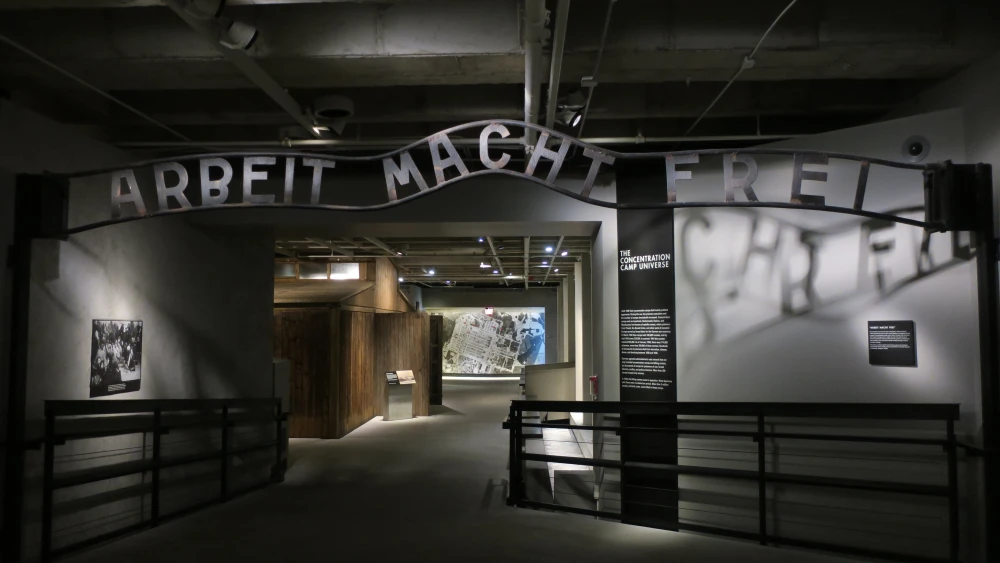
USHMM
A display in the United States Holocaust Memorial Museum in Washington, D.C. Photo by Menachem Wecker.

U.S. President Joe Biden announced his intent on May 17 to appoint 10 people to the United States Holocaust Memorial Council.

Among the nominees are American Jewish Committee CEO Ted Deutch; Rabbi Michael Beals (whom the president calls “my rabbi”) of Congregation Beth Shalom, a Conservative synagogue in Wilmington, Del.; and Alan D. Solomont, a former U.S. ambassador to Spain.

The council, which Congress established in 1980 to raise funding for the United States Holocaust Memorial Museum, has become the governing board of the museum since the latter opened in 1993.

The other nominees are business leaders Kevin Abel, Danielle Borrin Hertz, Jonathan Lavine and Harry Evans Sloan; attorneys Kimberly Marteau Emerson and Alexander Heckler; and historian Gary Phillip Zola.

“The museum does an incredible job of telling one of the most difficult and tragic of stories. But it’s one we all must hear. I look forward to working with other members of the council to ensure the museum has the resources it needs to further its vital mission,” Deutch stated in a news release.

“The increase in hateful acts across the city is absolutely abhorrent, and we have to do something about it,” stated Julie Menin, the council speaker.
“Many volunteers have never had the chance to meet a survivor in person, and hearing their stories firsthand makes the impact of their work tangible,” an organizer told JNS.
“If the government wants credit for resolving discrimination complaints, it has to also do the hard part, which is enforcement,” Mark Goldfeder, of the National Jewish Advocacy Center, told JNS.
“The reason they want to make a deal is they have been just beat to s***,” Trump said.
“The problem is money and politics,” the New Jersey senator told JNS. “And I think I want to lead by example.”
The goal is for the principle of “one authority, one law, and one weapon” to apply to all armed groups in the Strip.