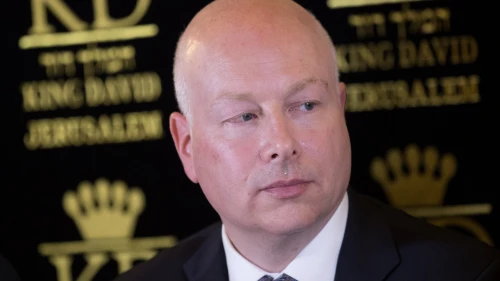
The gift from the Jan Koum Family Foundation is expected to triple the size of the Jerusalem hospital.
 Israeli forces also destroyed eight Hamas tunnels in Rafah and killed terrorists operating from a command center in northern Gaza.
 Had Trump allowed Israel one final operation in Iran, the IDF would have chosen to destroy the uranium. The Mossad would have chosen an all-out effort to get Iranians to overthrow the mullahs.
 The terrorist group supplies itself through smuggling from the air, sea and land, rebuilding its strength and rearming. The humanitarian aid it has seized is giving it cash and oxygen.
 Video from the rally at Columbia University shows violent activists pushing barriers and confronting law enforcement personnel.
 “Such hate has no place in our schools or our state, especially as we begin Jewish American Heritage Month,” said Maryland Gov. Wes Moore.
 “While our ability to provide additional information at this time is limited, we will continue to keep the community informed,” the private D.C. university stated.
 “We welcomed this traitor into our nation with open arms,” the U.S. attorney for the Eastern District of Michigan said. “And he repaid us by building a bomb and helping our great enemy.”
 Prof. Bassam Hussein referred to the Hamas massacres as “the most beautiful thing that has happened in our century.”
 “This is not a prank. It was an act of intimidation meant to spread fear,” Vince Gasparro, a Liberal parliamentarian, told JNS.
 The network relies on AI-generated avatars and fabricated IDs designed to mimic credible Jewish voices, Combat Antisemitism Movement found.
 “I was eventually told by the police that there’s not much that they could do and the case would ultimately get thrown out,” Nir Golan told a public inquiry of the 2023 attack.
-
Prof. Bassam Hussein referred to the Hamas massacres as “the most beautiful thing that has happened in our century.”
 Police told JNS that an officer was injured as a result of protesters attempting to remove barriers and that no arrests were made.
 “At least one student was injured by this incident, which is now under an investigation that will examine among other things whether individuals were targeted based on their Jewish faith,” the private D.C. school said.
 A deadline in the law has yet to pass, but Rabbi Josh Joseph, of the Orthodox Union, told JNS that “we expect the mayor and the NYPD to work in close coordination with the community to ensure that the intent of this legislation is fully upheld.”
  The president’s call for a national Shabbat “celebrates our religion and it refocuses on our job to become a light unto the nations,” Rabbi Steven Burg of Aish told JNS.
 Israeli attorney on trek with friends falls short of world record.
 The Israeli consul general in New York told JNS that this year was the first time the Jewish state held an Independence Day celebration in New York City under a mayor who doesn’t recognize it.
 A passionate supporter of Israel, Joni Lamb received the Israel Allies Award in 2024.
 Author Ian Pear explores faith, suffering and morality in a long-developed work he says has a “greater-than-zero chance” of someday becoming a movie.
 Many residents have returned home to rebuild their lives since the rockets attacks began in 2023.
 Golani Brigade social worker Shai Bachar lost 46 friends on Oct. 7, 2023.
 An exhibition in Tel Aviv supports thousands of IDF troops from abroad serving in Israel.
 The red-green alliance of Marxists and Islamists is fueling hatred for Jews and Israel among young people, while giving Tucker Carlson and Megyn Kelly a new audience.
 As long as there is a gap between restating the entirely legitimate goal of dismantling Hamas and achieving it, there will be a list of questions without ready answers.
 Judaism was never meant to be carried by one person. It was always meant to be lived together.
 Reports suggest that the closure of the Strait of Hormuz is costing Iran hundreds of millions of dollars per day. But economic pain alone is unlikely to force surrender.
 “Think Twice” with Jonathan Tobin with guest Jonah Platt, Ep. 221


-
The gift from the Jan Koum Family Foundation is expected to triple the size of the Jerusalem hospital.
Israeli forces also destroyed eight Hamas tunnels in Rafah and killed terrorists operating from a command center in northern Gaza.
Had Trump allowed Israel one final operation in Iran, the IDF would have chosen to destroy the uranium. The Mossad would have chosen an all-out effort to get Iranians to overthrow the mullahs.
The terrorist group supplies itself through smuggling from the air, sea and land, rebuilding its strength and rearming. The humanitarian aid it has seized is giving it cash and oxygen.
-
Video from the rally at Columbia University shows violent activists pushing barriers and confronting law enforcement personnel.
“Such hate has no place in our schools or our state, especially as we begin Jewish American Heritage Month,” said Maryland Gov. Wes Moore.
“While our ability to provide additional information at this time is limited, we will continue to keep the community informed,” the private D.C. university stated.
“We welcomed this traitor into our nation with open arms,” the U.S. attorney for the Eastern District of Michigan said. “And he repaid us by building a bomb and helping our great enemy.”
-
Prof. Bassam Hussein referred to the Hamas massacres as “the most beautiful thing that has happened in our century.”
“This is not a prank. It was an act of intimidation meant to spread fear,” Vince Gasparro, a Liberal parliamentarian, told JNS.
The network relies on AI-generated avatars and fabricated IDs designed to mimic credible Jewish voices, Combat Antisemitism Movement found.
“I was eventually told by the police that there’s not much that they could do and the case would ultimately get thrown out,” Nir Golan told a public inquiry of the 2023 attack.
-
Prof. Bassam Hussein referred to the Hamas massacres as “the most beautiful thing that has happened in our century.”
Police told JNS that an officer was injured as a result of protesters attempting to remove barriers and that no arrests were made.
“At least one student was injured by this incident, which is now under an investigation that will examine among other things whether individuals were targeted based on their Jewish faith,” the private D.C. school said.
A deadline in the law has yet to pass, but Rabbi Josh Joseph, of the Orthodox Union, told JNS that “we expect the mayor and the NYPD to work in close coordination with the community to ensure that the intent of this legislation is fully upheld.”
-
The president’s call for a national Shabbat “celebrates our religion and it refocuses on our job to become a light unto the nations,” Rabbi Steven Burg of Aish told JNS.
Israeli attorney on trek with friends falls short of world record.
The Israeli consul general in New York told JNS that this year was the first time the Jewish state held an Independence Day celebration in New York City under a mayor who doesn’t recognize it.
A passionate supporter of Israel, Joni Lamb received the Israel Allies Award in 2024.
-
Author Ian Pear explores faith, suffering and morality in a long-developed work he says has a “greater-than-zero chance” of someday becoming a movie.
Many residents have returned home to rebuild their lives since the rockets attacks began in 2023.
Golani Brigade social worker Shai Bachar lost 46 friends on Oct. 7, 2023.
An exhibition in Tel Aviv supports thousands of IDF troops from abroad serving in Israel.
-
The red-green alliance of Marxists and Islamists is fueling hatred for Jews and Israel among young people, while giving Tucker Carlson and Megyn Kelly a new audience.
As long as there is a gap between restating the entirely legitimate goal of dismantling Hamas and achieving it, there will be a list of questions without ready answers.
Judaism was never meant to be carried by one person. It was always meant to be lived together.
Reports suggest that the closure of the Strait of Hormuz is costing Iran hundreds of millions of dollars per day. But economic pain alone is unlikely to force surrender.
-
“Think Twice” with Jonathan Tobin with guest Jonah Platt, Ep. 221