The U.N. General Assembly voted this month to endorse a scheme that French Ambassador Jérôme Bonnafont said “lays out a single roadmap to deliver the two-state solution.”
Why? Because many world leaders apparently want to punish Israeli voters for keeping Benjamin Netanyahu, the leader they preferred, and his coalition, in office.
But does the U.N. vote really matter at all? Keep in mind that this resolution will have no practical impact since the world body has no way to enforce it. The real purpose of the resolution is to intimidate Israel and its supporters to make more concessions, and not to eradicate Hamas, as has been an official war aim of the Israeli government ever since the terrorist attacks in southern Israel on Oct. 7, 2023.
Should we take this vote seriously? And should Netanyahu, who is himself a former Israeli ambassador to the United Nations?
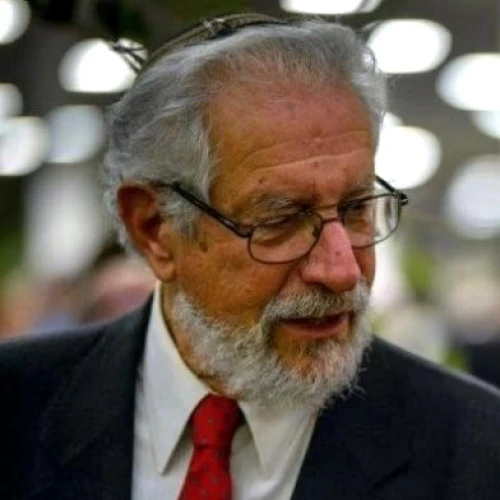
In a dismissive remark in March 1955, David Ben-Gurion, then Israel’s defense minister, employed the Hebrew acronym “Um” for the United Nations and added a pejorative, “Um-Shmum.” He used the Yiddish idiom to convey casual dismissal during a cabinet debate regarding his plan to take the Gaza Strip from Egypt in response to increasing cross-border terrorist attacks on Israel. He understood that the Jewish state had to act to safeguard its national security, regardless of whether that made the Jewish state unpopular at the United Nations.
That’s why in his time, Ben-Gurion took such steps as the construction of Israel’s nuclear reactor in Dimona; the capture and trial of top Nazi war criminal Adolf Eichmann (condemned by the U.N. Security Council in its Resolution 138 on June 1960, which targeted Israel for a violation of Argentina’s sovereignty by Israel for seizing Eichmann who Argentina had been harboring); and the imposition of strict security measures on Arabs within Israel’s borders.
Ben-Gurion also recognized the inherent moral weakness of the United Nations. Every country—no matter how oppressive or bellicose—has the same voting power in the U.N. General Assembly as an enlightened, peaceful and democratic state. One country, one vote.
Genocidal Sudan is equal to progressive Mexico.
Misogynistic Saudi Arabia is equal to egalitarian Belgium.
A country where black Africans are enslaved, such as Mauritania, is equal to a country that has rescued black Africans (from Ethiopia and Sudan), such as Israel.
A country ruled by a king, such as Jordan, is equal to a country run by a democratically elected president or prime minister.
The U.N. Security Council is equally problematic. Russia, which has spent years in a war against Ukraine to grab some of its territory, and China, which arms terrorist regimes and genocide-perpetrators around the world, enjoy the same veto power as the other permanent members of the Security Council: France, the United Kingdom and the United States. Furthermore, every country, no matter how oppressive or undemocratic, gets its turn among the Security Council’s 10 non-permanent seats.
Many nations cast their votes not on the basis of what is right or wrong or what is just or unjust, but rather, according to their narrow interests, their fear of increases in Arab oil prices or their Marxist principles.
This U.N. resolution on Palestinian Arab statehood is simply a moral farce. Those who voted in favor did not consider whether such a state would be a democracy or a dictatorship; whether or not “Palestine” would endanger Israel; or what the Palestinian Authority’s track record reveals about how a Palestinian state would behave. And that’s if the P.A. can keep Hamas from expelling it from power.
Such real-world considerations have no place in the absurd, upside-down fantasy world in which the United Nations dwells. That’s why whenever some resolution at the world body targets Israel, one thing Israelis and their friends should do is recall the simple wisdom of Ben-Gurion: “Um-Shmum!”
Danny Danon, Israeli ambassador to the United Nations, has said that “this one-sided declaration will not be remembered as a step toward peace, only as another hollow gesture that weakens this assembly’s credibility.” He is right.