Newsletter
Newsletter Support JNS

Enraged over Arab ties with Israel, Palestinians quit chairing Arab League sessions

“There is no honor in seeing Arabs rush towards normalization,” says Palestinian Authority Foreign Minister Riyad al-Maliki.

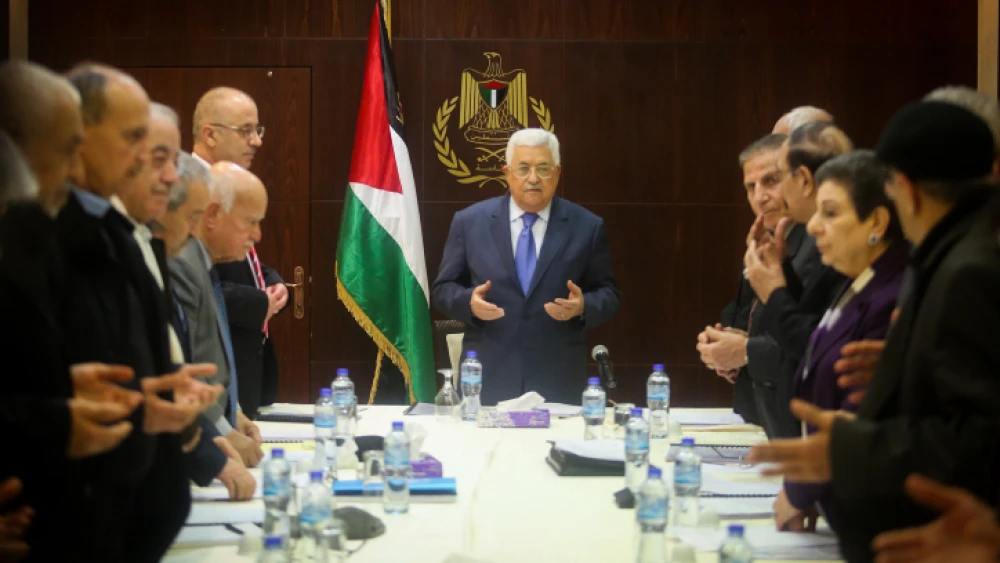
Palestinian Authority leader Mahmoud Abbas at a meeting of the executive committee of the Palestine Liberation Organization in the city of Ramallah in the West Bank, on Feb. 13, 2017. Photo by Flash90.

Angered at the Arab world’s growing ties with Israel, the Palestinian leadership has quit their chairmanship of Arab League meetings, the Palestinian Authority’s foreign minister announced on Tuesday.

“Palestine has decided to concede its right to chair the League’s council [of foreign ministers] at its current session. There is no honor in seeing Arabs rush towards normalization during its presidency,” said P.A. Foreign Minister Riyad al-Maliki in Ramallah, reported Reuters.

Palestinians are enraged that the United Arab Emirates and Bahrain signed normalization agreements with Israel in Washington, D.C. without being condemned by the Arab League.

Meanwhile, officials from the Fatah Party led by P.A. head Mahmoud Abbas and the terrorist group Hamas were scheduled to hold talks on improving their cooperation in Turkey on Tuesday, the report said.

“The legal system has sent a clear message. Illegal activity that compromises public safety is allowed in the Bay Area,” Tali Klima of Bay Area Jewish Coalition told JNS.
The sides discussed a U.S.-supervised communication mechanism involving Ankara that would prevent escalation in Syrian territory.
“We are, as always, troubled when antisemitic tropes are invoked in purported service of a business dispute,” the film production company said as the feud went viral.
CIJA blasted the opposition party for importing a foreign fight during local crises.