


In the midst of a war, with uncertainty in the air, a group of resilient souls sought solace in a physical and spiritual journey. The members of the Shishi Shabbat Yisraeli (“Israeli Friday/Shabbat”) association, determined to bridge the gaps for immigrants from the former Soviet Union, found themselves unexpectedly charting a course towards iconic Masada.
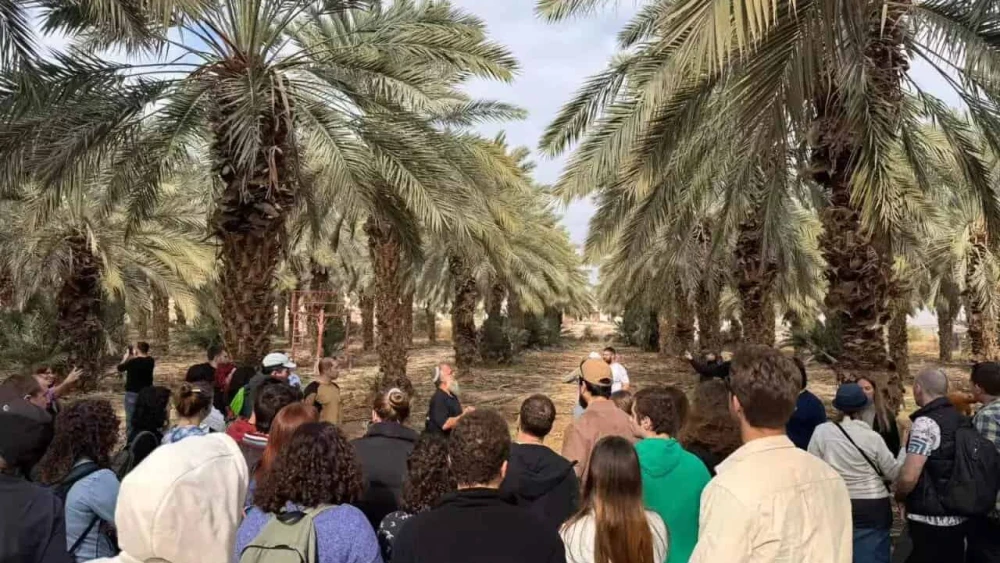
The original plan for the association’s 99th Friday/Shabbat retreat was a rendezvous at the Tel Hai hostel in the Upper Galilee, but fate intervened with Hezbollah missiles from Lebanon reshuffling the cards. Undeterred, the young men and women, many of them new immigrants navigating the intricacies of Israeli life, embraced the challenge.
Their mission: to forge a bond with their adopted homeland amid the ancient stones of Masada.
The arduous climb mirrored the resilience of Jewish rebels who, centuries ago, defied the Romans atop the monumental fortress. These modern pilgrims, only months into their Israeli journey, found a profound sense of belonging during this trek, a realization that they were woven into the fabric of a nation in turmoil. The lyrics of the familiar song: “The whole world is a very narrow bridge, and the main thing is not to be afraid at all” reverberated within them, providing resilience in the face of adversity.

The brainchild of founding director Linda Pardes Friedburg, the Shishi Shabbat Yisraeli National Jewish Leadership Initiative emerged from a realization that post-Soviet immigrants need more than just a plane ticket to Israel. They need connection, community and a sense of purpose once they get there.
Friedburg, a New Jersey native and tireless advocate for Russian-speaking Jews, crafted a solution in the form of immersive seminars designed to instill an emotional and national connection to Israel.
The initiative, conceived in 1992, has evolved into a multifaceted tapestry of activities, embracing more than 18,000 Russian-speaking participants. During the ongoing Gaza war, the association’s members volunteered to help with essential services while maintaining its flagship seminar, a crucible of formation and connection.
On their recent trip, they gathered in a circle, and, surrounded by the echoes of ancient history, they sang songs that resonated with their quest to find their identities and roots. “The people of Israel live” became an anthem of resilience, uniting the diverse participants under a common heritage.

As the sun dipped below the horizon, Saturday morning unveiled an extraordinary spectacle—two participants donning Roman soldiers’ uniforms, juxtaposed against one wearing the attire of a Jewish rebel.
The symbolism was not lost on new immigrant Andrey Vinogradov, who marveled at the significance of the experience. For him, the songs encapsulated the essence of the event, weaving a tapestry of friendships, conversations, and a profound connection to Israel.
After lunch, the group set out for Masada, facing the choice between cable car convenience and the challenging serpent path. The majority, undeterred by difficulty, opted for the latter. Among them were 4-year-old Roy and 8-year-old Yuval.
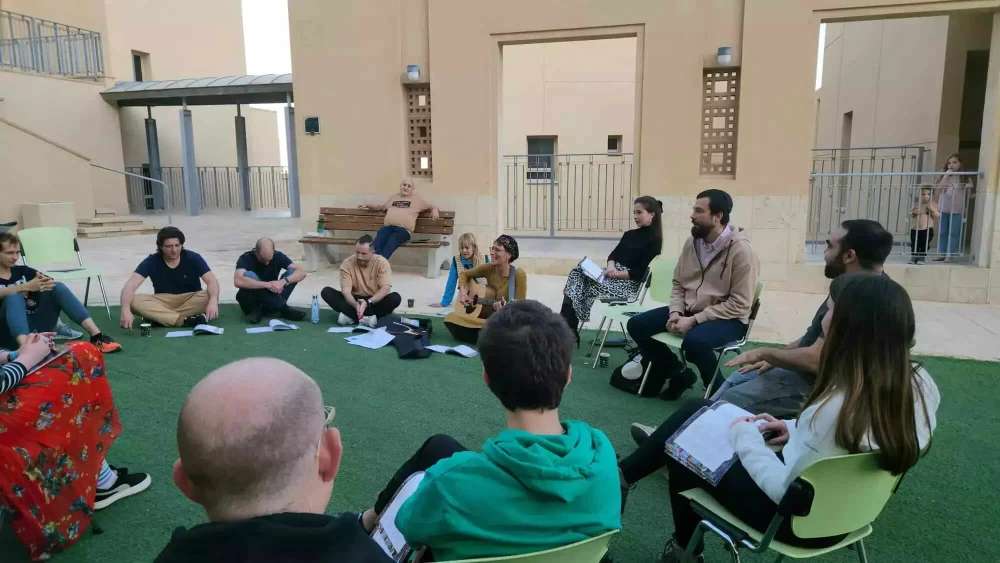
In Friedburg’s eyes, the Shishi Shabbat Israeli association strives to offer more than just a fleeting experience; it’s a familial embrace inviting everyone, irrespective of background or history, to partake in the richness of belonging.
Originally published by Israel Hayom.


