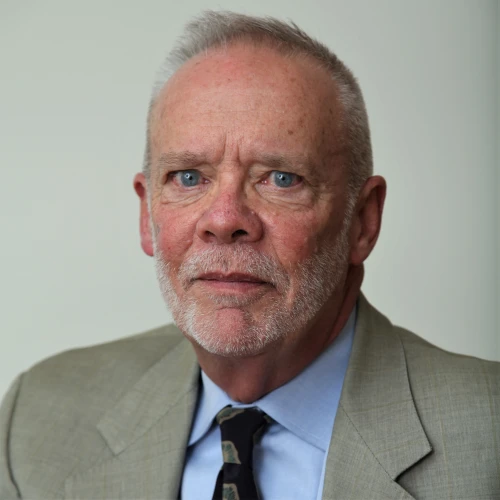
Religious Zionism Party lawmaker Michal Woldiger strongly agrees with her party head, Finance Minister Bezalel Smotrich, that an entirely different body should replace the Palestinian Authority.
In an interview at the Knesset, Woldiger told JNS that in the post-Oct. 7, 2023, reality, the P.A. continues to fund terrorists and provide support to them and their families. “Whoever harms a Jew is highly regarded in their society. In their textbooks, terrorists who kill, blow up, or rape Jews are portrayed as heroes. It’s terrible,” she said.
Last year, Woldiger supported renewing a temporary order barring Palestinians from Judea, Samaria and Gaza from automatically receiving Israeli citizenship through marriage to Israelis, amid growing calls for permanent legislation.
The Citizenship and Entry into Israel Law (Temporary Order), enacted in 2003 after the Second Intifada’s suicide bombing campaign to strengthen Israel’s security by limiting Arab immigration, has been renewed annually since its passage. The order includes a wide range of exceptions, including for families with children, humanitarian cases, medical needs and temporary residency permits obtainable through marriage.
“It’s hurting the country; it violates all international laws. There are borders, and we need to protect them. It’s legitimate for a sovereign country to decide who can enter and who can’t. Whoever is not ready to recognize the country shouldn’t be able to enter—much less settle here,” she said.
Woldiger, who is chair of the Knesset’s Labor and Welfare Committee, described it as one of the legislature’s most important bodies. The committee’s work includes rehabilitation efforts for both civilians and soldiers affected by over two years of war.
“This does not only pertain to mental health,” she said, noting that she has worked to improve the calculation of financial benefits for Israel Defense Forces reservists, including the salary base used during their service.
“The reservists are the ones who hold this country together at the end of the day. Their families are suffering because the day-to-day responsibilities fall on the wives and children, and they need welfare and emotional support. This falls under my committee,” she said.
“It’s not only about the soldiers, but the focus is on them—many experienced tremendous trauma on Oct. 7. Some suffer from post-traumatic stress disorder and combat trauma, and the country didn’t recognize it because of a lack of awareness,” she continued.
“It was forbidden to talk about pain, especially pain that cannot be seen, because the idea was that if you can’t see it, it doesn’t exist. Nowadays, we are succeeding in creating an important change,” she said.
“The family of a soldier who is physically hurt, and must be hospitalized, receives financial aid because of his loss of working capacity,” she explained, but “the family of a soldier in a psychiatric hospital did not receive anything. We succeeded in changing that, along with many other issues related to mental health.”
The Knesset marked International Mental Health Day on Nov. 25. The commemoration resulted from legislation she initiated, said Woldiger. “These are topics that are critical to the resilience of the Israeli people,” she told JNS.
A self-described “woman of the people,” Woldiger said that after her election to the Knesset, she launched a website for public inquiries. Often, recurring concerns surfaced across different communities, prompting her to advance legislation.
Among these, she highlighted a law prohibiting discrimination in professions requiring licensing. “To be a dentist, one could even excel at university, but then have to pass through a Health Ministry committee to obtain a license. Anyone who had ever suffered a mental or emotional disorder would be deemed ineligible—not based on ability, but because of a regulation,” she said.
“We succeeded, together with Yonatan Mishraki [Shas Party], who chaired the Knesset Health Committee, in changing this, and we are trying to do the same for university professors,” she added.
Woldiger also worked to amend the Planning and Building Law to make constructing mental health housing in communities more common as an alternative to psychiatric hospitalization, noting that unnecessary hospitalization can cause indirect harm.
On national-security legislation, Woldiger said she and other lawmakers had pushed to ensure that educators were teaching material aligned with Israel’s values and narrative. “We legislated to allow the removal from the educational system of teachers who are terror supporters. Everything starts and ends with education, and if students are being injected with hatred of the country and of Jews, we have a serious problem,” she said. She noted that she also supported legislation barring university lecturers from expressing support for terrorism.
On Gaza, Woldiger said, Israel needs to act with greater determination while acknowledging the sensitivities surrounding the return of the remaining deceased Israeli hostage. “There is no doubt that Hamas is playing us, and we knew it from the start. My party voted overwhelmingly against the [ceasefire] deal,” she said.
Woldiger congratulated President Donald Trump for securing the release of 20 living hostages. “It’s a miracle, but at the end of the day, we are releasing terrorists [in exchange]. We are teaching our enemies that kidnapping Israelis is worthwhile, and with that, I struggle,” she said.
While Israel “is working hard in Gaza,” she said she would have preferred a more decisive response to breaches of the ceasefire. “I hope there won’t be more breaches, but if there are, I hope next time we decide to return to fighting with full force—of course, while coordinating with our American allies,” she said.
However, she noted, “We need to remember that we are not the 51st state of the United States. We are a sovereign country, and we need to fight for ourselves. We should never return to the pre-Oct. 7 conception. We will fight for ourselves with the support of our good friends.”
With regard to the rising cost of living in the country, Woldiger called Smotrich’s milk reform—aimed at opening the market to competition—an important and courageous step.
“It needs to be done in other sectors in the State of Israel. We don’t live in Bolshevik times, and we understand we can’t live based on quotas, destroying someone’s supplies when they go over—even though we run out of milk,” she said.
The reform is expected to face pushback from major corporations, including Israel’s leading food company, Tnuva. “This has become the struggle of tycoons such as Tnuva, which is majority-owned by the Chinese, who themselves support Iran. This doesn’t make any sense,” she said.
“This reform will allow dairy farmers to succeed, because when there is no competition and everything is based on quotas, no one thrives,” she added.
Woldiger said the reform will strengthen food security and reduce the cost of living. “It will push dairy farmers out of their comfort zone and into a better place. This is for us—for Israeli families who will once again be able to buy cheese at reasonable prices,” she said.
“We have a brave finance minister. The shekel is strong, the economy is strong, thanks to the minister and to the Israeli people, who know how to withstand hard times and flourish,” she added.