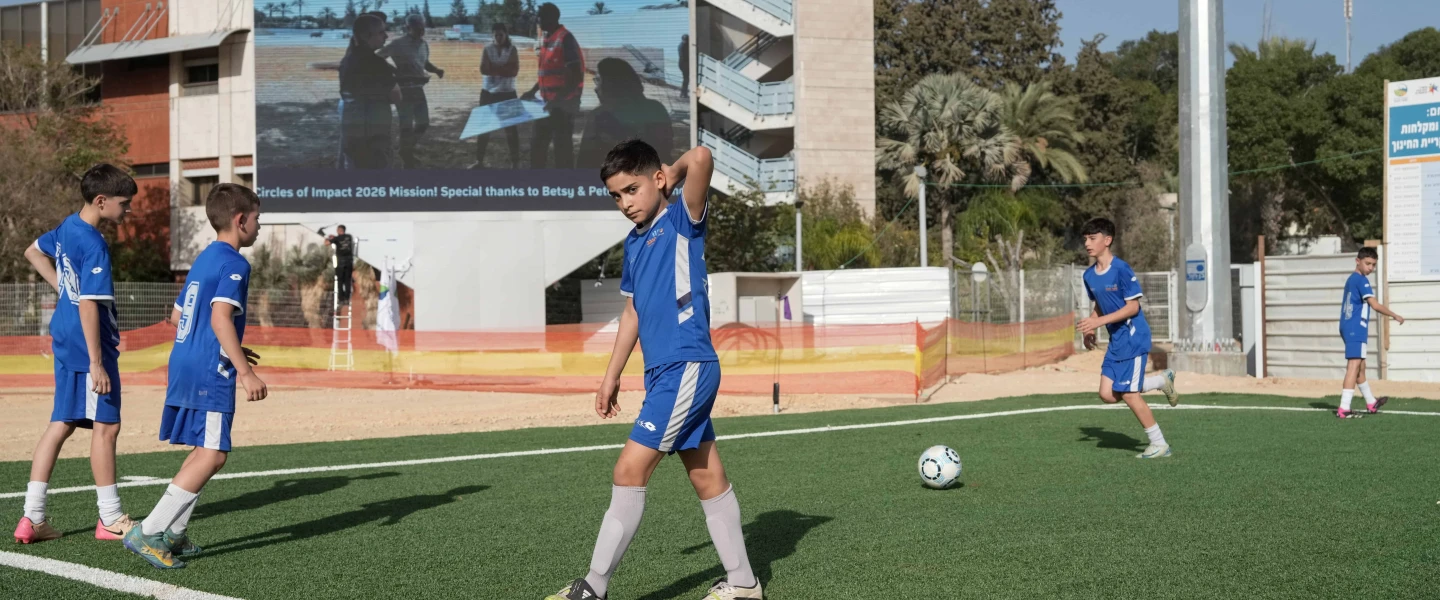
On a warm Feb. 15 afternoon, the sounds of youth sprinting across fresh turf mixed with applause from hundreds of residents of Sha’ar HaNegev in southern Israel gathered beside a gleaming new soccer pitch. The moment felt celebratory—but also deeply emotional.
The newly opened regional athletic complex is more than a sports facility. For the community, it represents the fulfillment of a vision left unfinished after Oct. 7, 2023.
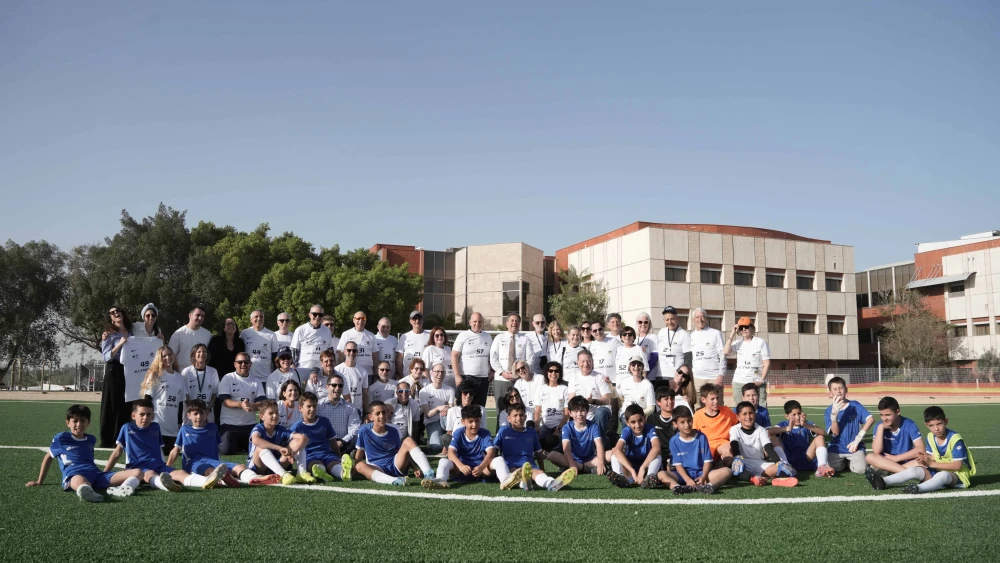
The Jewish National Fund-USA marked the soft opening of the complex in memory of Ofir Libstein, the head of the Sha’ar HaNegev Regional Council, who was killed during the Hamas assault on nearby Kfar Aza. Libstein, 50, had long championed quality-of-life projects aimed at strengthening communities along Israel’s southern frontier.
“This is Ofir’s dream come true,” said philanthropist Betsy Fischer as young players tested the FIFA-grade field for the first time.
Standing beside the field, Fischer described the moment as both uplifting and painful. Looking at Libstein’s widow, she added, “The smile on Vered’s face is incomprehensible—she feels she must carry this forward. But it’s also heartbreaking that Ofir isn’t here to see it.”
Renewal and continuity
The complex—located near schools and academic campuses—was designed as a regional hub for sports, education and community resilience programming. Facilities include an athletics track, soccer fields, jumping pits, locker rooms, referee areas, bomb shelters, accessible parking and landscaped gathering spaces.
Yet speakers emphasized that the site’s importance extends beyond infrastructure.
For Yoel Rosby, head of operations in Israel for Jewish National Fund-USA, the project symbolizes collective responsibility.
“It takes a village,” he said. “There wasn’t one individual or organization that didn’t put their whole heart into planning and execution.”
He cited cooperation between Jewish National Fund-USA leadership, Israeli government ministries, Keren Kayemeth LeIsrael partners, international supporters and the Sha’ar HaNegev Regional Council.
Rosby highlighted one unusual decision: the principal donors insisted the facility bear Libstein’s name rather than their own.
“When someone dedicates a project of this magnitude and demands it honor a leader instead of themselves, it says everything about their values,” he said, thanking Betsy and Peter Fischer for financing the project.
Libstein had worked for years to promote population growth and long-term resilience in the Gaza border region. Friends and colleagues said he believed thriving civilian life—schools, culture and sports—was essential to security.
The new complex reflects that philosophy. It will host youth leagues, school athletics and community gatherings, providing children a place to build confidence and teamwork while giving families a central meeting point.
For residents still coping with trauma after Oct. 7, the sight of children playing freely carried special meaning.
Rather than memorializing loss alone, organizers hope the site will encourage renewal and continuity—signaling that Sha’ar HaNegev is rebuilding, not retreating.
As the first games begin and families fill the stands, the facility stands as both tribute and promise: a reminder of a fallen leader’s vision and a declaration that life on Israel’s southern frontier will continue to grow stronger.