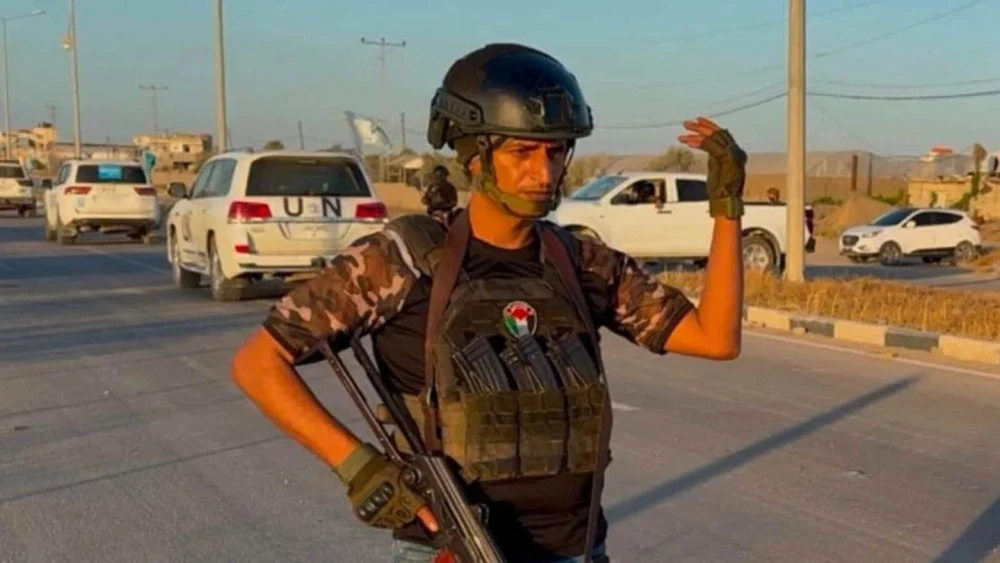
Yasser Abu Shabab, the leader of the Popular Forces militia who openly challenged Hamas in recent months, was killed in the Gaza Strip on Thursday.
Israeli security sources told local media that he was pronounced dead as he was being evacuated to Soroka Medical Center in the southern city of Beersheva. It was not immediately clear who was behind the killing.
Abu Shabab, who commanded a force of several hundred armed men, has accused Hamas of looting aid supplies and fostering chaos and corruption. Hamas accused him of treason and being an Israeli proxy.
Palestinian sources reported in late May that a new armed force was taking control of food trucks in Rafah in southern Gaza. The militia was led by Abu Shabab, who previously served time in a Hamas prison.
According to Hamas-linked circles, he was able to break out following an Israeli airstrike during the war and subsequently took command of a group estimated at 100 to 300 armed men.
The Abu Shabab clan belongs to the large Tarabin tribe, one of the most powerful in the Gaza Strip. Members of the tribe cooperated with the Islamic State terrorist organization during the past decade as part of the smuggling trade between Gaza and the Sinai Peninsula, in which Hamas also played a major role. The clan itself does not hold ideological affiliation with the Islamic State.
Originally published by Israel Hayom.