Newsletter
Newsletter Support JNS

House bipartisan group urges Merkel to label Hezbollah a terror group

In February, the United Kingdom officially designated Hezbollah as a terrorist group, joining 12 other countries that have done the same.

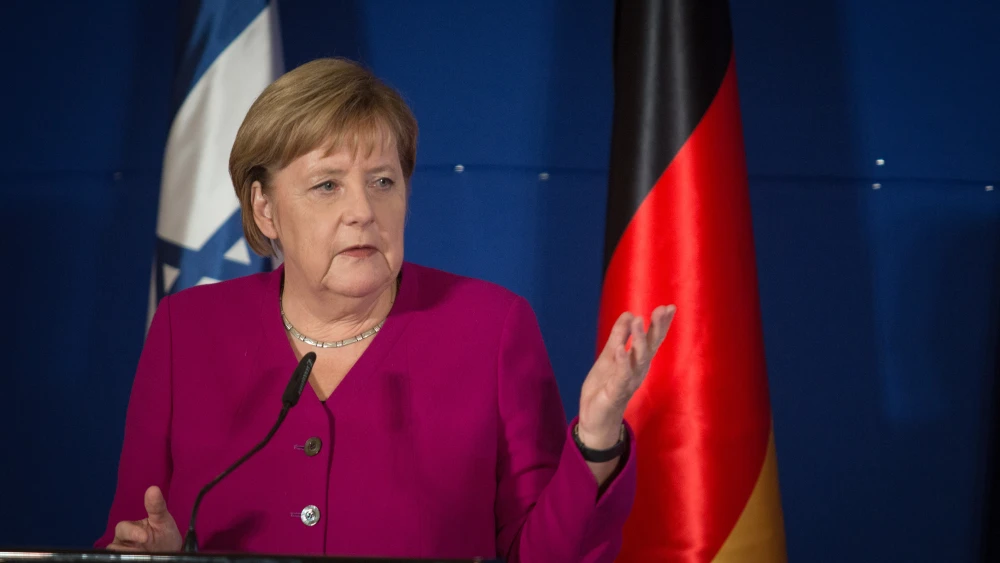
German Chancellor Angela Merkel during a joint press conference with Israeli Prime Minister Benjamin Netanyahu at the King David Hotel in Jerusalem on Oct. 4, 2018. Photo by Hadas Parush/Flash90.

A bipartisan group of members in the U.S. House of Representatives sent a letter to German Chancellor Angela Merkel, urging Germany to officially designate Hezbollah as a terrorist group.

The signees were Reps. Lee Zeldin (R-N.Y.), Gus Bilirakis (R-Fla.), Grace Meng (D-N.Y.) and Ted Deutch (D-Fla.).

This week, the German parliament rejected a bill to ban Hezbollah from the country.

“The threatening influence of Hezbollah extends beyond Israel and poses a tremendous risk to the security interests of Europe as a whole,” stated the letter. “As you know, your intelligence service has detailed that the number of Hezbollah members and supporters has increased to 1,050 in 2018.”

“The growth of support for Hezbollah will also contribute to the rise of anti-Semitism in Europe, which has already resulted in deadly attacks against Jews,” it continued. “That is why we strongly urge Germany to take substantive action against Hezbollah through sanctions and other means that will hamper their ability to project influence in the region.”

In February, the United Kingdom officially designated Hezbollah as a terrorist group, joining 12 other countries that have a similar designation.

In a draft report delivered to the U.S. president, the commission also called for improved religious accommodations for U.S. service members.
Salah Salem Sarsour, accused of concealing Israeli military court convictions on immigration forms, argued his detention was part of a Trump admin effort to target the pro-Palestinian movement.
CENTCOM stated that the strikes targeted missile, drone and radar facilities after the Islamic Republic attacked a cargo ship in the Strait of Hormuz, calling the assault a violation of the ceasefire.
Now that the primaries are over, “we hope that everyone will come together and be united,” Christine Quinn, chair of the executive committee of the New York State Democratic Party, told JNS.
An Iranian official warned on Friday that the safety of ships passing through the Strait of Hormuz without Iran’s permission “cannot be guaranteed.”
“We have put the train back on the tracks and going in the right direction,” said Yechiel Leiter, Israeli ambassador in Washington. “Final destination? Peace between our two countries.”
Benny Gantz, JNS editor-in-chief Jonathan S. Tobin, Gilad Erdan, Mosab Hassan Yousef, Nissim Black and leading voices in security, diplomacy, media, law and Jewish communal affairs headline the summit’s third day in Jerusalem.