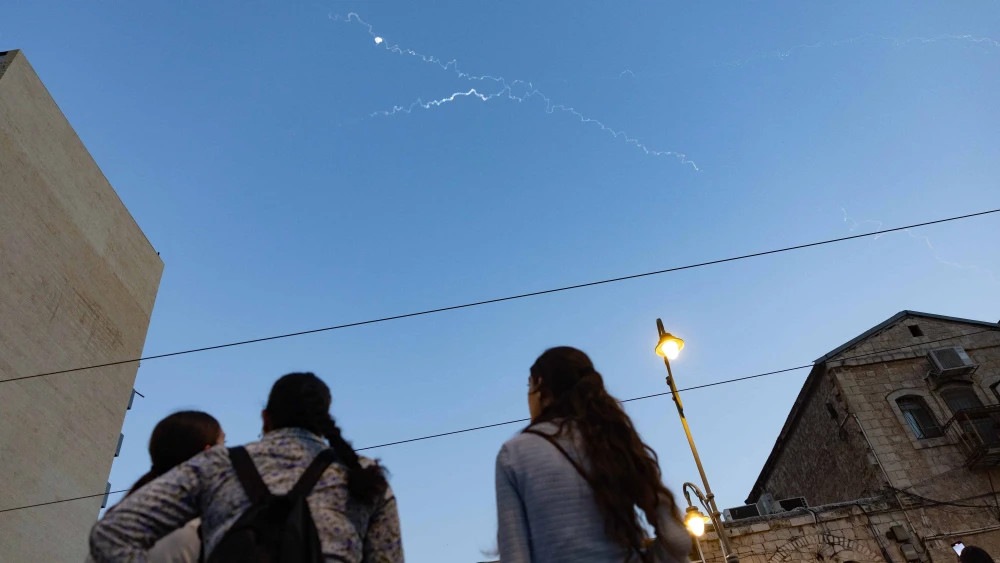
The Israeli Air Force intercepted a ballistic missile launched by Houthi terrorists in Yemen on Friday night, the military said.
The attack triggered air-raid sirens across central Israel, including in Tel Aviv, Jerusalem and parts of Judea and Samaria, sending millions of civilians rushing to bomb shelters during Shabbat.
There were no reports of injuries or damage.
On Wednesday, Israeli air defense systems shot down another projectile fired from Houthi-controlled territory, this time heading toward southern Israel near the Dead Sea and Negev regions.
A day earlier, the IDF intercepted a drone launched from Yemen.
The Iranian-backed Houthis have in recent weeks escalated attacks on Israel, including a direct hit near Ben-Gurion International Airport on May 4.
In response, IAF fighter jets earlier this month carried out a series of strikes targeting Houthi infrastructure in Yemen—including facilities at the ports of Al Hudaydah, Ras Isa, and Salif, as well as a power plant. The operation involved approximately 20 aircraft and the deployment of more than 50 munitions.
Jerusalem has conducted several rounds of strikes against the Houthis, including an operation in May called “Golden Jewel” targeting the airport in Yemen’s capital, Sanaa.