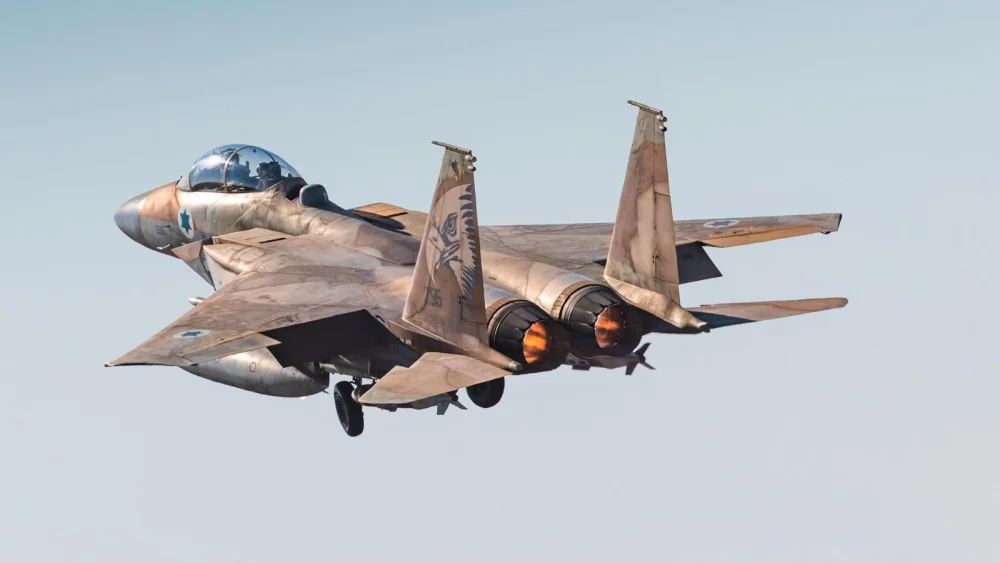
Israeli fighter jets on Monday night conducted a wave of strikes on Yemen’s Hudaydah Port, a day after a ballistic missile from Yemen impacted near Israel’s main international airport.
“The strike was conducted in response to the repeated attacks by the Houthis against Israel, during which surface-to-surface missiles and unmanned aerial vehicles were launched toward Israeli civilians,” the IDF stated.
The port serves as a “central supply source for the Houthis, used for the transfer of Iranian weapons,” according to the military.
Also struck was a concrete plant located east of the city.
The plant “functions as a significant economic resource and is used for the construction of underground tunnels and terrorist infrastructure for the Houthis,” the IDF stated. “The strike on the terrorist infrastructure sites was conducted precisely, with measures taken to mitigate harm to vessels docked at the port.”
The IDF revealed that approximately 20 Israeli fighter jets took part in the operation, dropping over 50 precision-guided munitions on dozens of targets.
עשרות מטרות הותקפו, כ-20 מטוסי קרב תקפו ו-50 חימושים שהוטלו:
— צבא ההגנה לישראל (@idfonline) May 5, 2025
תמונות ראשונות מהמראת מטוסי הקרב של חיל האוויר לתקיפות בתימן pic.twitter.com/ZPIGcnyKwT
IDF Chief of Staff Lt. Gen. Eyal Zamir and Air Force Commander Maj. Gen. Tomer Bar oversaw the strikes from the Israeli Air Force’s underground command center at the Kirya military base in Tel Aviv. Israeli Prime Minister Benjamin Netanyahu and Defense Minister Israel Katz were also present.
הרמטכ״ל, רא״ל אייל זמיר, ומפקד חיל האוויר, אלוף תומר בר, בבור חיל האוויר בקריה במהלך תקיפות צה״ל בתימן pic.twitter.com/qjiJKjZRwx
— צבא ההגנה לישראל (@idfonline) May 5, 2025
Aerial surveillance imagery released by the military confirmed multiple secondary explosions at targeted sites, indicating direct hits on weapons caches and supply depots.
Arabic media reported that U.S. jets participated in the attack, but a U.S. official told Axios that Washington had prior knowledge of but didn’t take part in the strikes.
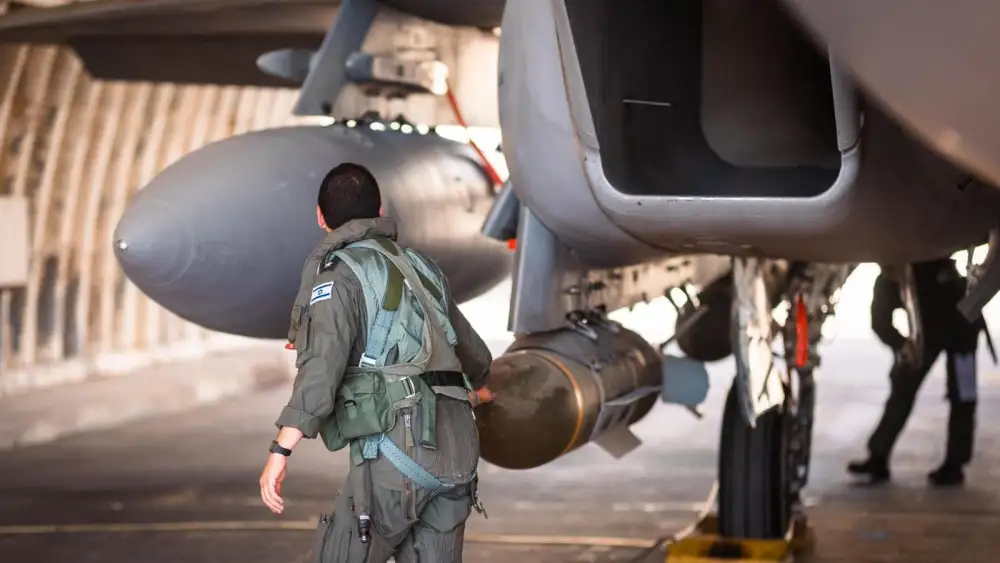
The Houthi missile that impacted near Ben-Gurion International Airport on Sunday wounded six people and halted flights temporarily.
An initial Israeli Air Force inquiry determined that a technical malfunction was responsible for the failure to intercept the missile. No issues were found with detection systems or alert protocols.
Israeli officials said that the malfunction was an isolated incident, and noted that Israel has a 95% interception success rate against missiles launched from Yemen.
Netanyahu on Sunday vowed a forceful response to the attack, saying, “We have acted and will act again,” adding, “There will be blows.”
Katz added: “Anyone who targets our international airports will be struck back—forcefully and repeatedly.”
Meanwhile, Ynet reported that military intelligence anticipates additional Houthi attacks on Israeli airports as part of a “maximum pressure” campaign. Potential targets reportedly include Haifa and other major air transit hubs.
Senior Houthi official Hazam al-Asad, threatened Israel and the United States in a fiery statement on Monday night, calling the strike on Hudaydah a “despicable crime” and promising a violent response. He vowed to escalate attacks in solidarity with Gaza and warned of imminent reprisals.
Earlier on Monday, the Houthis declared a “comprehensive aerial blockade” on Israel, vowing continued missile attacks on major airports, including Ben Gurion. In response, numerous international airlines—including Lufthansa Group carriers, United Airlines, Air France, Delta, Wizz Air, and British Airways—have suspended flights to and from Israel, citing safety concerns.