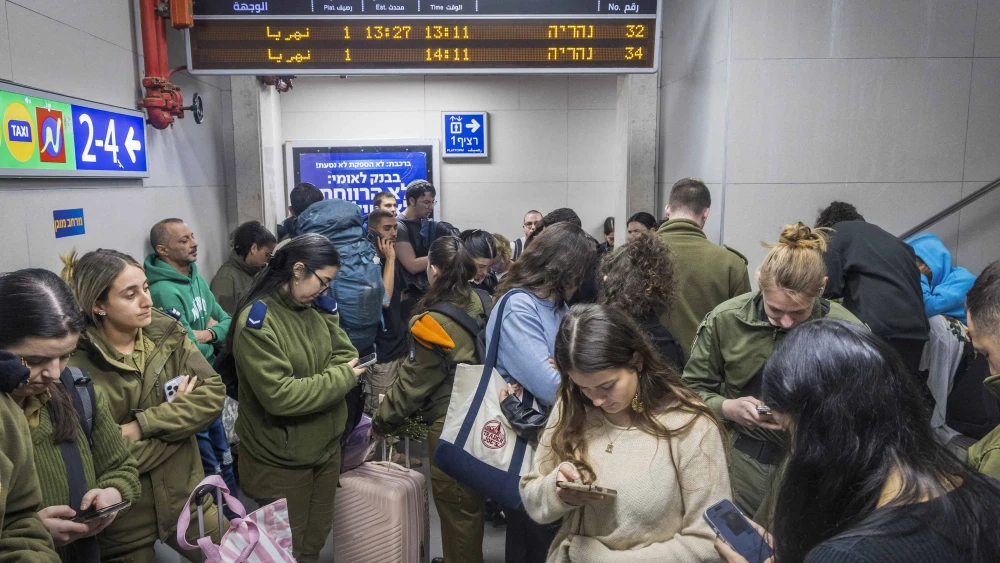
The Israel Defense Forces’ Home Front Command on Saturday updated its guidelines amid the war for specific regions of the country, to take effect at 6 a.m. on March 16.
Until that time, the current defensive guidelines will remain unchanged, the IDF said in a statement.
The policy for the following regions will shift from “limited activity” to “partial activity”: the Arava, Beit She’an Valley, Dead Sea area, “Gaza Envelope,” Jordan Valley, Judea, Samaria, Southern Negev, Western Lachish region and Western Negev.
The less stringent guidelines permit educational activities, gatherings of up to 50 people outdoors and 100 people indoors, and regular work activities, provided a standard protected space can be reached within the required time for the area when air-raid warnings are received.
Since the war with Iran began on Feb. 28, the Home Front Command has restricted public gatherings and civilian movement across the country, resulting in closures of schools and many workplaces considered nonessential.
Iran and Hezbollah in Lebanon have fired hundreds of projectiles at the Jewish state, killing 14 civilians and wounding nearly 2,800, according to the Israeli Health Ministry.