The Bank of Israel held its benchmark interest rate steady on Sunday at 4.5% for the 12th consecutive meeting, citing moderate economic recovery amid ongoing domestic and global uncertainty.
The Israeli economy grew at a 3.7% annualized rate in the first quarter, nearing its long-term growth trend, while annual inflation over the past 12 months fell to 3.1%, slightly above the upper limit of the Bank of Israel’s target range.
Since the end of May, the shekel has strengthened significantly, appreciating by approximately 7.3% against the U.S. dollar and 3.8% against the euro.
According to the Bank of Israel, GDP is projected to grow by 3.3% in 2025 and 4.6% in 2026. The debt-to-GDP ratio is expected to reach approximately 70% by the end of 2025 and around 71% in 2026, up from 69% at the end of 2024.
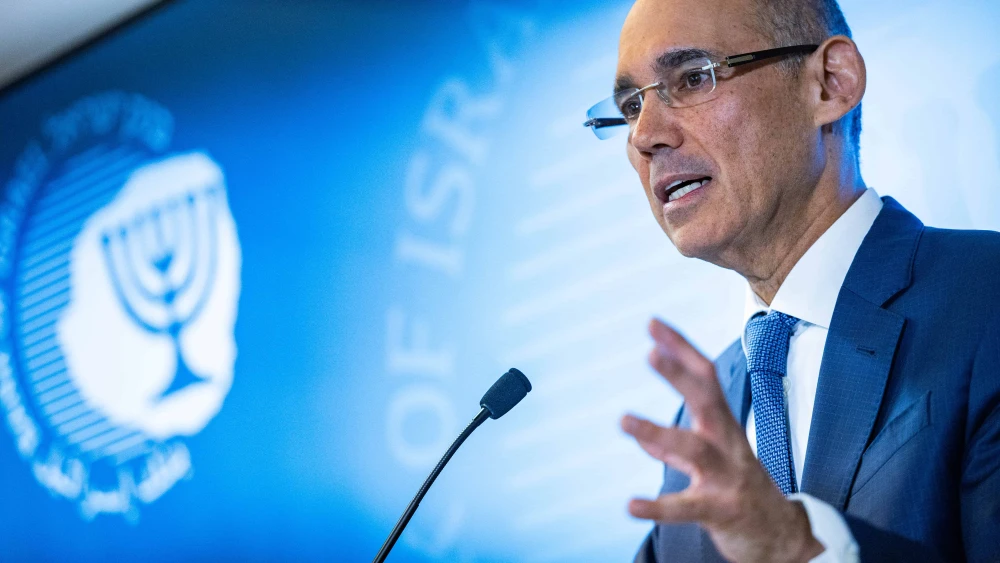
“Recent weeks have seen considerable uncertainty, against the background of ‘Operation Rising Lion’ [against Iran] and its effects on Israel’s residents and its economy,” said BoI Gov. Amir Yaron.
“Israel’s economy continues to display resilience in our current complex period. The economy’s strong fundamental underpinnings have enabled it to minimize the adverse impact and to maintain stability, even in view of the impact on economic activity and the associated costs of [war],” he added.
Israeli Energy Minister Eli Cohen slammed the Bank of Israel for being “out of touch” in a response to its decision to not lower the interest rate.
“While the shekel strengthens and inflation expectations drop, the Bank of Israel insists on not lowering the interest rate. Who benefits, you ask? Only the banks! Who pays the price? Young couples, mortgage holders and businesses. It’s time for the Bank of Israel to prioritize the citizens, not just the banks’ profits!” Cohen charged in a Hebrew statement.