Concerned residents and officials from towns and municipalities in Judea and Samaria are weighing their options following a Nov. 2 District Court decision, overturning a previous ruling that allowed the Ariel Municipality to bar certain Palestinian Authority workers from entering the city based on security concerns.
An Ariel municipal spokesperson told JNS that the ruling was a “catastrophe” from a security perspective, saying the city must now prepare for an influx of Palestinian Arab workers.
He explained that until now, Ariel Mayor Yair Chetboun had maintained control over the number of Arab workers permitted into the city and their physical location within construction zones. The new ruling transfers that authority to the regional IDF commander.
In a statement, the municipality said, “Since Oct. 7, the security outlook must be different and stricter. The old concept of ‘employment in exchange for calm’ has already collapsed, and we will not experiment with it here in Ariel against the backdrop of the security threats in Judea and Samaria.”
The spokesperson added that Ariel is considering appealing to Israel’s Supreme Court to overturn the decision.
Rachel Pearson, co-founder of B’yadaim Shelanu (“In Our Hands”), an initiative launched by women in Efrat opposing the reinstatement of workers from the P.A., told JNS that, like Ariel, Efrat is subject to IDF decisions and cannot independently determine which workers are allowed into the community.
She said her movement promotes “avoda Ivrit” (Jewish labor) and encourages hiring foreign workers “who want to make a living and don’t pose a security risk.”
“We may not have the ability to refuse to allow P.A. workers in places like Efrat and Ariel,” said Pearson, “but we can choose who to hire, and if we don’t hire them, they won’t be entering our towns.”
Pearson said that individual yishuvim (communities) in Judea and Samaria are legally considered private entities and can still determine which workers may enter, based on recommendations from local security chiefs.
“Just last week,” she noted, “the community of Shiloh voted not to allow P.A. workers in.”
However, she said that because Efrat and Ariel are classified as municipalities or cities, they fall under the IDF’s jurisdiction per the court ruling.
“After Oct. 7, we realize the great risk that employing Palestinian workers entails, especially because over 80% of them supported the Oct. 7 massacre,” Pearson added. “B’yadaim Shelanu’s goal is to create awareness and encourage citizens to choose who to hire with conscience and to help protect our children, our neighbors and our town.”
Shai D., a Gush Etzion building contractor who requested anonymity, told JNS that a growing trend in the local construction sector could help reduce reliance on Palestinian labor.
“Many IDF soldiers and officers are opening businesses in construction, which is a positive development,” he said.
Shai cautioned, however, that customers may need to be flexible, since these new contractors are just starting out and are sometimes called up for reserve duty. Still, he said, “If Israelis are willing to give a bit of themselves to encourage the phenomenon of avoda ivrit (Jewish labor), there could be a really nice breakthrough in this field.”
Ariel resident Avi Zimmerman said most residents value economic relationships with the Arab community but question the security risks involved in allowing non-Israeli workers into their neighborhoods.
“The people of Ariel have great respect for the IDF,” Zimmerman said, “but also understand that local communities now need to be able to fend for themselves in the case of an attack. It only makes sense that elected officials should have a say in what is considered safe and what is not.”
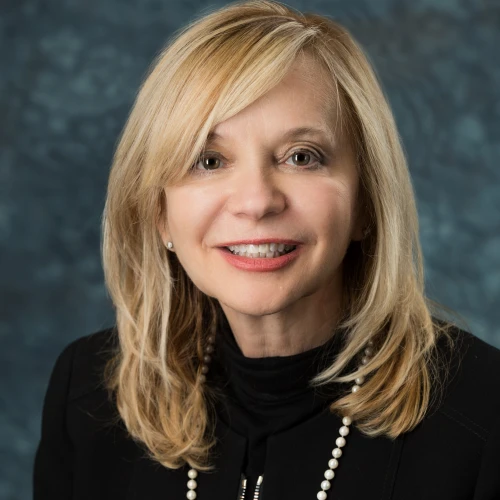
Maurice Hirsch, director of the Initiative for Palestinian Authority Accountability and Reform at the Jerusalem Center for Security and Foreign Affairs, former director of the Military Prosecution for Judea and Samaria, and a resident of Efrat, told JNS that what is needed following the ruling is a public campaign to discourage the employment of Palestinian workers.
“Every person who employs a Palestinian in the residential sections of the settlements should be sent a message saying that he or she is endangering the lives of all of the residents, and that if any terror attack happens as a result, they will personally bear the consequences,” Hirsch said.
He added that if Jews in Judea and Samaria wish to avoid “suffering the same fate as the Jews living in the Gaza envelope,” they must unite in rejecting the entry of Palestinians—regardless of the Civil Administration or IDF position.
Citing a recent Palestinian Center for Policy and Survey Research (PCPSR) poll from late October, Hirsch noted that 59% of Palestinians in Judea and Samaria still support Hamas’s decision to launch the Oct. 7 attack.
“In other words, statistically six out of every 10 Palestinians who, at the behest of the Civil Administration, will be allowed to enter Israeli settlements, support the murder, torture, rape and kidnapping of Jews,” Hirsch said.
A Binyamin-region security chief, speaking anonymously, told JNS that Israel’s defense minister could intervene to block the entry of P.A. workers into communities but has not yet acted.
He said the Ariel ruling “proved that Israel did not learn the lessons from the Oct. 7, 2023, massacre.”
Before the attack, he noted, communities near Gaza allowed Palestinian workers in with IDF approval, and “the workers used the opportunity to gather intelligence on how the community’s security was arranged to plan their attack strategy.”
“Throughout Judea and Samaria, especially now during the olive harvests, it is a sensitive time,” he said. “It has long been known in the IDF echelon that Arab workers can gather intelligence towards attacks against communities.”
“In the case of Ariel,” he added, “the IDF is not only saying you can bring in P.A. Arab laborers, but you have to—despite the lessons apparently not learned on October 7.”
An IDF spokesperson told JNS, “The District Court ruled that the authority to approve the entry of Palestinians into areas under the jurisdiction of the Ariel Municipality rests with the military commander of the area, following consideration of the position of the local authority.”