Newsletter
Newsletter Support JNS

Elizabeth Warren intends to boycott Netanyahu speech to Congress

The Massachusetts senator drew praise from the state’s chapter of the Council on American-Islamic Relations.

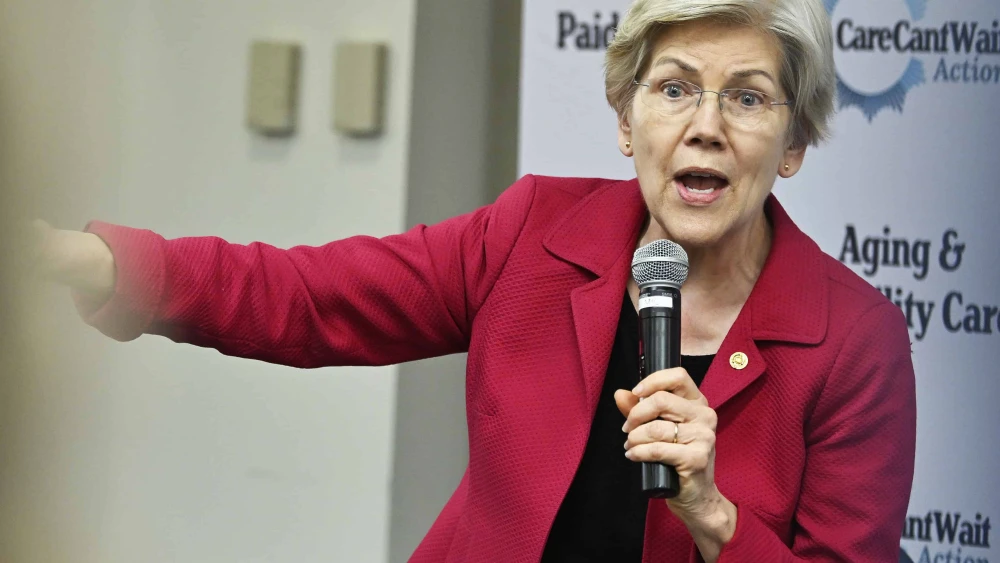
Sen. Elizabeth Warren speaks at the Care Can't Wait Action Hosts Town Hall in Washington, April 10, 2024. Photo by Shannon Finney/Getty Images for Care Can't Wait Action.
Sen. Elizabeth Warren speaks at the Care Can’t Wait Action Hosts Town Hall in Washington, April 10, 2024. Photo by Shannon Finney/Getty Images for Care Can’t Wait Action.

Sen. Elizabeth Warren (D-Mass.) plans to skip Israeli Prime Minister Benjamin Netanyahu’s address to a joint session of the U.S. Congress on July 24.

“Benjamin Netanyahu has created a humanitarian disaster,” the Massachusetts senator told The Hill. “We need a ceasefire, massive humanitarian relief, the return of the hostages, and we’ve gotta have a breakthrough on getting the parties to the negotiating table.

“Giving more arms to Israel is not pushing in the right direction,” she told the paper.

The Massachusetts chapter of the Council on American-Islamic Relations, which has long been accused of antisemitism and of being anti-Israel, praised Warren’s decision.

“We encourage all members of the Massachusetts [congressional] delegation to follow her example,” said Tahirah Amatul-Wadud, who leads the CAIR chapter.

In April, Warren claimed that there is “ample evidence” that Israel has committed genocide.

The Republican Jewish Coalition said at the time that Warren had joined “the chorus of Democrats trying to placate their rabidly anti-Israel base of voters.”

The reversal “sends an unfortunate signal at a time of rising antisemitism and sustained efforts to isolate Israel economically,” Evan R. Bernstein, CEO of B’nai B’rith International, told JNS.
Cooperation cannot thrive with boycotts, said the Israeli president, who met Bahraini and Chinese foreign ministers on the sidelines of a pan-Asian conference in Azerbaijan.
Israel’s foreign minister called it a historic day for ties between the two countries and an important day for the capital.
“People need to be aware, and institutions need to repair,” Miri Bar-Halpern told JNS. “Clinicians are engaging in activism. It’s not about therapy anymore.”