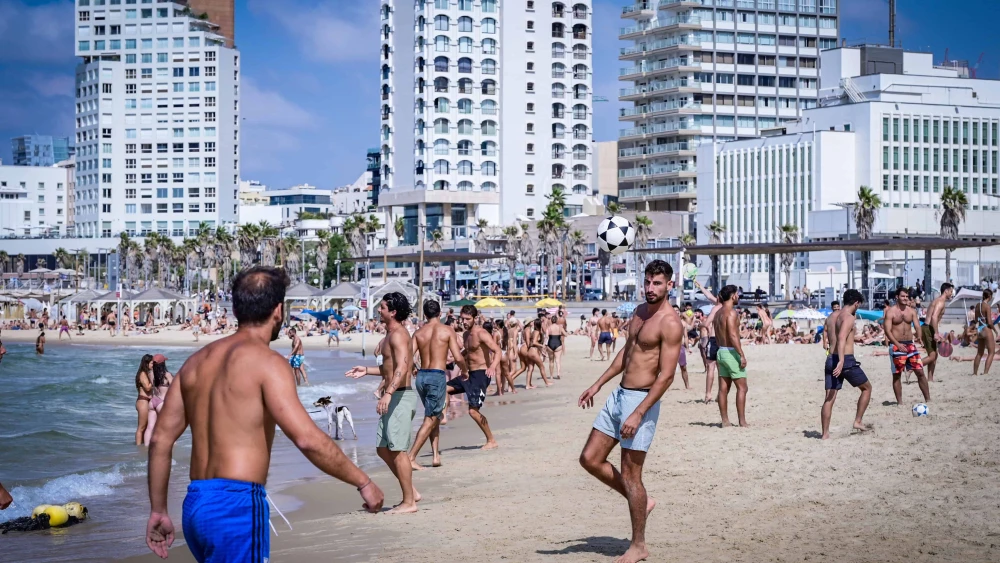
Israel is set to enter an intense and prolonged heatwave starting this Friday. The peak is forecast for Saturday and Sunday, with temperatures in the eastern regions expected to reach around 48°C (118°F) or higher. The worst of the heat is expected to hit the country’s inland areas.
Amir Givati, director of the Israel Meteorological Service, told Israel Hayom that while the models are still being closely monitored, forecasts currently indicate that Jerusalem could see temperatures around 40°C (104°F), with the Jordan Valley likely reaching at least 48°C. “Even along the coast, where it won’t be quite as hot, the combination of high humidity will make for extremely uncomfortable conditions across the coastal plain and lowlands,” he said.
According to Givati, this upcoming heatwave could be the most extreme seen in Israel so far this summer. “It is expected to begin on Friday and, at this stage, appears to be the most intense we’ve had this season,” he noted.
In light of the fact that temperatures in the eastern part of the country may approach 50°C (122°F), it’s worth noting that the highest temperature ever recorded in Israel was 54°C (129°F). That reading was registered at Kibbutz Tirat Zvi in the Beit She’an Valley on June 21, 1942.
In Tel Aviv, the record for the hottest April day since 1907 was set earlier this year, on April 25, when the temperature reached 40.8°C (105.4°F). Jerusalem’s all-time record high remains 42.8°C (109°F), recorded on September 1, 2020, the highest in more than a century.
Originally published by Israel Hayom.