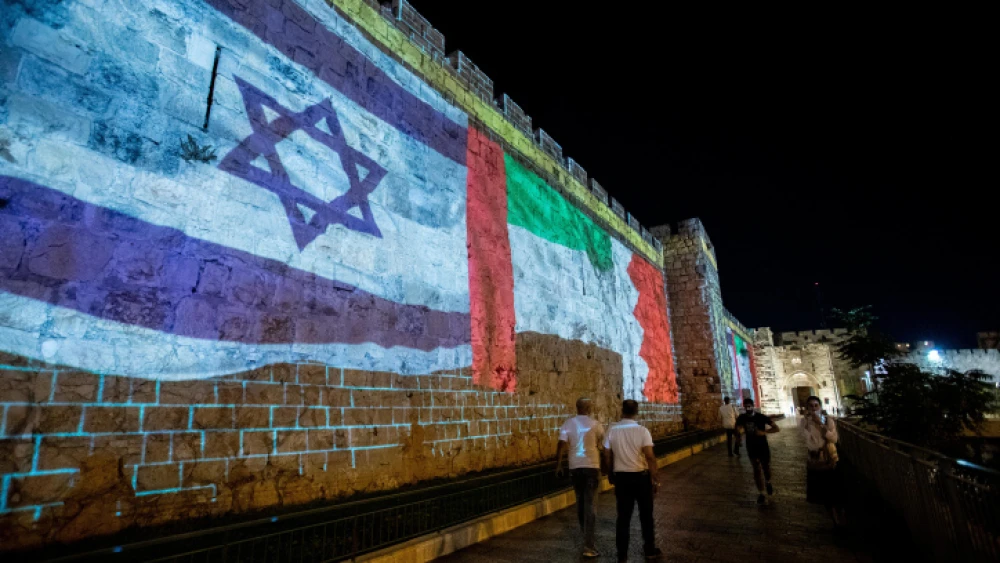
On Sunday, Israel welcomed the U.S. secretary of state and the foreign ministers of four Arab countries for the first high-profile visit by multiple Middle Eastern dignitaries.
They came for the Negev Summit, taking place in the southern desert over the next two days. Talks will reportedly focus on the common Iranian threat to the region and energy issues.
Participants include Israeli Foreign Minister Yair Lapid, U.S. Secretary of State Antony Blinken, Bahraini Foreign Minister Abdullatif bin Rashid Al Zayani, Egyptian Foreign Minister Sameh Shoukry, Moroccan Foreign Minister Nasser Bourita and UAE Foreign Minister Abdullah bin Zayed Al Nahyan.
Following an informal dinner on Sunday night, they are scheduled to hold an official meeting on Monday morning.
The summit in Israel follows on the heels of Israeli Prime Minister Naftali Bennett’s visit to Egypt last week, where he met with Egyptian President Abdel Fattah el-Sisi and the Crown Prince of Abu Dhabi, Mohamed bin Zayed Al Nahyan, and discussed with them developments in the region and the world.
FM @yairlapid: Welcome to Israel @SecBlinken 🇮🇱 🇺🇸 #Negev_Summit pic.twitter.com/VKt4PknQ3Y
— Israel Foreign Ministry (@IsraelMFA) March 27, 2022
Israel commenced its diplomatic relations with Bahrain, Morocco and the UAE in 2020 as part of the US-negotiated Abraham Accords. Since the accords were signed, Israel embarked on a host of agreements with its newfound allies in the fields of culture, education, science and technology.
The summit is taking place at the newly opened Kedma Hotel in Sde Boker, located within walking distance of the home of Israel’s first prime minister, David Ben-Gurion.
“This is a very festive day. We are hosting the ‘Negev Summit’ here in Israel,” said Israeli Prime Minister Naftali Bennett in his opening remarks to Sunday’s Cabinet meeting.
“For those who have yet to notice, Israel’s foreign relations are experiencing a good period. Israel is an important player on the global and regional stage. We are cultivating old ties and building new bridges,” said Bennett.
His meeting last week with the UAE crown prince and President el-Sisi had been a “defining moment,” he added.
“Our oldest peace, with Egypt, met the newest peace, that of the Abraham Accords. We are all adding more and more content—diplomatic, economic and security—to these relations, which have existed for more than a few years, in order to forge links between the moderate states in the Middle East. I am pleased to see that this will also be continuing at the meeting in Sde Boker,” he said.
This is a version of an article that was first published by Israel21c.