Israel and Azerbaijan will sign an agreement in Jerusalem on Monday granting the State Oil Company of the Republic of Azerbaijan (SOCAR) a license for gas exploration in Israel, the Israeli Ministry of Energy and Infrastructure said on Sunday.
The accord, which is expected to strengthen Israel’s energy security, is the latest sign of the friendly ties between the Jewish state and the predominantly Shi’ite Muslim country.
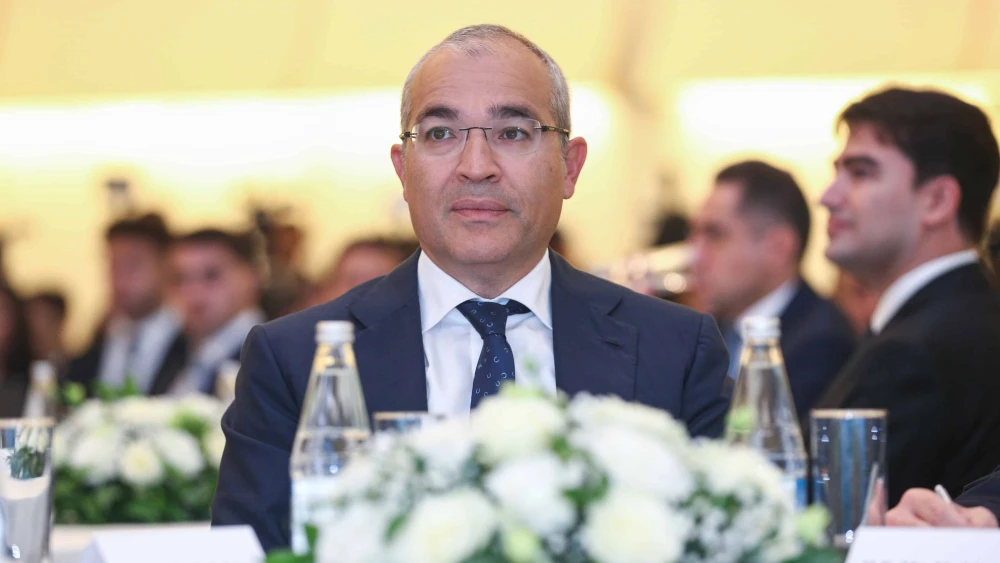
The gas exploration deal will be signed during a visit to Israel by Azerbaijan’s Economy Minister Mikayil Jabbarov, who also serves as the chairman of SOCAR, in a ceremony with Israeli Energy Minister Eli Cohen at his office.
SOCAR is part of a consortium that includes British multinational oil and gas firm BP, and Israel’s NewMed Energy (formerly Delek Drilling), which won a tender from Israel’s Energy Ministry in 2023 to drill in Mediterranean fields adjacent to the country’s Leviathan field, one of the world’s largest offshore gas discoveries.
Jabbarov, who is also expected to meet with Israeli President Isaac Herzog and senior business leaders, is the first Azerbaijani minister to visit Israel since the Oct. 7, 2023, Hamas-led massacre in southern Israel, which triggered the 15-month war in Gaza and delayed the deal.
The visit comes one month after Hikmet Hajiyev, the assistant to Azerbaijani President Ilham Aliyev and head of the Foreign Policy Affairs Department of the Presidential Administration, met with Israeli Prime Minister Benjamin Netanyahu in his second such trip in the last three months.
For Israel, ties with Azerbaijan, which shares a 428-mile border with Iran—a country that is home to tens of millions of Azeris—are of strategic importance as a conduit for intelligence and because it supplies more than a third of the Jewish state’s oil.
At the same time, Azerbaijan is a leading purchaser of Israeli military hardware, which helped Baku in the Second Nagorno-Karabakh War against archrival Armenia in 2020.
Two years ago, secular Azerbaijan made history when it became the first Shi’ite country to open an embassy in Israel, despite repeated violence and threats from neighboring Iran. The diplomatic landmark was the product of a three-decade-old covert and overt relationship rooted in a centuries-long affinity between the two nations, which has blossomed from a people-to-people relationship to a robust security- and energy-related focus.