Newsletter
Newsletter Support JNS

Israel imposes sanctions on released terrorists paid by PA

“The Palestinian Authority’s payments to terrorists will be met with an uncompromising response,” said Israeli Defense Minister Israel Katz.

Tulkarem
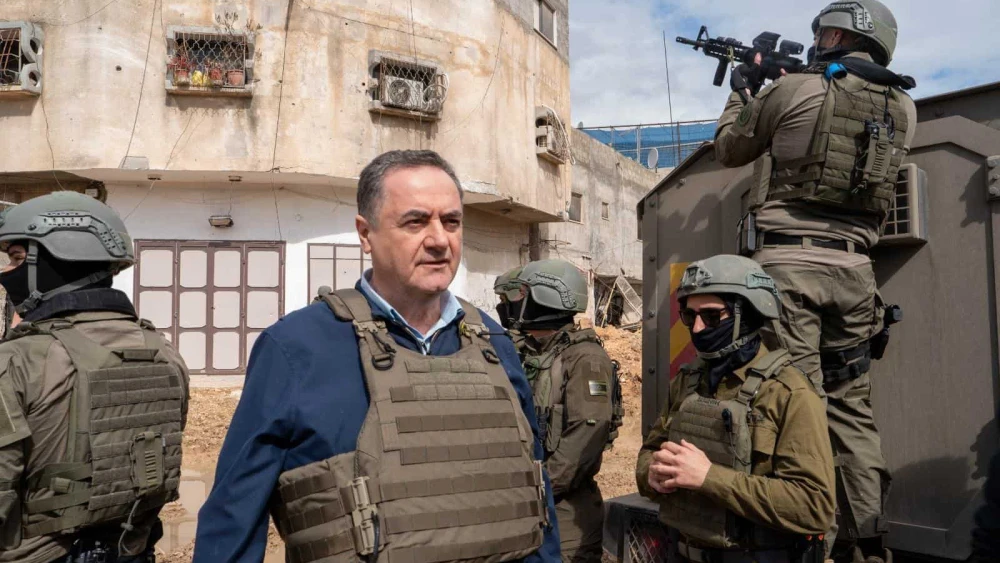
Israeli Defense Minister Israel Katz visits IDF troops in the Tulkarem camp in northern Samaria, Feb. 21, 2025. Photo by Ariel Hermoni/Defense Ministry.

Israeli Defense Minister Israel Katz announced on Tuesday the imposition of new sanctions on terrorists and their families who receive payments from the Palestinian Authority.

The sanctions specifically target released prisoners who are also Israeli citizens, according to Channel 12 News.

The decision follows recommendations from the Israeli Defense Ministry’s Counter Terrorist Financing Taskforce and was implemented in coordination with the Israel Security Agency (Shin Bet).

Police raided the terrorists’ homes, seizing cash and property worth hundreds of thousands of shekels.

Over the past year, Israel has frozen 470 million shekels ($131.5 million) meant for the P.A., redirecting the funds to families of terror victims.

P.A. leader Mahmoud Abbas recently issued a decree modifying payments to terrorists’ families, but later reaffirmed that all available funds would continue to support prisoners and martyrs.

“The blood money paid by the P.A. to terrorists fuels terrorism. Israel is engaged in an all-out war on terror—on the battlefield, in the economic sphere, and in every necessary arena,” stated Katz on Tuesday. “The P.A.’s payments to terrorists will be met with an uncompromising response. The frozen funds will be used to compensate victims of terrorism instead of rewarding murderers.”

Joshua Marks is a news editor on the Jerusalem desk at JNS.org, where he covers Jewish affairs, the Middle East and global news.
The complaint urges the Justice Department to determine “who funds, directs, coordinates, services and benefits” from the group’s work, and to sanction it for its alleged terror ties.
Yosef Dagan championed the penalty shootout after Israel’s elimination from the 1968 Olympics by the drawing of lots.
At a Tel Aviv gathering, volunteers hear the story of an Ethiopian immigrant’s journey to Israel as the organization seeks to strengthen its growing community beyond IDF bases.
The exhibit on the roof of the Azrieli Mall in Tel Aviv involves 11 large-scale installations of photos and poems.
The file is the first in connection with the ‘Law on Intensifying Punishment for Espionage and Cooperation with the Zionist Regime and Hostile States,’ passed by Tehran’s parliament in the fall of 2025.
Israeli lawmakers approved the measure unanimously after the coalition passed legislation keeping mandatory military service at 32 months.