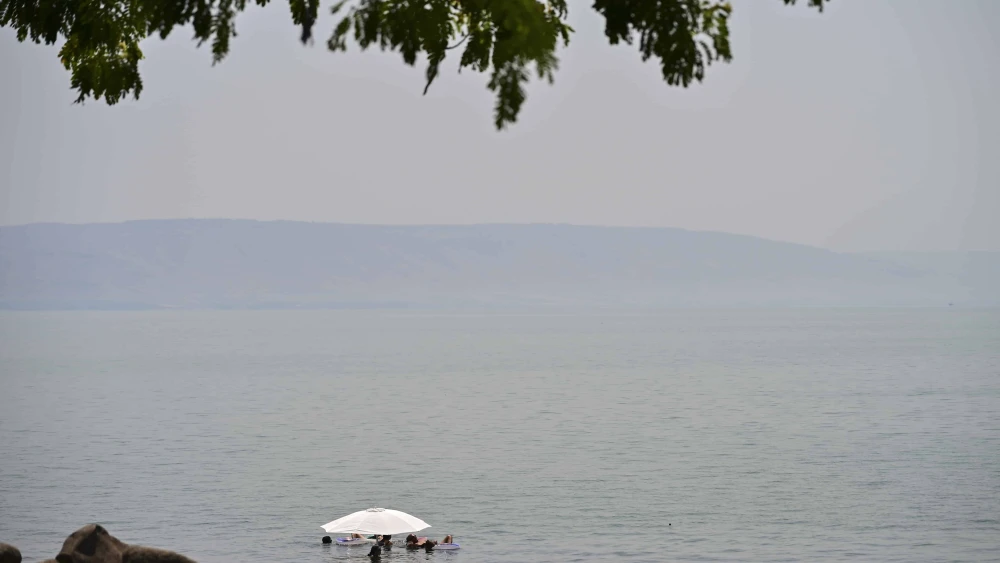
Israel plans to pump desalinated Mediterranean seawater into the Sea of Galilee to combat years of drought and falling water levels, in what is considered the first project of its kind in the world.
Located in northeastern Israel, between the Golan Heights and the Galilee, the lake is the country’s main freshwater reservoir, underscoring the importance of the Water Authority’s initiative.
Officials aim to reverse the decline after a series of droughts pushed the lake dangerously close to the “black line”—the level at which water extraction becomes ecologically harmful and could cause irreversible damage.
In the coming weeks, desalinated water from Israel’s Mediterranean coast will begin to be redirected into the Sea of Galilee, Ynet reported on Tuesday. By late October or early November, the Water Authority expects to start pumping up to 5,000 cubic meters (1.3 million gallons) of water per hour, with a long-term plan to expand to 15,000 as additional infrastructure is completed.
The desalinated water will travel 62 to 93 miles, drawn from plants in Ashdod, Hadera and other coastal sites. The project has required upgrading pumping stations, constructing new pipelines and reinforcing reservoirs, at a cost of around 1 billion shekels ($297 million).
“We dropped below the lower red line and came close to the black line. That’s when experts proposed reversing the National Water Carrier and channeling desalinated water into the lake. Ultimately, this became the chosen solution,” said Firas Talhami, head of the Water Authority’s northern region, in an interview with Ynet.
“This is a historic event that has never been done before anywhere in the world,” Talhami added. “We also considered the ecological impact, and the project will restore the Zalmon stream as a perennial waterway, reviving plant and animal life.”