Newsletter
Newsletter Support JNS

Israel to offset five-year drought with two new desalination plants

The plan will include the expansion of pipelines for use in agriculture, and is intended to help Israel to rehabilitate dried-up rivers.

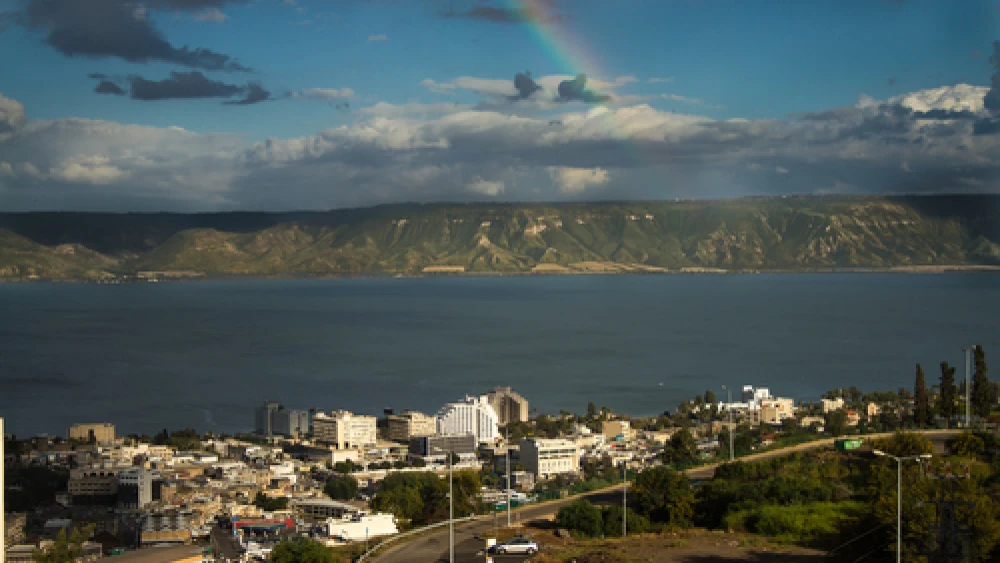
The Kinneret in Tiberias has seen receding water levels over the years, though heavy rainfall is beginning to fight back against water depletion. Credit: Andreas Fjellmann via Wikimedia Commons.

Israel’s Ministry of Energy and Water announced Monday that two new desalination plants will be built to offset the deficits of an extended five-year drought that has left Israel’s sensitive water sources at their lowest levels in nearly 100 years.

Currently, Israel has five active desalination plants, built in the last 13 years, to extract water suitable for drinking from the Mediterranean Sea and distribute the desalinated water through Israel’s national water carrier.

Each facility is expected to cost approximately $400 million.

The plan will include the expansion of pipelines for use in agriculture, and is intended to help Israel to rehabilitate dried-up rivers. The plans may include pumping fresh water into Israel’s primary source for drinking water, the Kinneret—also known as the Sea of Galilee—which has continued to suffer receding levels.

The Kinneret is also the primary feeder of Israel’s Jordan River, which runs south to the Dead Sea and is another body of water suffering severe ecological damage due to receding water levels.

“Before the war, the public was divided,” the premier said. “I think that has changed.”
Prosecutors say defendants linked to the IRGC planned assassinations and arson against the Federal Republic’s top Jewish leader, a pro-Israel activist and Jewish businesses.
A change in Austrian law could allow survivors who remained in the country after World War II while searching for relatives or awaiting visas to receive long-denied benefits.
The facility, mainly used by budget airlines, had been shut for four months due to reduced traffic during the war with Iran.
“Peace is tied to freeing Lebanon from the de facto Iranian occupation,” said Gideon Sa’ar.
Jerusalem and Beirut recognized “that they are not at war w/ each other but with terror group Hezbollah,” the U.S. ambassador said.
Benny Gantz, JNS editor-in-chief Jonathan S. Tobin, Gilad Erdan, Mosab Hassan Yousef, Nissim Black and leading voices in security, diplomacy, media, law and Jewish communal affairs headline the summit’s third day in Jerusalem.