The Israeli Cabinet approved a nearly $9 million budget on Sunday for the restoration and development of Sebastia, a major archaeological site that served as the capital of the Kingdom of Israel nearly three millennia ago.
The investment at the history-rich site deep in the biblical heartland comes after Palestinian vandalism there and follows decades of neglect, damage and disrepair due to lawlessness in an area marked by conflicting Israeli and Palestinian control.
The 32 million shekels ($8.8 million) budget is to draw from several government offices, foremost among them the Environmental Protection and Tourism ministries. It will go towards establishing a visitors’ center and a new access road and increasing law enforcement to prevent vandalism.
“We will not allow Jewish history to be erased and rewritten,” said Environmental Protection Minister Idit Silman ahead of the weekly Cabinet meeting.
“We will be putting Judea and Samaria back on the tourism map,” said Tourism Minister Haim Katz, hailing the decision and referring to the region as the ‘Tuscany of the State of Israel.’”
The site is located a few miles northwest of Nablus.
The ancient city of Shomron (Samaria in English) was the capital of the Kingdom of Israel during the 9th and 8th centuries B.C.E. Herod the Great renamed it “Sebastia” in honor of Emperor Augustus, translating the Latin epithet augustus to the Greek sebastos, “venerable,” according to Josephus.
Since the Oslo Accords, the archaeological site has been in Area C of Judea and Samaria, under full Israeli control, and the adjacent present-day Arab village of Sebastia has been in Area B, under Israeli security control and Palestinian Authority civilian jurisdiction.
Alexander the Great, King Herod and medieval Islamic rulers left their marks on the site. According to tradition, the town is the burial place of John the Baptist, revered by Christians and Muslims.
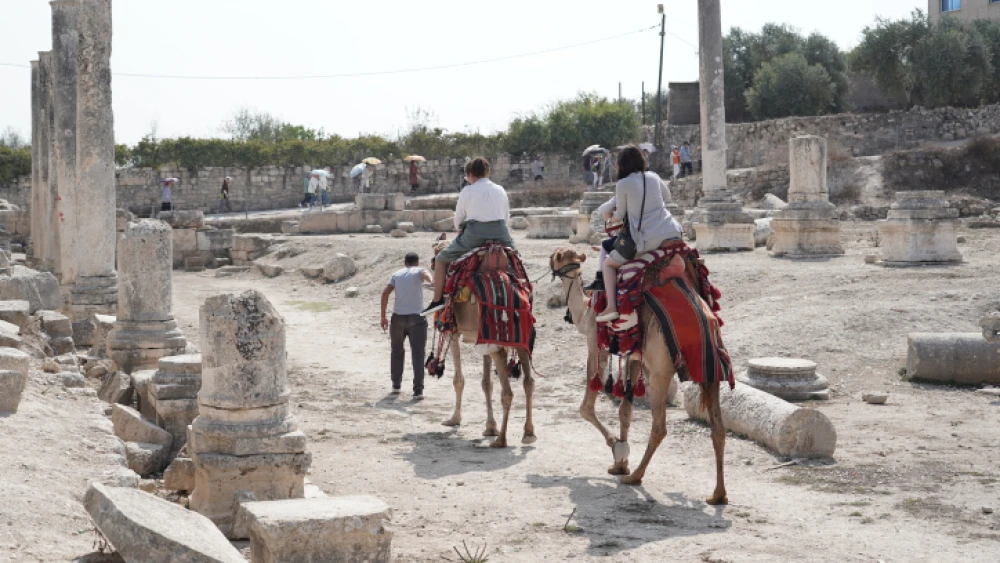
The remains from 10 periods extend from the present-day village and up a nearby hill to the site of the ancient capital, around a square kilometer that includes a Crusader cathedral, a Roman city boasting a forum, a colonnaded street and a temple to Augustus, and the remains of the palace of Omri, the 9th-century monarch of the Kingdom of Israel.
The site has barely been excavated.
The last archaeological dig took place in 1967, when the area was still under Jordanian occupation. Since then, only salvage excavations have taken place.
Moreover, like many archaeological sites in Judea and Samaria, visits to Sebastia by tourists are restricted due to security concerns.
Yossi Dagan, chairman of the Samaria Regional Council, welcomed the government’s plan as “historic.”
“This is the first step towards saving one of the most important heritage sites in history,” he said.
In March, carcasses of wild boars were found thrown onto the ancient graves at Sebastia.
Defense Minister Yoav Gallant previously pledged to safeguard archaeological sites of historical, cultural and religious significance.