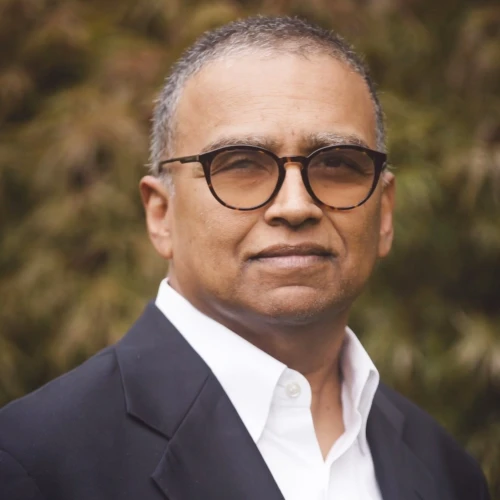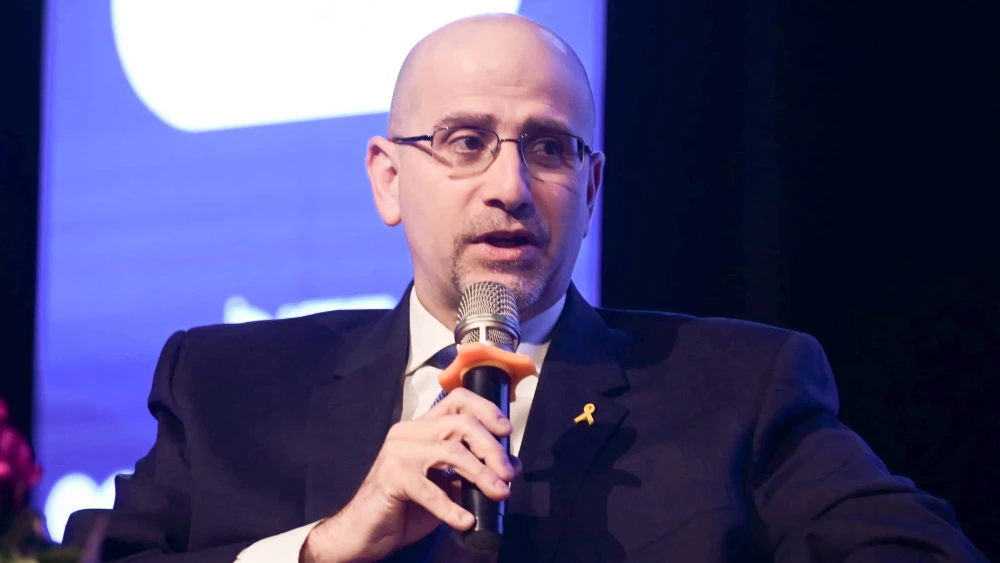
Progress on the Abraham Accords has stalled, but there is room for intensive regional cooperation, according to Rep. Josh Gottheimer (D-N.J.) and Dan Shapiro, a former U.S. envoy to Israel.
The two took part in a Democratic Majority for Israel briefing this week to mark the fifth anniversary of the signing of the Accords.
Shapiro, who also served as U.S. deputy assistant secretary of defense for the Middle East during Iran’s two attacks on Israel in 2024, said regional cooperation helped Israel defend itself against the attacks.
That defense led to major Israeli military achievements against terror groups like Hezbollah, the Houthis and Shia militias in Syria.
“Military achievements dealing with those actors and helping defend Israel from them really have set the stage for political achievements, which ultimately is what war is about,” Shapiro said. “It’s politics by other means.”
The goal, according to Shapiro, “is to secure meaningful and lasting political achievements for the good, for security, for prosperity, for a better Middle East and for a strengthened coalition of moderate states, Israel, Arab states, all U.S. partners and a weakened coalition of Iran and its access to terrorist organizations.”
During his time at the Pentagon, even as the Israel-Hamas war progressed and regional integration had largely paused on the diplomatic front, “regional integration in the security sector was actually galloping forward, as more and more Arab states were putting themselves into the coalition to help Israel help the United States address these common threats,” Shapiro said.
The former envoy said there are several countries outside the Middle East, such as Djibouti, Comoros and Somalia and Indonesia, that have expressed interest in expanding ties with Israel and could be brought into the fold through other mechanisms, even as the war continues.
Conversations should continue with countries like Saudi Arabia, on issues like Gaza reconstruction and a multinational Arab force, potentially led by Egypt, to take part in security for Gaza after Hamas is ousted, he said.
“I think it’s very reasonable to seek and expect Saudi participation in several things in Gaza, in the reconstruction of Gaza. Obviously, they have funds,” Shapiro said. “They have a strong interest, unlike Qatar, which has funded much of the previous reconstruction, in ensuring no funds or materials get into the hands of extremist mobs or some successor to Hamas from the Muslim Brotherhood.”
Shapiro doesn’t expect Riyadh “to step forward before there’s a real sort of pathway toward ending the war.”
“But you don’t have to wait for all of that to happen to have those conversations and to lay out those expectations,” he said.
A member of the House Abraham Accords Caucus, Gottheimer recently returned from a trip to Israel. His remarks in the DMFI briefing focused mainly on the Gaza humanitarian situation, which he surveyed at the Kerem Shalom crossing.
“If you see what I saw, you realize that the real problem is not whether or not enough aid is moving from Israel into Gaza but the distribution,” Gottheimer said.
The United Nations “is failing miserably on that front, because they have refused any kind of protection for their aid caravans,” the Jewish congressman said.
Those caravans have been looted at very high rates, according to U.N. data. Gottheimer suggested that an international peacekeeping force should help secure them, among other potential solutions.
Gottheimer was critical of the Trump administration’s decision to disband the U.S. Agency for International Development, which oversaw global humanitarian efforts, but supported the U.S.-backed Gaza Humanitarian Foundation.
He said there must be more distribution sites, because aid seekers must travel long distances.
“The big point here is we’ve got to get the aid out and also stop doing what’s not working,” Gottheimer said. “We know that what the U.N. is doing is not working, by their own information.”