Newsletter
Newsletter Support JNS

Knesset officially disperses; Israeli elections set for Nov. 1

The opposition had sought to hold elections on Oct. 25, when yeshivah students would be on holiday, making it easier for them to vote.

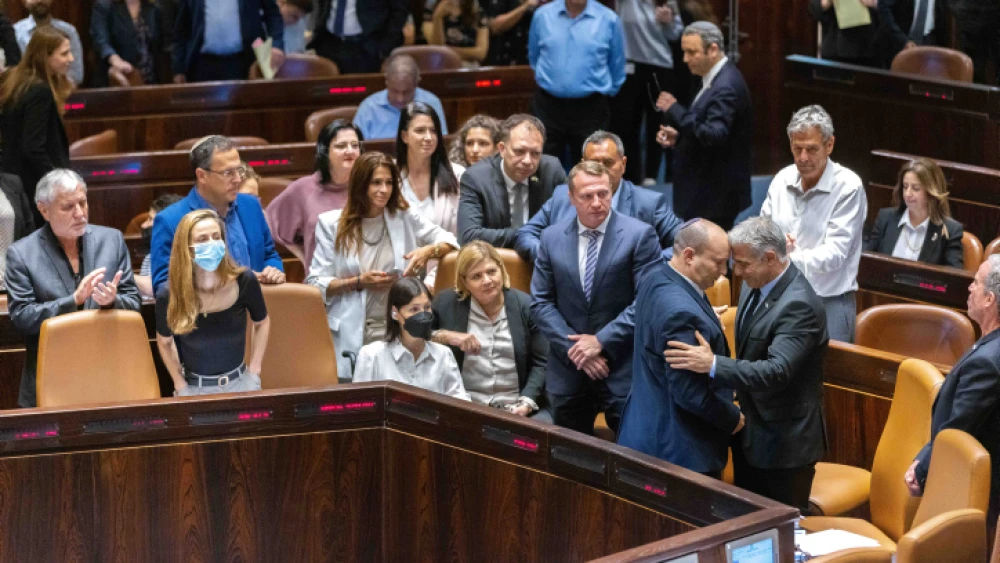
A discussion and vote on a bill to dissolve the Knesset, at the Knesset assembly hall, June 30, 2022. Photo by Olivier Fitoussi/Flash90.

Israel’s Knesset has set Tuesday, Nov. 1, as the date for the country’s next general elections.

The Joint Arab List voted with the coalition, resulting in a majority of 57 votes in favor of a Nov. 1 election date. Forty-seven Knesset members voted against the November date.

The opposition had been pushing for the election to be held on Oct. 25, when yeshivah students, who are likely to vote for ultra-Orthodox parties that will seek to join Likud in a political bloc, will be on holiday.

The Knesset approved in third and final reading a bill to disperse itself on Thursday, which means that Yair Lapid is set to become caretaker prime minister at midnight on Friday. He will replace current Israeli Prime Minister Naftali Bennett.

Bennett, who announced on Wednesday that he will not run in the election, will become alternate prime minister after Yair Lapid becomes the premier.

“The State of Israel is the love of my life. Serving it is my calling,” Bennett said in a televised farewell speech.

Ayelet Shaked, Bennett’s long-time political partner, will replace him as the head of the Yamina Party. Shaked has said she would be open to joining Likud leader Benjamin Netanyahu in forming a right-wing government.
Israeli forces eliminated Adham Ibrahim Sha’aban Nasman, who directed terrorists during the 2023 massacre, and two Islamic Jihad terrorists, including a Nova festival infiltrator.
Former BDS supporter Klaas Mokgomole told JNS that a firsthand visit to the Jewish state overturned years of anti-Israel indoctrination.
The strikes targeted command centers, missiles and air defenses to curb attacks on commercial shipping in the Strait of Hormuz, CENTCOM said.
“Due to heightened tensions in the Middle East, the security environment remains complex with the potential for unforeseen escalation.”
“The IDF will respond forcefully to any violation of the agreement,” said the Israeli military.
In its own version of the Palestinian “pay-for-slay” scheme, the terror group has leveraged state institutions to channel public funds.