The Israeli High Court of Justice on Wednesday ordered Israeli Prime Minister Benjamin Netanyahu to explain why he hasn’t fired National Security Minister Itamar Ben-Gvir over his alleged interference in police work.
The Supreme Court’s order effectively shifts the burden to Netanyahu to explain why he has refused to dismiss Ben-Gvir, according to Kan News.
The court claimed that the premier failed to file a substantive response to petitions against Ben-Gvir, instead offering general arguments that the Supreme Court lacks the authority to intervene, Kan News said.
The order followed a submission last month by Attorney-General Gali Baharav-Miara, who asked the Supreme Court to order Netanyahu to explain to justices why he has failed to remove Ben-Gvir from office.
The AG has accused Ben-Gvir—who oversees the Israel Police and Israel Prison Service—of improper interference in police operations, raising concerns over political involvement and influence on investigations.
In a response, Ben-Gvir accused Baharav-Miara, whom the government fired on Aug. 4 but who was reinstated by the court pending petitions against the move, of trying to remove him over policy differences.
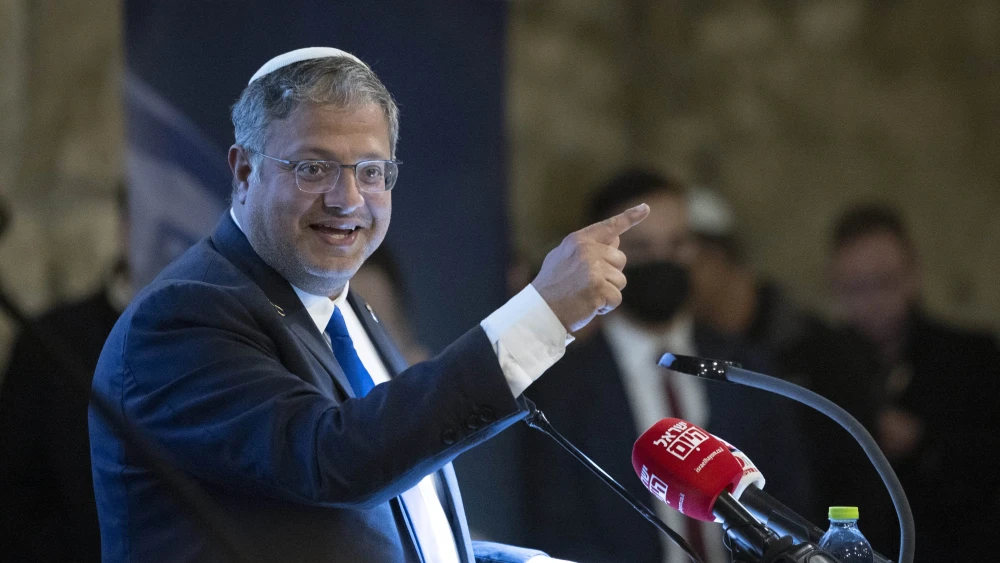
The national security minister, responding to the court’s ruling on Wednesday, stated: “You have no authority. There will be no coup.”
Yariv Levin, the Jewish state’s justice minister and deputy premier, also came out in support of Ben-Gvir, saying: “The arsonists at the Supreme Court have long been behaving as if they are the government and the parliament, and now they are even replacing the people.”
“Without even minimal legal authority, and in complete contradiction of the most basic principles of any democracy, they are single-handedly creating an unprecedented constitutional crisis,” Levin charged.
Netanyahu told ministers at a Cabinet meeting on Nov. 10, 2024, that he would refuse to dismiss Ben-Gvir, saying that Baharav-Miara’s demands could pave the way for a “constitutional crisis.”
“Today it’s me; tomorrow it’s you,” Ben-Gvir reportedly told the prime minister during the meeting. “They want to take over the government.”
The premier was said to have told Ben-Gvir that he didn’t know “a faster way to bring about a constitutional crisis than trying to fire a minister without an indictment.”
Under Israeli law, Baharav-Miara does not work for the prime minister, unlike in the United States, where the attorney general is an agent of the executive branch. The Netanyahu government has often clashed with Baharav-Miara, who then-Prime Minister Naftali Bennett appointed in 2022.