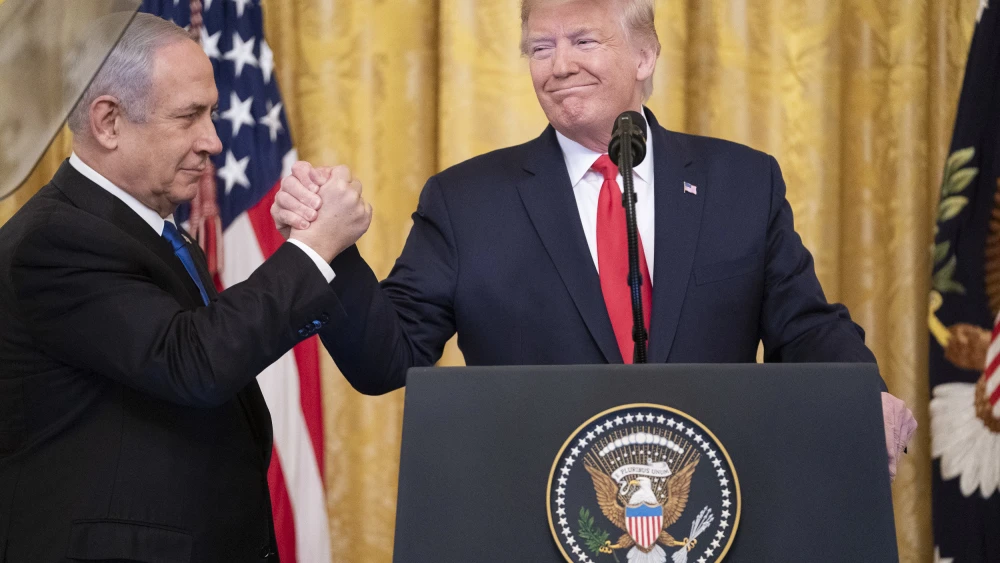
Saturday’s assassination attempt on former president and presumptive Republican nominee for the White House Donald Trump “is not only a heinous crime, it is also an attempt to assassinate American democracy,” Israeli Prime Minister Benjamin Netanyahu said.
At the start of the weekly Cabinet meeting in Jerusalem on Sunday morning, Netanyahu said that he “would like to send him in my name, in the name of my wife, Sara, in the name of the ministers of the Israeli government and in the name of the entire people of Israel our best wishes for a speedy recovery and a return to full strength.”
Netanyahu earlier wrote that he and, Sara, were “shocked by the apparent attack on President Trump” and praying “for his safety and speedy recovery.”
Sara and I were shocked by the apparent attack on President Trump. We pray for his safety and speedy recovery.
— Benjamin Netanyahu - בנימין נתניהו (@netanyahu) July 13, 2024
Trump was rushed off stage—bleeding from his right ear—after being shot on Saturday at a political rally in Butler, Pa., north of Pittsburgh.
The president lifted his fist as Secret Service agents walked him off stage. Butler County District Attorney Richard Goldinger told AP that the shooter was dead and one attendee at the rally was killed.
The Federal Bureau of Investigation identified Thomas Matthew Crooks, 20, from Bethel Park, a southern suburb of Pittsburgh (Butler is a northern suburb), as the “subject involved” in the shooting.