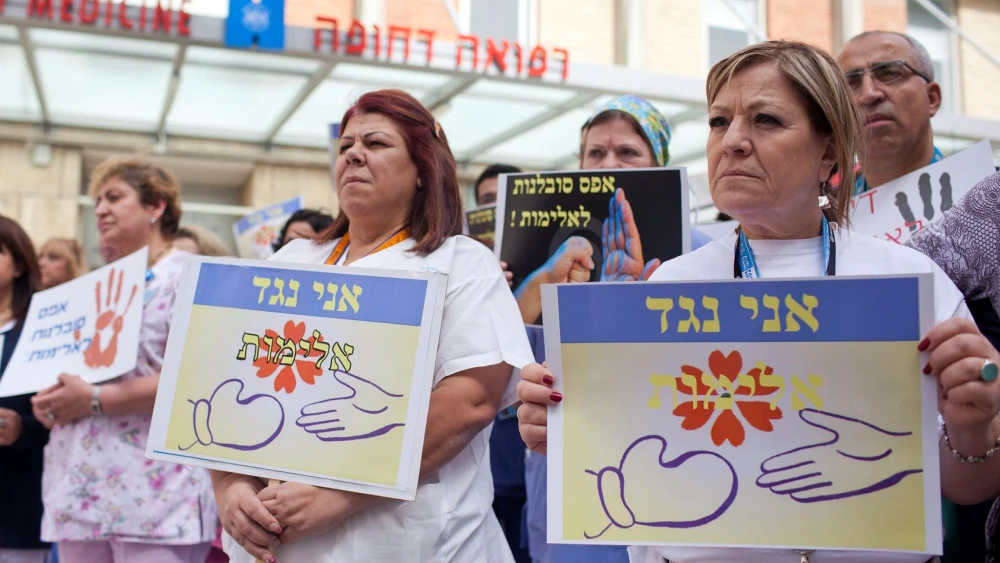
Israeli nurses will begin a nationwide strike on Tuesday in protest of what they describe as rising violence against health-care personnel in Israeli hospitals and care facilities.
The strike will affect hospitals, clinics and family health centers, with nurses offering limited services. Operating rooms and intensive-care wards will offer limited services; epidemiology clinics will only treat urgent cases; immunization clinics for overseas travel will be closed; and outpatient services will be shuttered.
The union said the government has failed to respond to its complaints of attacks on health-care workers and has not implemented recommendations of the Committee for the Elimination of Violence in the Health System, such as the installation of security cameras and the hiring of additional security personnel, which were issued in December.
“Until immediate action is taken to resolve the unbearable overcrowdedness in the hospitals system and protect the medical teams and health-care employees, the nurses will not stand down,” said Ilana Cohen, chair of the National Association of Nurses in Israel, in an interview with Ynet news.
“It is inconceivable that nurses go to work, take care of patients and end up at the emergency room themselves,” she said. “It is inconceivable that the Israeli government stands by as the health system becomes a war zone—and the nurses, medical teams and health-care personnel serve as a punching bag for displeased patients.”
According to a report in the Israel Journal of Health Policy Research published online on Aug. 23, 2017, violence was reported in all hospital departments, with emergency rooms and outpatient clinics the most exposed to it. Nurses in the emergency room were 5.5 times at a higher risk of being exposed to violence than nurses in the internal-medicine department. Nurses were also exposed to violence almost twice as much as physicians.
Last month, an illegal immigrant from Eritrea stabbed an Israeli nurse in the stomach at the Shmuel Harofe Geriatric Medical Center in Be’er Yaakov.