


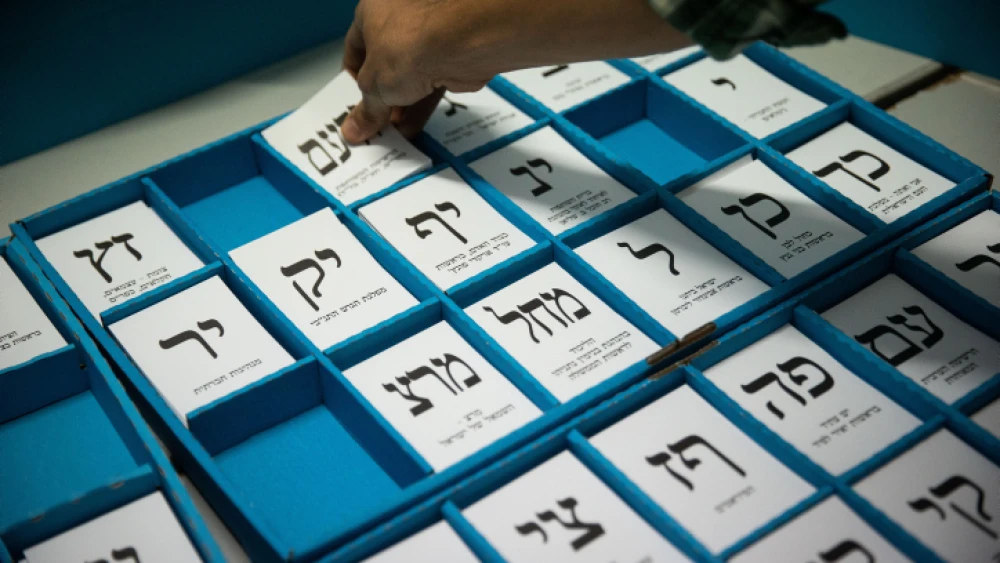
U.S. Jewish groups reacted to Israel’s election results, which have once again ended in a political stalemate with Israeli Prime Minister Benjamin Netanyahu and his opponents falling short of the necessary numbers mandated to form a Knesset majority.
The American Jewish Committee said it was “heartened by the images of Israelis of all backgrounds, ethnicities and faiths flocking to the polls across the country,” especially in the backdrop of the ongoing coronavirus pandemic. However, the organization added that it has “deep concern” with the “apparent entry of representatives from the far-right Otzma Yehudit and Noam parties into the Knesset.”
Both Otzma Yehudit and Noam were part of the Religious Zionist Party that has won six seats in the new Knesset.
AJC also expressed concern “about those on the other end of the political spectrum who deny Israel’s very right to exist, even as they are elected via Israel’s democratic system, and embrace such terror groups as Hamas.”
The Ra’am Party, headed by Mansour Abbas, is the political wing of Israel’s Southern Islamic Movement, which like Hamas is modeled off the Muslim Brotherhood. Abbas in the past has praised aspects of Hamas’s 2017 charter, although he has also criticized the terror group for targeting Israeli civilians.
In 2019, AIPAC joined AJC in condemning Otzma Yehudit, saying that it would boycott the “racist and reprehensible” party.
In a statement to JNS, AIPAC spokesman Marshall Whittman said “we stand by our previous statement, and as we indicated then, we have not and will not meet with members of Otzma.”
‘We have condemned this party before’
Left-wing U.S. Jewish groups focused their criticism on the entry of members of the Religious Zionist Party.
Jeremy Ben-Ami, president of J Street, said they were alarmed that “Israel’s most extreme party—a coalition of Kahanists, Jewish supremacists and proud anti-LGBT bigots—has entered the Knesset and could even be included in the next government.”
Ben-Ami blamed Netanyahu for their rise, saying the Israeli leader “campaigned for them and facilitated mergers to increase their vote share. He and other leaders on the right laid the groundwork for their emergence by mainstreaming some of their most hateful views.”
Similarly, Rabbi Rick Jacobs and Jennifer Kaufman of the Union for Reform Judaism said that while they “celebrate Israelis’ commitment to robust political engagement,” they were also “deeply concerned” by the “electoral success of candidates and parties that traffic in hate and intolerance.”
The URJ said that “extremist MKs Itamar Ben-Gvir and Avi Moaz of the Religious Zionist Party must not under any circumstances be rewarded for their reprehensible views with seats in the Cabinet.”
Netanyahu previously has said that he would not offer Ben-Gvir a cabinet position.
The Democratic Majority for Israel also said it was “appalled to see another small party comprised of racist, Kahanist Jews join the Knesset. We have condemned this party before.”


