Newsletter
Newsletter Support JNS

Second deal phase to be negotiated in Washington, Netanyahu says

The Israeli prime minister stated that he agreed to begin talks in Monday in Washington with Steve Witkoff, the US. special envoy to the Middle East.

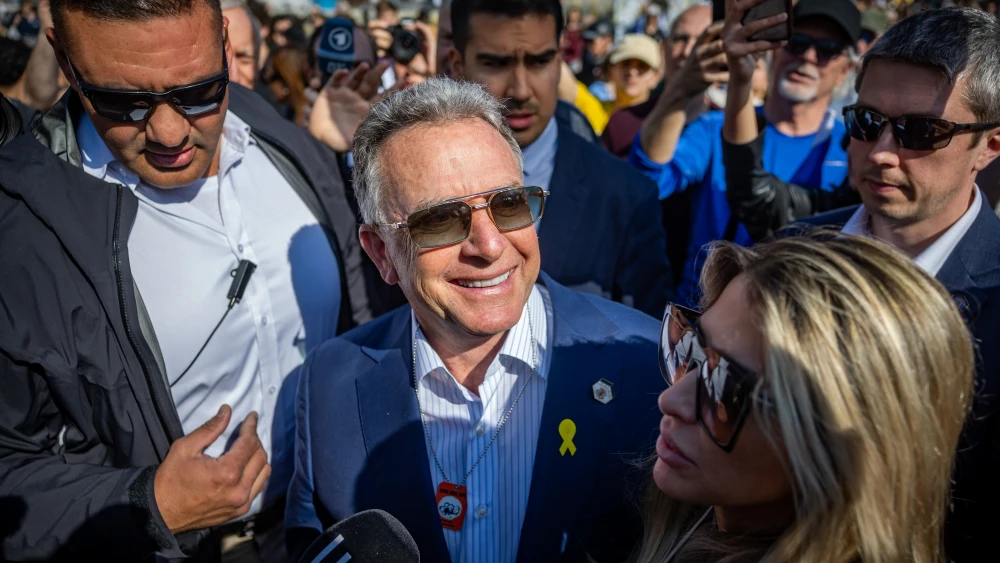
Steve Witkoff
Steve Witkoff, the U.S. special envoy to the Middle East, at Hostage square in Tel Aviv, Jan. 30, 2025. Photo by Yonatan Sindel/Flash90.

Israeli Prime Minister Benjamin Netanyahu stated on Saturday that he spoke in the evening with Steve Witkoff, the U.S. special envoy to the Middle East, and that the two agreed to begin negotiating the second stage of the hostage deal in Washington next week.

Netanyahu’s office said that discussions would take place on Feb. 3, on the 16th day of the agreement, “within the framework of which they will discuss the Israeli positions.”

“Later in the week, Witkoff will speak with the prime minister of Qatar and senior Egyptian representatives,” per Netanyahu’s office. “He will then discuss with the prime minister steps to advance the negotiations, including dates for the departure of delegations to the talks.”

Neither the White House nor Witkoff read out Saturday’s call, nor did U.S. President Donald Trump or the special envoy make a public statement about the second phase of the deal.

Also on Saturday, Trump spoke on the phone with Abdel Fattah el-Sisi, the Egyptian president, and thanked him “for his friendship,” per a White House readout.

“The two leaders also discussed Egypt’s important role in the release of hostages from Gaza and President el-Sisi expressed his confidence that President Trump’s leadership could usher in a golden age of Middle East peace,” the White House said.

See more from JNS Staff
The United States is “shutting down the financial infrastructure that allows the regime to continue its threats to U.S. national security and global shipping,” the U.S. treasury secretary said.
“The American people are crying out for an end to U.S. tax dollars subsidizing Israel’s military,” Rep. Greg Casar, chair of the Congressional Progressive Caucus, told colleagues.
A U.S. Department of Homeland Security spokesman told JNS that the administration “acted well within its statutory and constitutional authority” in Khalil’s case, “as it does with any alien who advocates for violence, glorifies and supports terrorists, harasses Jews and damages property.”
“The Strait of Hormuz is open to all ship traffic except for Iran,” the U.S. president wrote.
The amendment “would restrict our country’s ability to confront Hamas, Hezbollah and other terrorist organizations in the region who are sworn enemies of both the United States and Israel,” the House minority leader said.
“We are prepared for any scenario,” the prime minister assured.