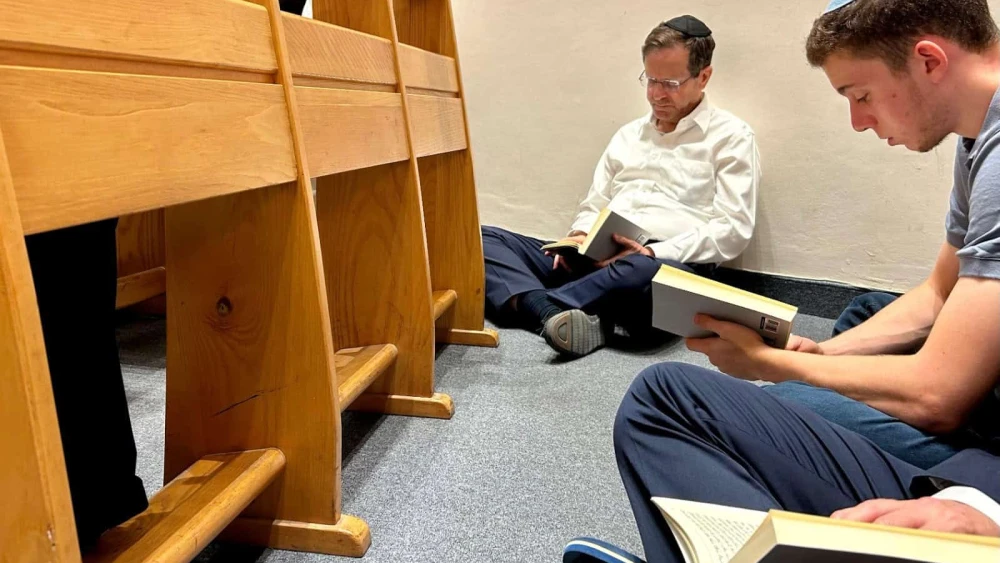
Israeli synagogues will remain closed this Shabbat for the first time since the coronavirus pandemic as the IDF Home Front Command implements emergency restrictions following Israel’s strikes on Iran, with leading rabbis providing guidance for prayer during the crisis.
Early Friday morning, the Home Front Command announced an immediate shift in national defense posture. The directive moves all Israeli regions from full operational status to essential services only. These restrictions prohibit educational activities, public gatherings and nonessential work operations.
“The people of Israel face an emergency situation, and we pray while strengthening our IDF soldiers and national leadership in their war to eliminate the existential threat against Israel,” Rabbi David Stav, who chairs the Tzohar rabbinical organization, said.
“This crisis demands complete adherence to Home Front Command directives. Should gathering restrictions remain in effect, this necessarily includes synagogue prayers. While communal prayer represents an ideal, preserving life takes precedence over Shabbat observance,” Stav said.
Rabbi Shmuel Eliyahu, serving as Safed’s chief rabbi, advocates neighborhood-based prayer services similar to coronavirus-era arrangements.
“Community prayer groups can function near [rocket-]protected areas when necessary. Should synagogue worship become feasible, congregants must carry firearms, given uncertainty about Israeli-Arab intentions. The synagogue sexton should also maintain telephone access,” Eliyahu said.
Both rabbis emphasize the importance of monitoring emergency broadcasts through silent radio frequencies that will go live in case of emergency, while prohibiting regular media consumption. “Keep radios tuned to silent emergency channels for critical updates. Television, standard radio programming, and internet browsing for news remain forbidden,” both men instructed.
Eliyahu further stressed advance preparation of safe rooms for extended Shabbat occupation. “Maintain minimal lighting to prevent Shabbat violations through switching lights on or off,” he advised.
Restricted Western Wall operations
Following Israel’s emergency declaration and directives from security agencies and the Israel Police, Western Wall prayers will operate under severe limitations to ensure worshipper and visitor safety. Current guidelines restrict services until further notice to protected prayer chambers within the Western Wall tunnel complex, with strict capacity controls and official oversight.
“We emphasize the critical importance of following Home Front Command and security force instructions. Compliance with these guidelines saves lives. All site prayers will focus on the welfare and success of IDF personnel, security operatives and Israeli Air Force pilots defending Israel and its people with unwavering resolve,” Western Wall Heritage Foundation representatives stated.
Prime Minister Benjamin Netanyahu issued remarks from the Security Cabinet session, stating, “We have delivered a highly successful initial strike, and with divine assistance, we will achieve substantial strategic gains.”
Addressing Israeli civilians, Netanyahu warned, “Extended periods in protected facilities may prove necessary.”
Originally published by Israel Hayom.