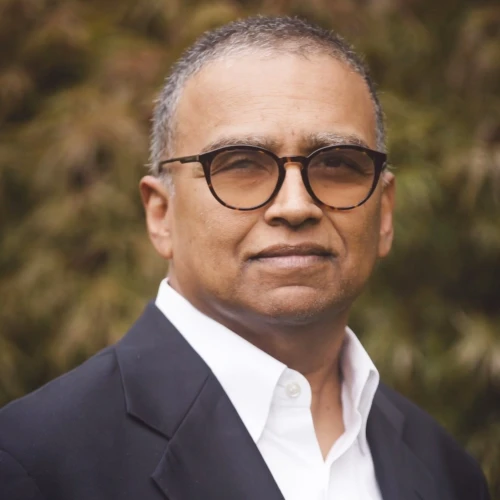
The United States brought Syrian Foreign Minister Asaad Hassan al-Shibani into direct talks with an Israeli delegation in Paris on Tuesday as part of a diplomatic push for Damascus and Jerusalem to normalize relations, the Associated Press reported on Wednesday.
According to Syria’s state-run SANA news agency, the two sides discussed reducing recent tensions, which soared after Israel militarily last month intervened on behalf of the Druze community in southern Syria.
Restoring the 1974 disengagement agreement with Israel, which created a U.N.-monitored buffer zone separating the two countries, was also discussed.
A senior Trump administration official confirmed the talks to AP, saying that Washington “continues to support any efforts that will bring lasting stability and peace between Israel and its neighbors” and adding that the meeting follows President Donald Trump’s “vision of a prosperous Middle East” that includes a “stable Syria at peace with itself and its neighbors—including Israel.”
The official stressed that “we want to do everything we can to help achieve that.”
Following the overthrow of the Bashar Assad regime in December by Sunni jihadists, Israel took control of portions of the Syrian side of the Golan Heights. The move was aimed at creating a security buffer to protect Israeli communities from hostile elements operating in the power vacuum.
Israeli Prime Minister Benjamin Netanyahu said in December that the “deployment is temporary until a force that is committed to the 1974 agreement can be established and security on our border can be guaranteed.”
Syria’s new governing authority in early July claimed a willingness to work with the United States to reimplement the 1974 disengagement agreement with Israel.
After a phone call with U.S. Secretary of State Marco Rubio, al-Shaibani expressed Damascus’s “aspiration to cooperate with the United States to return to the 1974 disengagement agreement.”
The meeting between Syria and Israel is the second to take place in the French capital since a U.S.-brokered ceasefire was declared on July 19 following the massacres against the Druze carried out by Sunni jihadists loyal to Damascus and Israeli airstrikes against regime targets in an effort to stop the attacks on the Druze.
United States Special Envoy for Syria Tom Barrack participated in the July 24 talks.
“I met this evening with the Syrians and Israelis in Paris,” Barrack posted on X. “Our goal was dialogue and de-escalation, and we accomplished precisely that. All parties reiterated their commitment to continuing these efforts.”
Barrack met on Tuesday with Israeli Druze spiritual leader Sheikh Muwaffaq Tarif, posting a picture of them together on X and writing that they “discussed the situation in Suwayda and how to bring together the interests of all parties, de-escalate tensions, and build understanding.”
Today I had a warm and informative meeting with Israeli Druze spiritual leader Sheikh Muwaffaq Tarif and his team. We discussed the situation in Suwayda and how to bring together the interests of all parties, de-escalate tensions, and build understanding. pic.twitter.com/A7htbbSl2r
— Ambassador Tom Barrack (@USAMBTurkiye) August 19, 2025
Many Israeli Druze have strong family connections to the Druze in southern Syria with more than a thousand crossing the border during the recent fighting to help their brethren under attack.
Israeli and Syrian officials also held secret talks in Azerbaijan earlier this year. Hikmet Hajiyev, assistant to Azerbaijan’s President Ilham Aliyev, confirmed to JNS on July 20 that Baku had hosted discreet talks between Israel and Syria earlier this year, but did not say when these took place.