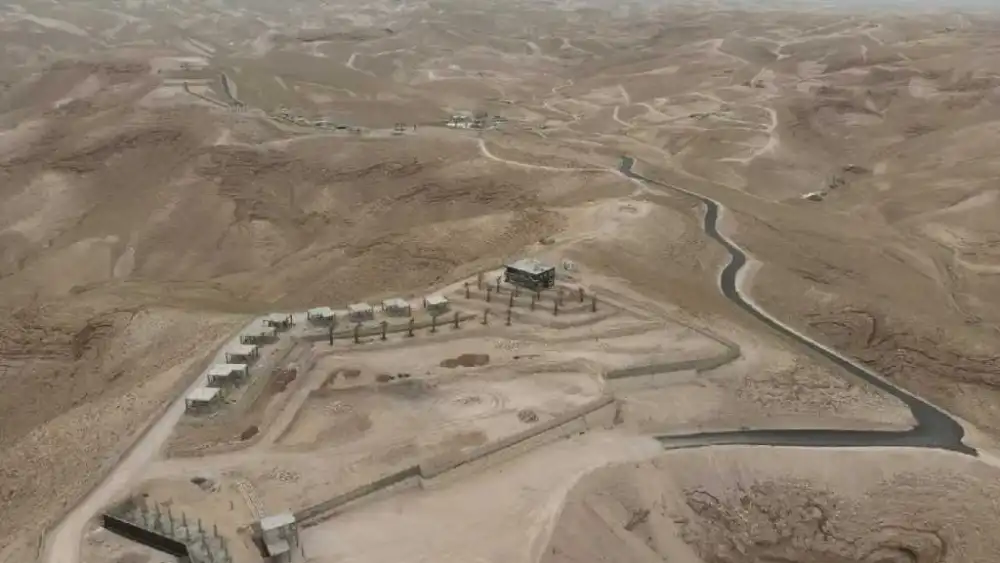
Israeli enforcement authorities tore down additional illegal Palestinian Authority structures in a protected nature reserve in the eastern Gush Etzion region of Judea, the Israel Hayom daily reported on Thursday.
Two buildings were razed on Thursday morning as part of a third wave of demolitions, according to the Hebrew-language newspaper, which noted that an Israeli demolition ban had been in place until a year ago.
At the orders of Israeli Finance Minister Bezalel Smotrich, who also serves as a minister in the Defense Ministry with responsibility for civilian matters in Judea and Samaria, enforcement is expected to commence soon on the southern side of the nature reserve, it said.
“We are determined to put an end to the illegal takeover,” Smotrich said in remarks cited by Israel Hayom, in a reference to Palestinian Authority plans to create a de facto Arab state by seizing large swaths of territory.
The Israel Hayom report noted that there has been a complete freeze in P.A.-backed illegal construction in the nature reserve.
On Dec. 12, Israel’s Civil Administration demolished the first illegal structures, marking the first significant enforcement operation in Area B of Judea and Samaria since the signing of the Oslo Accords in the 1990s.
The action came as a result of a Cabinet decision prompted by recent exposés of unauthorized Palestinian construction in the Judean Desert.
The first operation targeted seven illegally constructed buildings in the designated nature reserve, an area that has been a point of contention between Israeli and Palestinian authorities.
According to officials from the Civil Administration, the demolitions were carried out in response to repeated violations of the Oslo Accords by Palestinian builders.
In May 2023, an exposé revealed plans to build a Palestinian city in the Judean Desert under the radar, sparking outrage and prompting visits from top officials, including then-Israeli Defense Minister Yoav Gallant.
The revelations led to the Cabinet decision in June, effectively reversing a key provision of the 1998 Wye River Memorandum. The Israeli move transferred the responsibility for the designated nature reserve back to Jerusalem, overturning the previous arrangement that had assigned the area to PA control while prohibiting construction.