A federal judge expressed concerns on Friday that New York governmental leaders violated the rights of residents to when it sought limited the number of individuals who could gather for prayer services during the coronavirus pandemic.
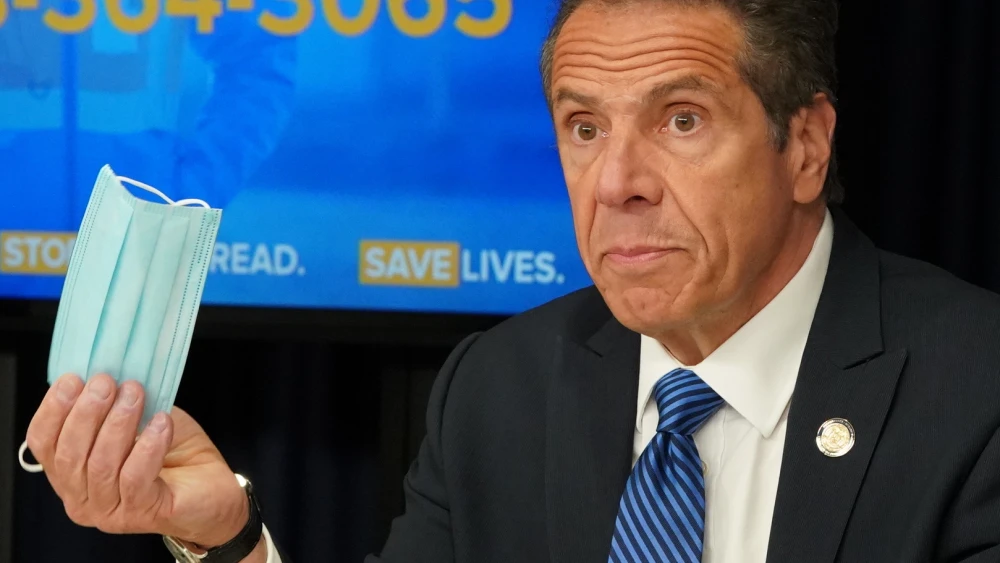
Judge Gary L. Sharpe of the U.S. District Court, Northern District of New York issued a preliminary injunction against New York Gov. Andrew Cuomo and New York City Mayor Bill de Blasio, preventing them from enforcing any limitations on outside gatherings for religious services, even in the midst of COVID-19, which ran rampant in the state and especially affected Jewish communities early on.
In terms of indoor assembly, the judge said that houses of worship can have the same number people as imposed on other industries in Phase 2 of New York’s reopening plan, which means that in the five boroughs, houses of worship can now have up to 50 percent capacity. Previously, they were limited to 25 percent capacity.
The judge made clear, however, that parishioners will still need to observe social-distancing regulations set out by both the city and the state.
The lawsuit was brought on behalf of two Catholic priests and three Orthodox Jewish men. In court papers, the Jewish litigants noted that while they can be considered for a public prayer quorum of 10 men, counted towards a minyan, their families could not attend services.
Furthermore, they noted a pattern of harassment. As plaintiff Daniel Schonbrun indicated in the filings, during an outdoor service at his synagogue, Chabad of Marine Park in Brooklyn, police arrived on the scene and told them they were having an “illegal gathering,” despite the fact that eight people were present and spaced “at least 20 feet apart.”
In a release, Agudath Israel of America praised the ruling, calling it a “powerful legal vindication of a rally cry Agudath Israel has made for over a month now.” The organization, which represents the haredi sector of Orthodox Jewry, has been at odds with the governor in recent weeks, in large part due to his decision to shutter overnight summer camps in New York.
In issuing the injunction, Sharpe took particular issue with the way that de Blasio and Cuomo seemed to lend their support to thousands of people marching for racial justice in the aftermath of the George Floyd killing by a Minneapolis police officer. Likewise, he noted that the state was allowing outdoor graduation ceremonies of up to 150 people.
In an interview with JNS, attorney Ron Coleman of Mandelbaum Salsburg P.C. in New Jersey, who has filed a similar lawsuit on behalf of four Pentecostal ministers in New Jersey and had tried to file an amicus brief in the New York case (it was denied), said “everybody respects the predominate value of preserving human life.”
The concern, he continued, is that by their actions, the government overstepped its boundaries, especially given its acquiescence to the civil-rights marchers. The result, said Coleman, is that “we have been denied the core social, religious experiences that make the Jewish community what it is.”
What is next, however, remains to be seen, as the U.S. Supreme Court last month refused to block the State of California’s limitations on religious gatherings during the pandemic.