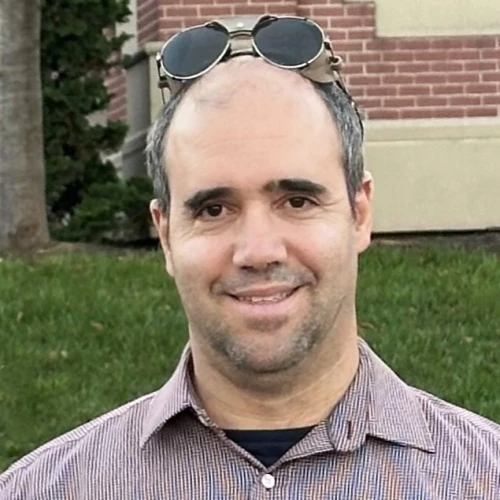
Incoming Palestinian Authority Prime Minister Mohammad Mustafa vowed on Tuesday to appoint a cabinet that can “gain both the trust of our people and the support of the international community.”
In a vision statement seen by the Associated Press, Mustafa promises to reunify Gaza with Judea and Samaria and establish an “internationally managed trust fund” to rebuild the Strip after the Israel Defense Forces operation against the Hamas terrorist organization there ends.
Mustafa claims Ramallah aims to enact wide-ranging administrative reforms and hold its first election since 2006. However, he did not provide a timetable for the possible vote, saying it would depend on “realities on the ground” in Gaza, Judea, Samaria and eastern Jerusalem.
The mission statement also makes no mention of Gaza-based Hamas, which has the support of the majority of Palestinians but is blacklisted as a terrorist group by most Western countries.
The United States wants the P.A. to assume control of Gaza after the war. At the same time, the Biden administration has refused to rule out Hamas retaining power in the coastal enclave or even joining a P.A.-led governing body that would also have jurisdiction in Judea and Samaria.
According to a recent poll, 89% of Palestinians support establishing a governing body that includes or is led by Hamas. Only around 8.5% said they favor the status quo, where the Western-backed Palestinian Authority is controlled exclusively by Mustafa’s Fatah faction.
A separate survey found that most Palestinians believe Hamas is “the most deserving of representing and leading the Palestinian people.”
Fatah and Hamas have been engaged in unity talks geared towards forming a political alliance after the war in Gaza ends. Yet the latter terrorist group said on Friday that P.A. chief Mahmoud Abbas’s decision to appoint Mustafa was made “without national consensus.”
“Engaging in superficial and empty steps such as forming a new government without national consensus only reinforces a policy of unilateralism and deepens division,” stated Hamas.
Abbas signed the decree appointing Mustafa on Thursday. The 69-year-old economist replaces Mohammad Shtayyeh, who announced his resignation on Feb. 26, along with that of his entire administration.
Mustafa was born in the village of Kafr Sur, near Tulkarm in western Samaria, and holds a Ph.D. in business administration and economics from George Washington University. A longtime member of Fatah, he sits on the Executive Committee of the Abbas-led PLO.
In 2015, Abbas appointed Mustafa as chair of the P.A.'s billion-dollar Palestine Investment Fund. A year earlier, as Ramallah’s minister of economy, he oversaw the reconstruction of the Gaza Strip in the wake of Israel’s 2014 military operation against Hamas (“Protective Edge”).
Lebanon’s Al-Modon online newspaper last week cited a Palestinian official as saying that Mustafa intends to appoint some new faces, with the exception of Ibrahim Khraishi, the PLO “Ambassador” to the United Nations in Geneva, who will be asked to head Ramallah’s “foreign ministry.”