


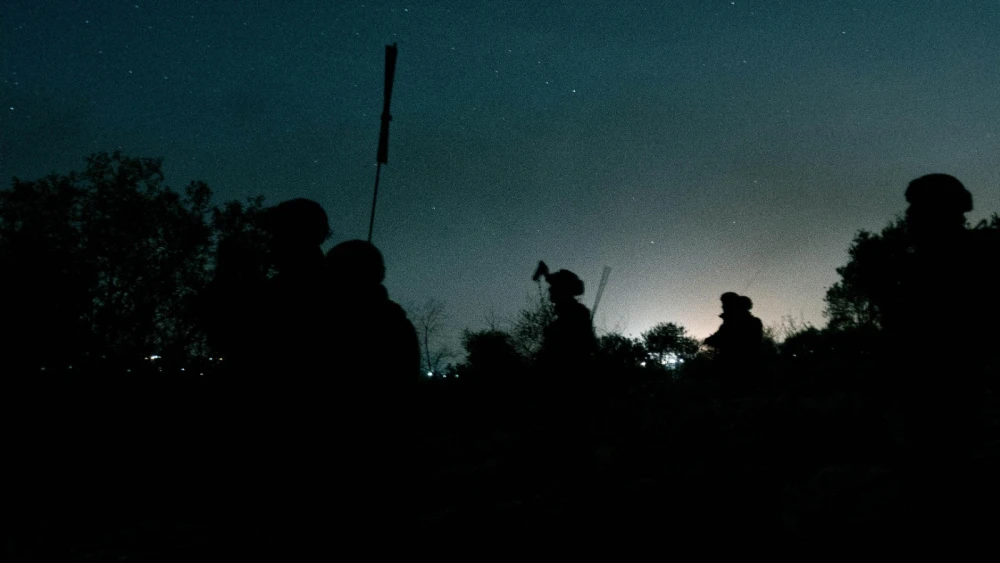
Iranian-backed Hezbollah terrorists on Monday launched a “suspicious aerial target” toward Israel Defense Forces soldiers deployed in Southern Lebanon, the military said.
“The results of the interception are under review,” stated the IDF, adding that the drone did not cross into Israeli territory and air-raid sirens sounded “in accordance with protocol.”
The incident triggered alerts in the Upper Galilee border town of Kibbutz Misgav Am, sending the community’s 400 residents running for bomb shelters.
Also on Monday, the Israeli Air Force successfully intercepted an unmanned aerial vehicle in Lebanon “prior to its crossing into Israeli territory,” according to the statement.
Overnight Sunday, Hezbollah launched an anti-tank missile toward IDF soldiers operating in Southern Lebanon.
“No injuries were reported,” the military stated, adding: “In a rapid response, the IDF struck the launch post from which the anti-tank missile was fired.”
“The IDF will continue to operate against threats directed at Israeli civilians and IDF soldiers, in accordance with the directives of the political echelon,” the statement continued.
Over the past several days, troops from the IDF’s 7th Brigade eliminated 10 armed Hezbollah terrorists in separate incidents, according to the military. The gunmen were operating near Israeli soldiers, posing a threat, and were targeted with precise strikes.
Meanwhile, troops located and dismantled a loaded launch position and destroyed weapons storage sites and other Hezbollah terror infrastructure.
Hezbollah began firing rockets and drones at Israel on March 2, after the Jewish state’s targeted killing of Iranian Supreme Leader Ali Khamenei on Feb. 28.
In response to the terrorist organization’s violation of the U.S.-brokered Nov. 27, 2024, truce agreement, Jerusalem launched an aerial campaign against Hezbollah and ordered the IDF to advance and take control of additional areas in Southern Lebanon to halt cross-border attacks.
Jerusalem and Beirut on April 16 agreed to a 10-day ceasefire following mediation by U.S. President Donald Trump. The two countries on April 23 agreed to extend the truce for three more weeks following direct talks in Washington, D.C.
However, Israeli Prime Minister Benjamin Netanyahu on April 26 accused Hezbollah of “essentially disintegrating” the ceasefire through its ongoing terrorist attacks.
“Therefore, as far as we are concerned, what obligates us is the security of Israel, the security of our soldiers, and the security of our communities,” the premier said. “We are acting vigorously according to the rules we agreed upon with the United States, and incidentally, with Lebanon as well.”


