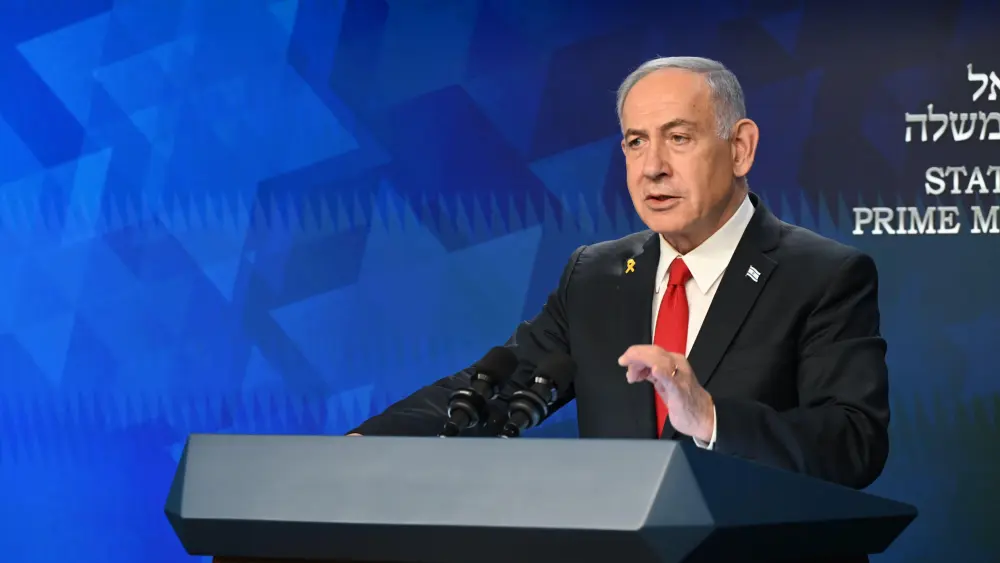
Israeli Prime Minister Benjamin Netanyahu on Saturday sent a warm message of support to Hungarian Prime Minister Viktor Orbán and CPAC Hungary, an annual conservative conference, which opened the same day in Budapest. Netanyahu had been scheduled to speak at the event but was unable to make it due to the war with Iran.
“Greetings from Israel to all my friends in CPAC. ... I want to thank you for standing up for Western civilization. I want to thank you for standing with Israel, because you know that Israel is the forward position that protects our common civilization against these kind of radical, fanatic Muslims who not only torture their own people, but also threaten our Arab friends and threaten every one of your countries,” Netanyahu said in a video message broadcast on the first day of the conference.
Now in its fifth year, CPAC (Conservative Political Action Conference) Hungary unites conservatives who fear a process is underway to transfer sovereignty from nations to supranational organizations run by globalist elites. It’s the most successful of the regional CPAC conferences affiliated with CPAC in the United States. (CPACs have taken place in Japan, Australia, Israel and elsewhere.)
The conference is organized and hosted by the Budapest-based Center for Fundamental Rights.
The prime minister also praised Hungary’s leader. “I want to thank my friend Viktor Orbán. He has been like a rock. Today, we live in turbulent times. You need leaders who can protect against this rising tide, and can also assure safety and stability for their own countries. This is what Viktor Orbán has in abundance. I know many world leaders, and I can tell you he is right there at the top. Viktor Orbán means stability, safety, security.”
Orbán, who has been a close ally of Netanyahu, faces a serious challenge in the coming elections on April 12. Most notably, Orbán stood with Netanyahu when the International Criminal Court (ICC) issued a warrant for the Israeli Prime Minister’s arrest on war crime charges. Orbán invited Netanyahu to visit the day after the International Criminal Court issued its arrest warrant.
In April, 2025, Netanyahu visited Hungary amid much pomp and circumstance, including a lavish ceremony at Buda Castle, the historic complex of the Hungarian kings, which included a brass band and military honor guard with cavalry. Orbán described the Jewish state as “an anchor in the Middle East.” Hungary announced it would withdraw from the ICC during the visit, which it did in June.