The Trump administration imposed sanctions on Tuesday on individuals and entities involved in procuring support for Iran’s drone and ballistic-missile programs and U.S.-sanctioned Mahan Air.
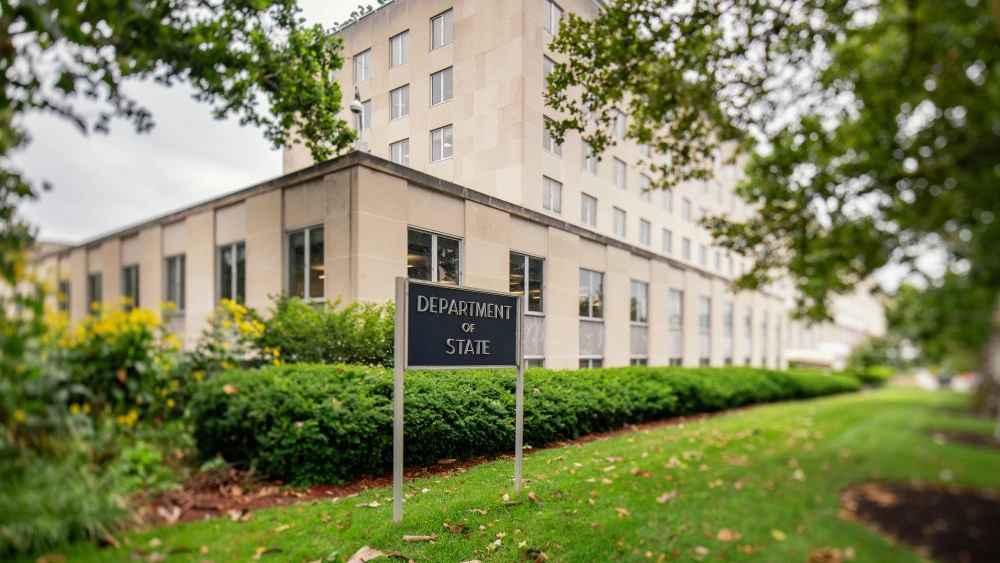
The measures support “the implementation of United Nations sanctions and restrictive measures on Iran, which were reimposed as a direct result of Iran’s ‘significant non-performance’ of its nuclear commitments,” stated Tommy Pigott, spokesman for the U.S. State Department.
The sanctions span Iran, Turkey and the United Arab Emirates, and are intended to disrupt Iran’s replenishment of its drone and ballistic missile stockpiles, which it has used in its war with the United States and Israel and to attack its Gulf neighbors.
“The Iranian regime must be held accountable for its extortion of global energy markets and indiscriminate targeting of civilians with missiles and drones,” stated Scott Bessent, U.S. treasury secretary. “Under President Trump’s leadership, as part of ‘Economic Fury,’ Treasury will continue to follow the money and target the Iranian regime’s recklessness and those who enable it.”
Operation “Economic Fury” refers to sanctions and other financial measures taken against Iran, complementing the U.S. military’s operation “Epic Fury.”
The sanctions apply to three people tied to support of Iranian-based Pishgam Electronic Safeh Company, which produces parts for use in Iranian one-way attack drones and has already fallen under sanctions.
A Tehran-based currency exchanger acting on behalf of the company was also designated, as were agents acting to facilitate its efforts.
A Turkish-based company was slapped with sanctions for supporting the U.S.-designated Pardisan Rezvan Shargh International Private Joint Stock Company, whose owner produces chemicals for Iran’s defense industry.
Several people tied to Mahan Air, which transports goods to support Iran’s Islamic Revolutionary Guard Corps-Quds Force, were also hit with designations.